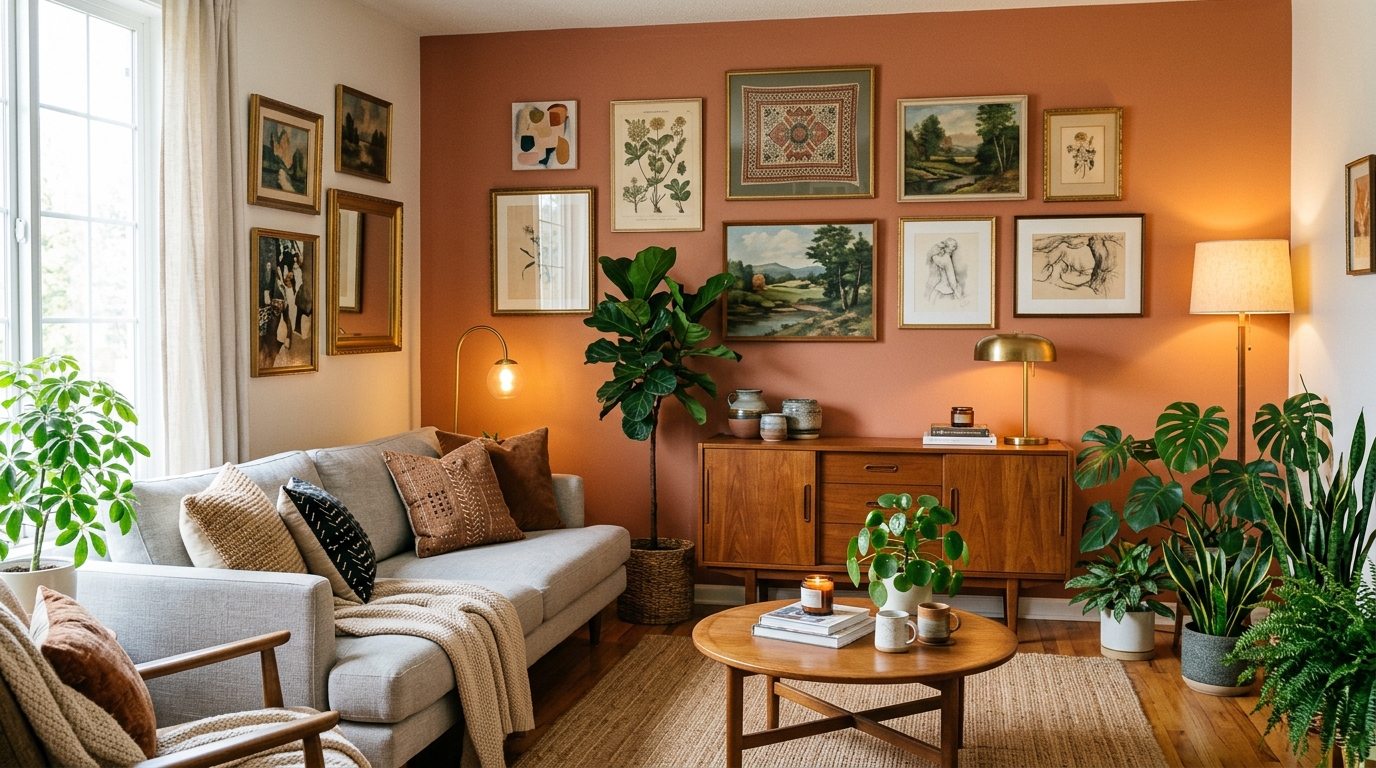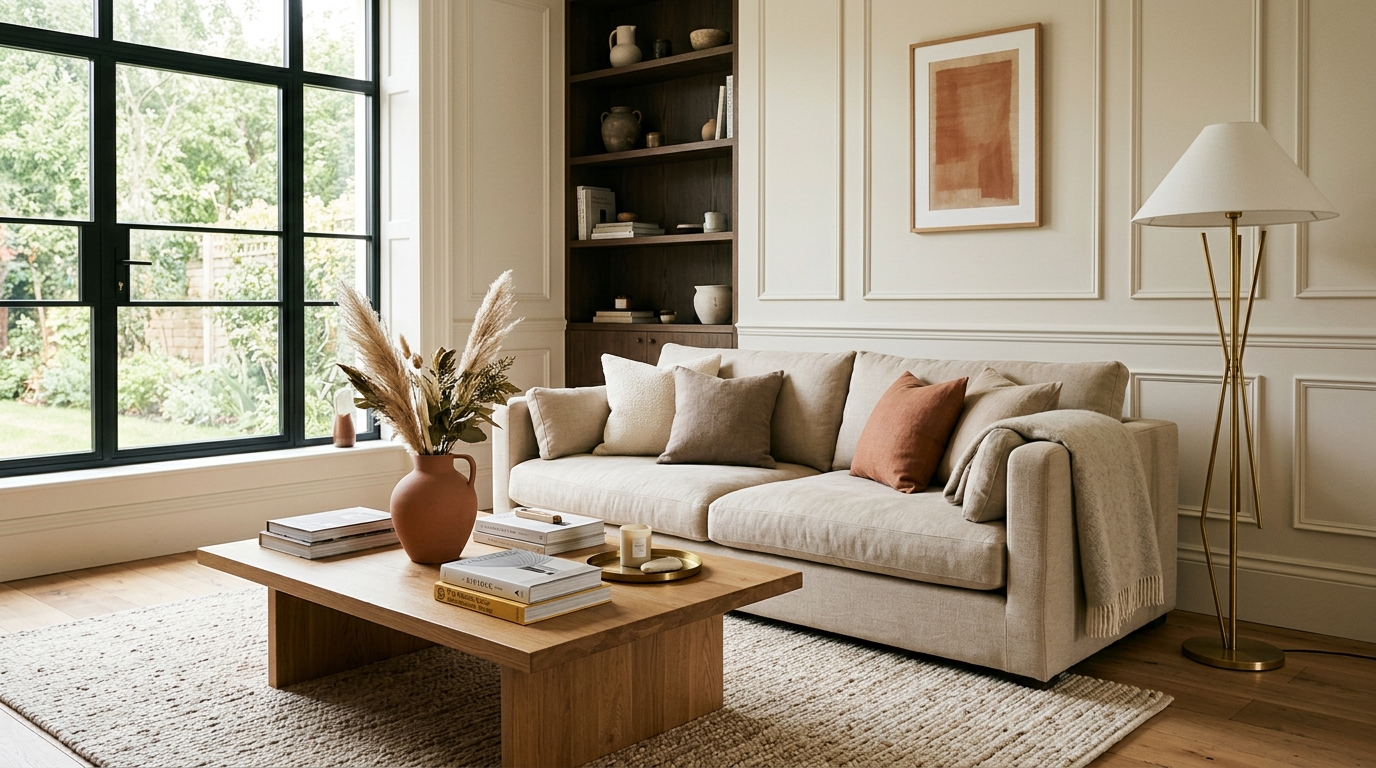
To choose decorative materials, balance tactile textures across hard, medium, and soft planes. Select solid hardwoods (White Oak, Walnut) over weak softwoods, specify upholstery fabrics with a Wyzenbeek rating of 30,000+ double rubs (Crypton, performance velvet, top-grain leather), and harmonize metals by standardizing on 1 dominant finish (e.g., brushed brass) and 1 accent (matte black).
At a Glance: Key Takeaways
- Specify upholstery fabrics with Wyzenbeek ratings of 30,000+ double rubs for heavy family and pet use.
- Choose dense hardwoods (White Oak, Walnut, Teak) rather than soft pine for daily tables and flooring.
- Standardize metal hardware with the 80/20 rule: 80% dominant brushed brass + 20% accent matte black.
- Honed marble and natural quartzite resist visible acid etching far better than high-gloss polished surfaces.
In-Depth Guides in this Directory
Explore specialized subtopic blueprints, technical dimensions, and execution checklists:
Hardwood & Veneer Guide: Janka Hardness, Grain Matching & Stain Harmony
Master decorative wood selection: Janka hardness ratings, solid wood vs engineered veneers, oak vs walnut grain pairing, and mixing wood stains seamlessly.
Upholstery & Drapery Fabrics: Wyzenbeek Rub Counts, Linen vs Velvet
Master interior fabric selection: Wyzenbeek abrasion rub tests, Martindale standards, performance fabrics (Crypton/Sunbrella), Belgian linen, and upholstery durability.
Mixing Metal Finishes: Brushed Brass, Matte Black & Polished Nickel Rules
Master mixing metals in home decor: the 70/30 dominant-to-accent rule, warm vs cool metal temperatures, living finishes, and hardware coordination.
1. Wood Species, Grain Patterns & Janka Hardness Ratings
Wood brings organic warmth and structural longevity into a home. However, selecting the wrong wood species leads to dented tabletops, surface gouges, and warping:
- The Janka Hardness Scale: Measures the force required to embed an 11.28mm steel ball halfway into wood:
- White Oak (1,360 Janka): The gold standard for modern flooring and dining tables; tight straight grain, highly resistant to moisture, dents, and wear.
- American Walnut (1,010 Janka): Rich, luxurious chocolate tones with flowing grain; ideal for statement credenzas and dining tables.
- Teak (1,155 Janka): Rich in natural silica and rubber oils; naturally waterproof and impervious to rot for outdoor and bathroom use.
- Pine / Softwoods (<600 Janka): Highly susceptible to denting from fingernails and dropped mugs; reserve for rustic accent beams rather than dining surfaces.
- Veneer vs. Solid Hardwood: High-grade furniture-grade plywood with thick hardwood edge-banding resists seasonal humidity warping better than solid wood in wide tabletop expanses.
2. Performance Upholstery Fabrics & Double-Rub Counts
The lifespan of a sofa depends entirely on its fabric's mechanical abrasion rating:
- The Wyzenbeek Abrasion Test (Double Rubs): A mechanical canvas arm rubs back and forth over fabric until wear appears:
- Light Duty (<15,000 Double Rubs): Decorative accent pillows and occasional bedroom slipper chairs only.
- Medium Duty (15,000–30,000 Double Rubs): Formal living room seating used infrequently.
- Heavy Duty / Commercial (30,000–100,000+ Double Rubs): Essential for primary family sofas, dining chairs, and homes with dogs and children.
- Crypton & Solution-Dyed Acrylics: Moisture-barrier fabrics that repel red wine, coffee, and pet stains; liquids bead up on the surface and wipe off with a dry paper towel.
- Top-Grain Aniline Leather: Breathes naturally, adjusts to body temperature, and develops a rich vintage patina over 20+ years of use without peeling.
3. Metal Finishes, Natural Stone & Tactile Friction
Balance hard surfaces to prevent spaces from feeling sterile:
- Unlacquered Brass vs. Plated Gold: Cheap electroplated shiny gold finishes chip and scratch. Living unlacquered brass oxidizes naturally over time, developing an authentic, rich organic patina that can be polished or left raw.
- Honed vs. Polished Marble: High-gloss polished marble shows obvious dull etching rings when exposed to acidic lemon juice or wine. Honed (matte satin) marble conceals minor etching and feels soft and velvety to the touch.
- Tactile Friction Rule: Pair cold, hard surfaces (stone, glass, metal) with soft, warm tactile textures (boucle, heavy linen, raw wool, sheepskin) in every room.
Interior Decorative Material Specification Matrix
Use this reference table to calculate exact physical dimensions, ratios, and specifications before purchasing:
| Material Category | Recommended Grade | Durability / Rub Count | Best Application | Maintenance |
|---|---|---|---|---|
| Upholstery Fabric | Crypton / Solution-Dyed Acrylic | 50,000–100,000 Double Rubs | Main Family Sofa & Dining Chairs | Soap and warm water |
| Natural Leather | Top-Grain Semi-Aniline Leather | Indestructible (Puncture safe) | Lounge Armchairs & Ottomans | Leather conditioner annually |
| Hardwood | Solid White Oak / Walnut | 1,000–1,360 Janka Rating | Dining Tables, Flooring, Credenzas | Hardwax oil / Matte poly |
| Countertop / Table Stone | Honed Quartzite / Honed Marble | Hardness 7 Mohs (Quartzite) | Kitchen Islands & Coffee Tables | Penetrating stone sealer yearly |
| Architectural Metal | Solid Unlacquered Brass / Black Steel | Solid structural alloy | Cabinet Pulls, Sconces, Curtain Rods | Natural patina / Microfiber wipe |
Decorative Material Constraints
Every successful decoration project must account for physical and environmental constraints:
Bonded Leather Warning
Never buy 'bonded leather' or 'faux PU leather' sofas; bonded leather is shredded leather scraps glued to paper that inevitably peels, cracks, and flakes within 18 months.
Direct Sunlight Fabric Bleaching
Natural linen and silk fabrics fade and disintegrate rapidly when exposed to direct south-facing window sunlight; use UV-blocking window film or solution-dyed acrylics in sunrooms.
Calacatta Marble Acid Sensitivity
Real marble is calcium carbonate, which dissolves on contact with vinegar, tomatoes, and citrus; use natural Quartzite or sintered stone (Dekton) for bulletproof kitchen prep surfaces.
10-Step Material Selection and Sampling Protocol
Execute this professional sequence to achieve flawless results without backtracking:
Identify Room Traffic and Daily Usage Level
Classify room as High Traffic (family/pets) or Low Traffic (formal/bedroom).
Request Physical Material Swatch Samples
Never order furniture from online photos; order 4x4" fabric, wood, and stone swatches.
Perform Stain and Scratch Test on Fabric Swatches
Pour coffee and oil on fabric samples and scrub with soap to test cleanability.
Verify Wyzenbeek Rating (>30,000 Double Rubs)
Check fabric specification sheets for heavy-duty commercial rub count ratings.
Select Hardwoods with Janka Rating >1,000
Specify White Oak, Walnut, or Teak for all daily table and flooring surfaces.
Audit Wood Undertones for Warm/Cool Harmony
Ensure all wood species in the room share matching golden or neutral undertones.
Establish 80/20 Metal Finish Hierarchy
Choose 1 dominant metal (brushed brass) and 1 secondary accent (matte black).
Specify Honed Finishes for Natural Stone
Choose matte honed marble or quartzite to prevent visible acid etching rings.
Layer Soft Tactile Textiles Against Hard Surfaces
Pair cold glass/stone tables with chunky wool rugs and washed linen drapes.
Review Full Materials Flatlay Under 2700K Light
Assemble all physical samples together under final lighting to verify sensory balance.
Common Mistakes & Countermeasures
Avoid these costly errors that compromise aesthetics, ergonomics, and budget:
Buying Bonded or 'Faux' Leather Furniture
Using Delicate Silk or Unprotected Linen on Family Sofas
Polished High-Gloss Marble in Busy Kitchens
Project Execution Checklist
Track your physical progress. Checkboxes persist automatically on this device:
Frequently Asked Questions
What is the most durable fabric for a family living room sofa?
Performance velvet and Crypton-treated polyester-blend weaves rated at 50,000+ double rubs. They resist liquid stains, do not absorb odors, and have no open loops for pet claws to snag.
Can I mix gold, brass, and black metals in the same room?
Yes! Brushed brass (80%) paired with matte black metal accents (20%) is a timeless designer combination. Black provides crisp architectural grounding while brass provides warm luxury.
What is the difference between solid wood and engineered hardwood?
Solid wood is one solid plank of timber throughout. Engineered hardwood features a real hardwood veneer atop cross-layered plywood, making it significantly more dimensionally stable and resistant to moisture warping.