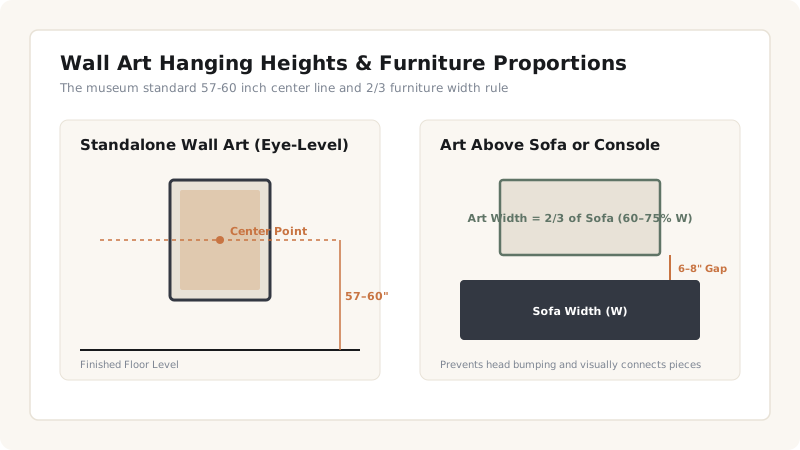
To decorate walls effectively, follow two foundational formulas: hang standalone art with its vertical center at exactly 57 to 60 inches from the floor (the museum eye-level standard), and ensure art hung over furniture (sofas, consoles, headboards) spans approximately two-thirds (60%–75%) of the furniture width, leaving a 6 to 8 inch gap above the furniture back.
At a Glance: Key Takeaways
- Hang standalone art at 57–60 inches on center from the finished floor level.
- Scale artwork to 60%–75% (two-thirds) of the width of the furniture below it.
- Maintain strict 2.0 to 3.0 inch uniform gaps between frames in gallery wall groupings.
- Integrate architectural vertical textures (slat wood, picture mouldings) to add depth to large walls.
In-Depth Guides in this Directory
Explore specialized subtopic blueprints, technical dimensions, and execution checklists:
Gallery Wall Layouts: 2-Inch Spacing, Grid vs Organic & Eye-Level Rules
Master gallery wall design: formal symmetrical grids, organic salon clusters, 2-inch uniform spacing, paper template layout methods, and frame styling.
Large-Scale Canvas & Statement Art: The 2/3 Furniture Proportion
Master statement art sizing: single large canvas vs gallery walls, the two-thirds furniture width formula, floating frame construction, and eye-level hanging rules.
Floating Shelves, Slat Wall Paneling & Architectural Moulding
Master architectural wall textures: floating shelf styling formulas, vertical acoustic oak slat paneling, DIY picture frame moulding, and weight-bearing shelf brackets.
1. The 57–60" Eye-Level Formula & Proportional Scaling
The most widespread mistake in home decoration is hanging art too high ('ceiling floating') or choosing undersized prints that look lost on expansive walls. Professional interior styling adheres to strict mathematical proportions:
- The 57–60" Museum Centerline: The vertical center of any art piece (or the geometric center of a multi-frame gallery group) should hang 58 inches from the floor, matching the average human sightline.
- The Two-Thirds Furniture Proportion: When hanging art over a sofa, credenza, or headboard, the total width of the artwork must measure approximately 60% to 75% of the furniture width below it.
- The 6–8" Anchor Gap: Leave exactly 6 to 8 inches between the bottom of the picture frame and the top of the sofa back or credenza surface to visually connect the pieces without head-bumping.
Wall Art & Decor Sizing Matrix
Use this reference table to calculate exact physical dimensions, ratios, and specifications before purchasing:
| Wall / Furniture Situation | Target Art Width | Target Height / Centerline | Gap Above Furniture | Recommended Style |
|---|---|---|---|---|
| Above 84" Living Room Sofa | 50" to 62" Total Width | Centered at eye-level | 6–8 inches | 1 Large canvas or pair of 28x38" frames |
| Above 60" Bedroom Queen Bed | 36" to 45" Total Width | Centered above headboard | 8–10 inches | Triptych (3 frames) or wide horizontal canvas |
| Standalone Hallway Wall | Proportionate to wall width | Center point at 58" from floor | N/A (Open floor) | Single statement piece or grid gallery |
| Above 48" Entryway Console | 30" to 36" Total Width | Center point at 58" from floor | 6–8 inches | Large round mirror or framed print |
Wall Decoration Constraints
Every successful decoration project must account for physical and environmental constraints:
Heavy Plaster / Drywall Anchors
Large framed art and mirrors weighing over 20 lbs pull out standard plastic drywall anchors. Always screw into wall studs or use toggle bolts rated for 50+ lbs.
Thermostats and Light Switches
Do not squeeze art awkwardly beside electrical switches; maintain at least 4 inches of negative space around all wall plates.
Direct Sunlight Fading
UV rays from unshaded windows fade watercolors and art prints; frame valuable prints with UV-filtering conservation glass or acrylic.
How to Hang Wall Art at Perfect Eye Level
Execute this professional sequence to achieve flawless results without backtracking:
Measure the Height of the Frame
Measure total frame height (H) and calculate the half-height (H / 2).
Measure Distance from Wire to Frame Top
Pull the hanging wire taut toward the top of the frame and measure the drop distance (D).
Calculate Nail Height Formula
Nail Height = 58 inches + (H / 2) - D.
Mark Wall and Install Anchor
Mark the exact calculated height on the wall with a pencil and install a heavy-duty picture hook.
Hang and Check with Bubble Level
Hang frame on the hook and place a magnetic torpedo level on top to ensure true horizontal alignment.
Common Mistakes & Countermeasures
Avoid these costly errors that compromise aesthetics, ergonomics, and budget:
Hanging Art Near the Ceiling
Project Execution Checklist
Track your physical progress. Checkboxes persist automatically on this device:
Frequently Asked Questions
How do you calculate hanging height for a gallery wall?
Treat the entire gallery wall grouping as one giant single picture. Measure the total height of the entire cluster, find the vertical midpoint, and position that center point exactly 58 inches from the floor.
How big should art be above a sofa?
Art above an 84-inch sofa should span between 50 and 63 inches in total width (two-thirds of the sofa's width), positioned 6 to 8 inches above the sofa back.