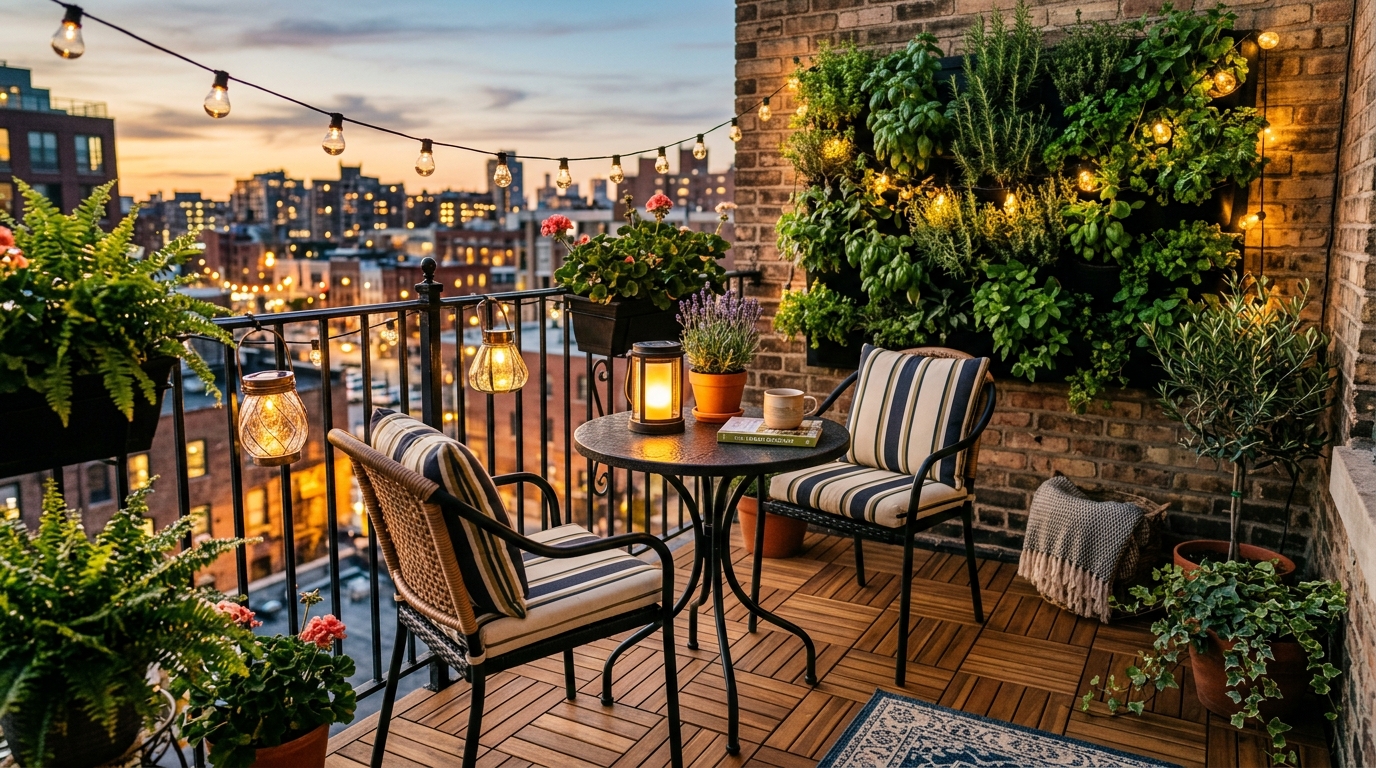
To decorate an open terrace, divide the space into 3 distinct functional micro-zones (Lounge, Dining, and Sun Deck). Install an anchored pergola or retractable sail canopy for sun and wind protection, arrange all-weather modular seating around a propane fire table, use heavy fiberglass planters with dwarf trees as natural windbreaks, and install 2700K outdoor lighting.
At a Glance: Key Takeaways
- Zone large terraces into 3 distinct areas: shaded dining, open lounge with fire table, and botanical perimeter.
- Install an anchored aluminum pergola or retractable shade sails to provide crucial UV and heat protection.
- Use heavy, wind-resistant fiberglass planters with dwarf evergreen trees to create a living green windbreak.
- Choose all-weather powder-coated aluminum or grade-A teak furniture with Sunbrella quick-dry cushions.
In-Depth Guides in this Directory
Explore specialized subtopic blueprints, technical dimensions, and execution checklists:
Terrace Seating Layouts & Weatherproof Lounge Design
Design the ultimate outdoor rooftop terrace seating area with modular weatherproof sectionals, pergola shade zoning, and fire table clearances.
Wind-Resistant Terrace Planters, Green Screens & Irrigation
Create a lush, wind-resistant rooftop terrace garden with fiberglass trough planters, automated drip irrigation, and hardy evergreen screens.
Terrace Lighting Architecture: String Lights, Uplighting & Lanterns
Master rooftop terrace evening illumination with catenary wire festoon canopies, low-voltage planter uplighting, and warm 2700K ambient styling.
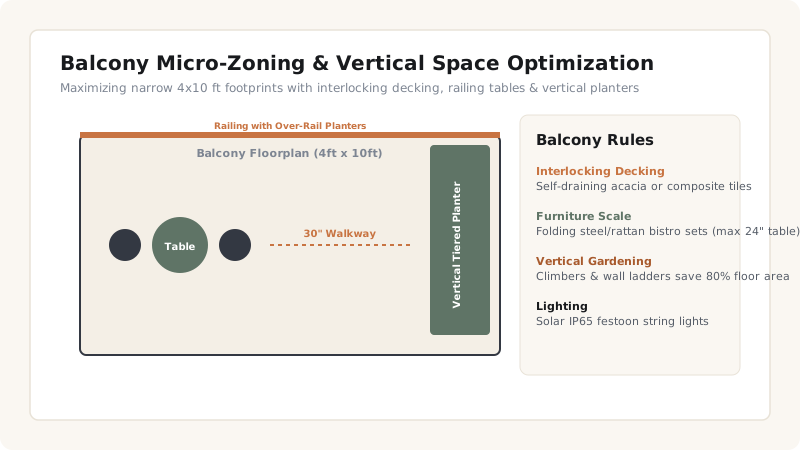
1. Multi-Zone Terrace Architecture & Overhead Pergola Shading
An open terrace or rooftop without architectural structure feels exposed, wind-swept, and blisteringly hot during daytime hours. Transform large outdoor square footage using the Three-Zone Master Plan:
- Zone 1: The Shaded Outdoor Dining Pavilion: Anchor with an anchored motorized louvered aluminum pergola or retractable shade sail canopy. Place a 6 to 8-person outdoor teak or aluminum dining table with a dedicated overhead outdoor wet-rated chandelier or pendant.
- Zone 2: The Conversational Fire Lounge: Position a deep-seating modular sectional around a smokeless propane fire table (producing 50,000 BTUs) for evening warmth and ambient flickering light.
- Zone 3: The Botanical Perimeter & Sun Deck: Line perimeter parapet walls with tall planters and pair two adjustable chaise lounges with a side umbrella.
2. Microclimate Windbreaks & Structural Planter Engineering
Rooftop terraces experience wind velocities up to 3 times higher than ground-level patios. Manage exposure with structural botany:
- Heavy Fiberglass & Concrete Composite Planters: Choose tall rectangular trough planters (36" length × 18" width × 24" height). Fill the bottom 4 inches with gravel for drainage ballast to prevent tipping during severe storms.
- Wind-Filtering Living Green Screens: Plant hardy, wind-tolerant species—such as bamboo in lined troughs, dwarf olive trees, boxwoods, ornamental fountain grasses, and lavender. These plants filter and slow wind speeds by 50% without creating turbulent wind eddies.
- Automatic Drip Irrigation: Terraces baked in direct sun lose soil moisture rapidly; install a simple battery-timer drip irrigation system connected to an outdoor hose bib.
3. All-Weather Materials & Low-Voltage 2700K Landscape Lighting
Outdoor furniture must withstand extreme thermal expansion, freezing rain, and relentless UV rays:
- Powder-Coated Aluminum & Grade-A Teak: Aluminum will never rust, warp, or rot. Grade-A teak contains dense natural oils that repel moisture, weathering into a silver-gray patina over decades.
- Solution-Dyed Acrylic Fabrics (Sunbrella): Pigment is embedded into the core of acrylic fibers during manufacturing, ensuring 5+ years of zero color fading under direct UV exposure.
- Low-Voltage Landscape Lighting (2700K IP67): Place low-voltage uplight spotlights at the base of potted trees, install step lights along changes in floor elevation, and weave dimmable festoon cafe lights across the pergola beams.
Terrace Material & Shading Strategy Matrix
Use this reference table to calculate exact physical dimensions, ratios, and specifications before purchasing:
| Terrace Element | Recommended Material | Wind Resistance | UV / Sun Rating | Maintenance |
|---|---|---|---|---|
| Overhead Shade | Motorized Louvered Pergola | High (Up to 70 mph) | 100% UV Block (Waterproof) | Low (Annual hose wash) |
| Lounge Sectional | Powder-Coated Aluminum + Sunbrella | High (Heavy & Sturdy) | 5-Year No-Fade Warranty | Cover during winter |
| Perimeter Planters | Commercial Fiberglass Troughs | High (Ballasted with gravel) | Frost & UV Safe | Zero maintenance |
| Fire Feature | Propane Concrete Fire Table | High (Heavy concrete body) | All-Weather (Covered) | Wipe burner clean |
| Dining Table | Solid Grade-A Teak Wood | High | Naturally Weatherproof | Oil yearly (or silver patina) |
Terrace Engineering Constraints
Every successful decoration project must account for physical and environmental constraints:
Structural Weight Load Limits
Rooftop terraces have strict engineering limits (typically 50–100 lbs/sq.ft.); calculate the combined weight of saturated wet soil, planters, furniture, and guests before installing large concrete fixtures.
Waterproofing Membrane Protection
Never drill screws into rooftop floor membranes to anchor furniture; secure pergolas using heavy concrete counterweights or ballast planters that rest on protective rubber pavers.
High-Altitude Sun Exposure
UV radiation is significantly stronger on unobstructed rooftops; apply marine-grade UV fabric protector to all outdoor pillows and umbrellas annually.
10-Step Rooftop Terrace Transformation Blueprint
Execute this professional sequence to achieve flawless results without backtracking:
Check Structural Weight Capacity and Drainage
Consult building management to verify rooftop load limits and ensure all scuppers/drains are clear.
Establish 3 Functional Zones (Dine, Lounge, Green)
Map out dedicated dining, conversational fire pit, and sunbathing zones on paper.
Install Shading Structure (Pergola or Shade Sails)
Erect a freestanding aluminum pergola or anchor UV-rated shade sails with steel turnbuckles.
Position Perimeter Windbreak Planters
Line terrace edges with fiberglass trough planters weighted with gravel at the base.
Plant Wind-Resistant Trees and Ornamental Grasses
Install dwarf olive trees, bamboo, and lavender connected to a battery drip irrigation timer.
Assemble All-Weather Modular Lounge Seating
Arrange a powder-coated aluminum sectional around a central propane fire table.
Set Up Outdoor Teak Dining Table and Chairs
Place an 8-seater dining table under the pergola canopy with 36" chair clearance.
Lay Outdoor Polypropylene Area Rugs
Define the lounge and dining zones with large UV-resistant flatweave rugs.
Install Low-Voltage 2700K Tree Uplighting
Position waterproof spot lights at the base of potted trees aimed into foliage canopy.
Add Weatherproof Storage Chest & Covers
Install a lockable resin storage box to stow cushions during off-season winter months.
Common Mistakes & Countermeasures
Avoid these costly errors that compromise aesthetics, ergonomics, and budget:
Using Lightweight Plastic Furniture on Rooftops
Drilling Screws into Rooftop Deck Flooring
Planting Delicate Broadleaf Plants in High Wind
Project Execution Checklist
Track your physical progress. Checkboxes persist automatically on this device:
Frequently Asked Questions
How do I secure an umbrella on a windy rooftop terrace?
Use a heavy cantilever umbrella base weighted with at least 150 to 200 lbs of sand/water, and choose umbrellas featuring double-vented top canopies that allow wind gusts to escape without lifting the frame.
What is the best way to heat an outdoor terrace in winter?
A central propane or natural gas fire table (50,000+ BTUs) combined with overhead infrared electric radiant patio heaters mounted to pergola beams.
How do I prevent outdoor rugs from flying away on a terrace?
Place the heavy front legs of your outdoor sectional and fire table directly on the rug corners, and use heavy-duty all-weather outdoor double-sided carpet tape.