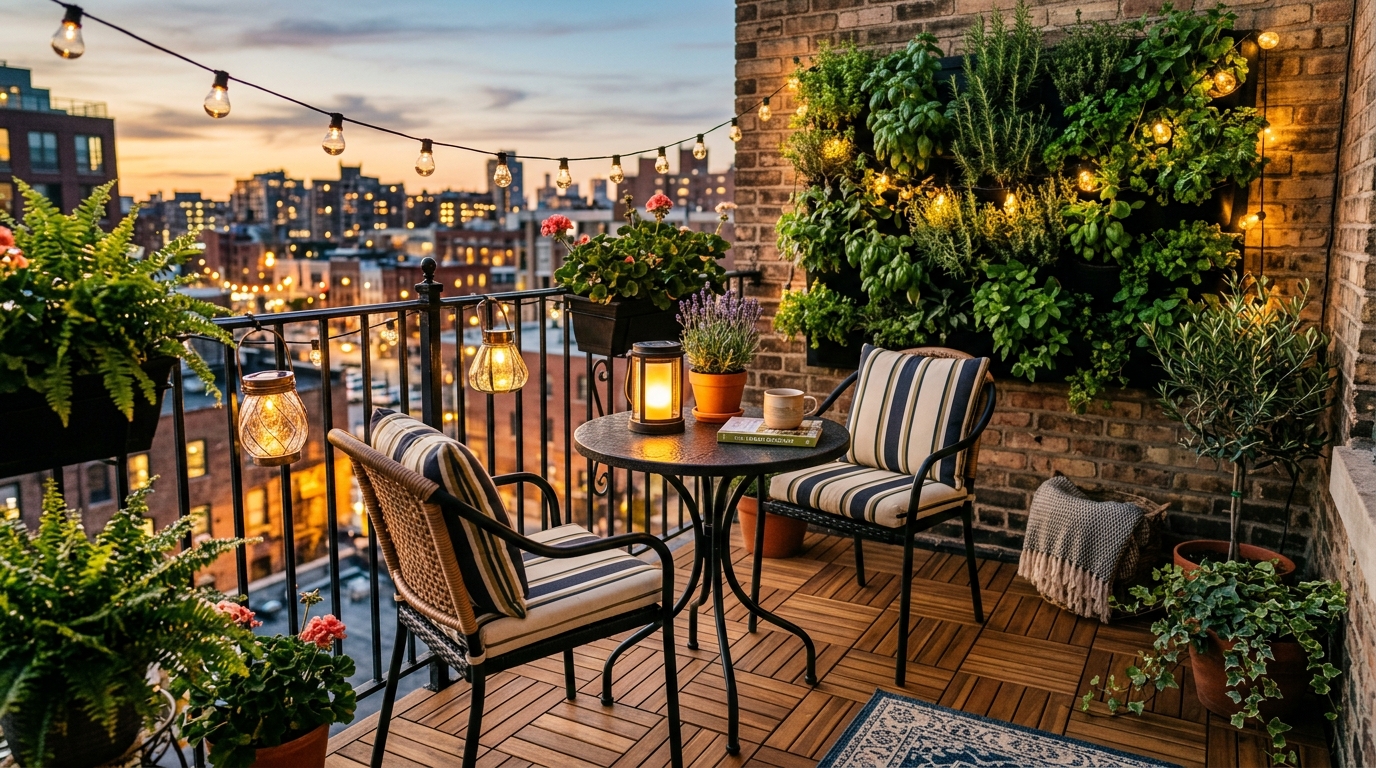
To landscape a rooftop terrace against high winds, arrange rectangular fiberglass trough planters (min. 18" depth) along exposed perimeter walls. Plant flexible, wind-shedding species like ornamental feather reed grass, bamboo, and boxwood, and install an automated solar-powered drip irrigation system with moisture sensors.
At a Glance: Key Takeaways
- Use heavy rectangular trough planters that resist tipping in 50+ mph wind gusts.
- Select wind-flexible plants that bend rather than snap under gale-force rooftop winds.
- Automate watering with a battery/solar drip irrigation timer to prevent rapid rooftop soil desiccation.
- Use lightweight potting mixes enriched with perlite and coconut coir to reduce structural floor load.
1. Rooftop Aerodynamics & Green Screen Engineering
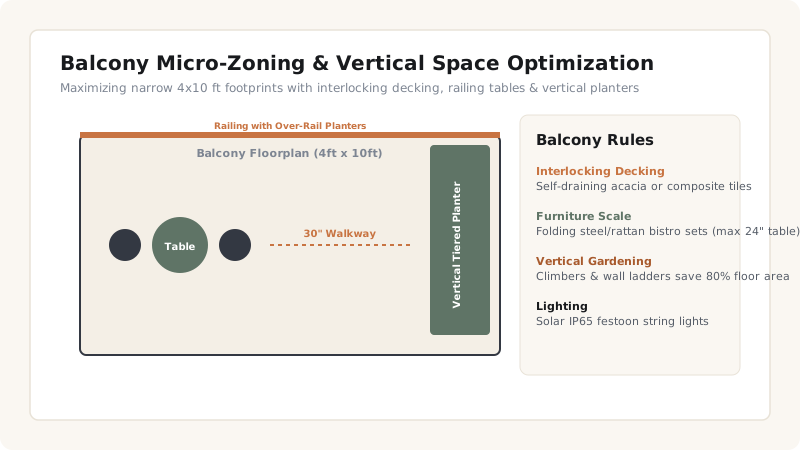
Solid glass or brick rooftop parapets create severe air turbulence: wind hits the solid surface, rolls over the top, and plunges downward, creating strong vortexes in the seating area. Permeable green screens made of layered plants filter wind gradually, dissipating up to 50% of wind energy without turbulence.
The best windbreak plant species for rooftops:
- Ornamental Grasses (Calamagrostis, Miscanthus): Narrow blades bend effortlessly in strong gusts without tearing.
- Dwarf Conifers & Boxwoods: Dense, waxy evergreen foliage that resists winter frost and intense summer UV radiation.
- Bamboo (Clumping Fargesia): Tall, flexible canes that provide 6-to-8 ft high privacy screening.
Terrace Planter Material Comparison
Use this reference table to calculate exact physical dimensions, ratios, and specifications before purchasing:
| Planter Material | Weight Empty | Wind Stability | Frost Resistance | Lifespan |
|---|---|---|---|---|
| Commercial Fiberglass | Lightweight (15 lbs) | High (when filled with soil) | 100% Frostproof | 15+ Years |
| Corten Weathering Steel | Heavy (50 lbs) | Extremely High | 100% Frostproof | 25+ Years |
| Reinforced Concrete | Very Heavy (100+ lbs) | Stormproof | High (Sealed) | 20+ Years |
| Terracotta / Ceramic | Moderate-Heavy | Moderate (Prone to crack) | Low (Freezes & breaks) | 3–5 Years |
Terrace Landscaping Constraints
Every successful decoration project must account for physical and environmental constraints:
Roof Load Bearing Capacity
Wet soil weighs approx 100 lbs per cubic foot. Distribute heavy planters over structural load-bearing perimeter walls rather than the center of the roof span.
Rapid Soil Desiccation
Sun and wind dry rooftop pots in hours during summer. Top soil with a 2-inch layer of cedar bark mulch to retain moisture.
Winter Root Freezing
Planters freeze from the outside inward. Use insulated double-walled planters or line planter interiors with 1-inch rigid foam board.
How to Build a Windbreak Terrace Garden
Execute this professional sequence to achieve flawless results without backtracking:
Position Trough Planters on Glides
Line up rectangular trough planters 2 inches off parapet walls on rubber feet to ensure water flow.
Install Filter Fabric and Drainage Layer
Place geotextile fabric over drainage holes followed by 2 inches of lightweight expanded clay pebbles.
Fill with Lightweight Soil Mix
Blend 50% composted potting soil, 30% perlite, and 20% coconut coir to minimize dead weight.
Plant Wind-Resistant Evergreens
Space root balls evenly and stake tall bamboos until root anchoring is established.
Run Drip Irrigation Tubing
Stake 0.25-inch emitter tubing at the base of every plant connected to a faucet timer.
Common Mistakes & Countermeasures
Avoid these costly errors that compromise aesthetics, ergonomics, and budget:
Using Heavy Garden Topsoil in Rooftop Pots
Project Execution Checklist
Track your physical progress. Checkboxes persist automatically on this device:
Frequently Asked Questions
How often should rooftop plants be watered in summer?
During peak summer heat and wind, rooftop containers require daily automated watering (15–20 minutes via drip irrigation).
Can I grow trees on a rooftop terrace?
Yes, small dwarf trees like Japanese Maple, Olive, or Serviceberry thrive in large 24x24 inch insulated fiberglass planters.