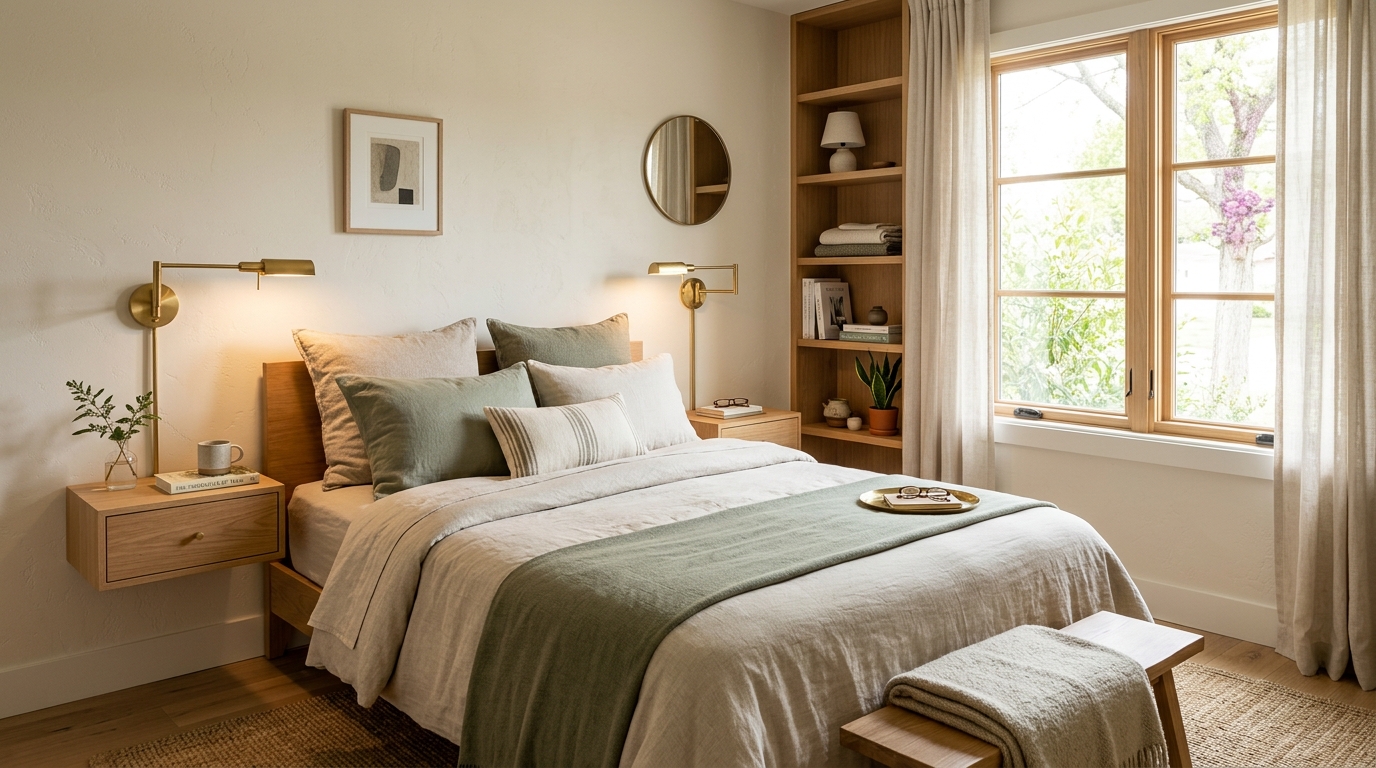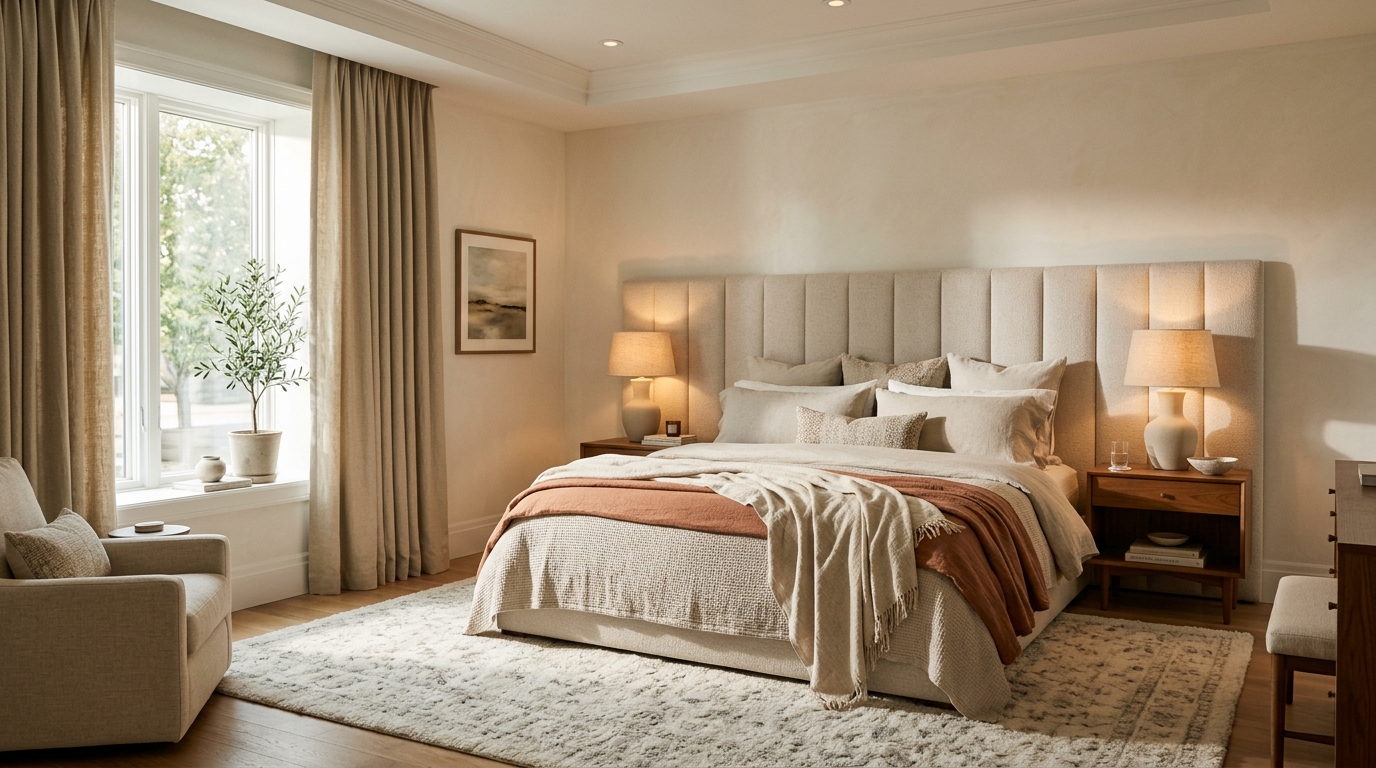
To decorate a bedroom, position the bed as the primary focal point on the longest uninterrupted wall with at least 30 to 36 inches of clearance on both sides. Place an 8x10 rug (Queen) or 9x12 rug (King) extending 24 to 36 inches past the foot and sides, install dimmable 2700K reading sconces at shoulder height, and layer breathable natural bedding (linen/cotton) in a soothing low-contrast palette.
At a Glance: Key Takeaways
- Maintain 30–36 inches of clear walking space on both sides of the bed for comfortable access and making sheets.
- Under Queen beds, use an 8x10 ft rug; under King beds, use a 9x12 ft rug extending 24–36" past the frame.
- Install 2700K warm dimmable reading sconces (500 lm) at 22–26 inches above mattress height to support circadian rest.
- Choose floor-to-ceiling 100% blackout drapery with thermal lining to optimize deep sleep cycles.
In-Depth Guides in this Directory
Explore specialized subtopic blueprints, technical dimensions, and execution checklists:
How to Decorate a Small Bedroom: Vertical Storage, Floating Units & Clearances
Maximize 9x10 and 10x12 small bedrooms with floating nightstands, under-bed storage drawers, vertical wall sconces, optical drapery tricks, and space plans.
How to Arrange Bedroom Furniture: Bed Placement, Door Swings & Traffic Pathways
Master bedroom furniture layouts with the command bed position, 36-inch wardrobe clearances, nightstand proportions, and airflow optimization.
How to Choose Bedroom Lighting: 2700K Dimmers, Reading Sconces & Glare-Free Ambience
Master bedroom lighting design with circadian 2200K-2700K color temperatures, bedside reading sconce heights, dimming systems, and glare elimination.
How to Decorate a Bedroom Wall: Headboard Framing, Art Heights & Acoustic Texture
Master bedroom wall decoration: safe art hanging rules above headboards, picture frame molding, acoustic slat paneling, and 57-inch gallery alignments.
How to Decorate a Bedroom on a Budget: Layered Bedding, Thrifted Accents & Warm Lights
Budget bedroom decorating blueprint: luxury bed layering hacks, DIY upholstered headboards, thrifted nightstand refinishing, and 2700K lighting tricks.
1. Bed Orientation & Architectural Clearances
The bed is the psychological and physical anchor of the bedroom. Its orientation dictates whether you feel secure and rested or exposed and restless. Follow these core architectural rules:
- The 'Command Position': Position the headboard against the longest solid wall in the room where you have a clear sightline of the entry door from the pillow, without having your head directly under an open window or directly in line with the doorway.
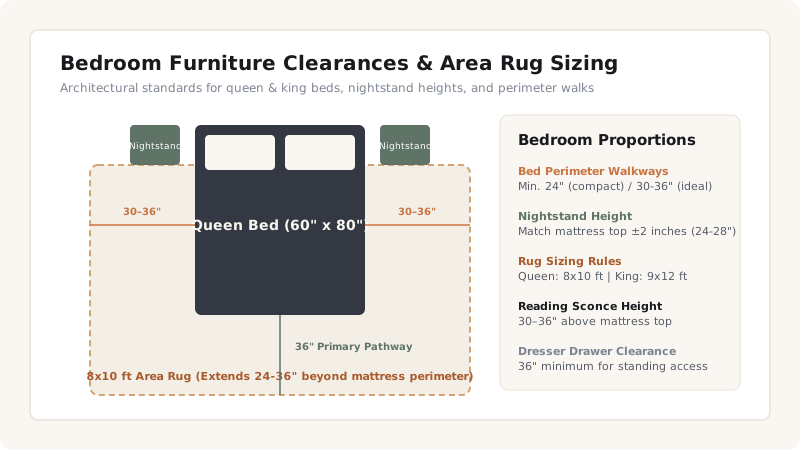
- Perimeter Walkway Clearances (30 to 36 inches / 75 to 90 cm): Maintain at least 30 inches between the sides of the mattress and flanking walls or dressers. This allows two people to walk comfortably and make the bed without straining against walls.
- Closet & Drawer Draw Clearances (36 inches / 90 cm): Ensure at least 3 feet of open space in front of dresser drawers and hinged wardrobe doors so you can stand and pull drawers to full extension.
2. Rug Sizing Formulas for Queen and King Beds
An undersized rug beneath a bed is one of the most common decorating errors, leaving cold floors where your feet land in the morning. Use these exact dimension standards:
- Queen Bed (60x80 inches): Requires an 8x10 ft area rug. Slide the rug under the lower two-thirds of the bed, starting just in front of the nightstands. This leaves 24 inches of warm, plush rug exposed on both sides of the bed and 36 inches at the footboard.
- King Bed (76x80 inches): Requires a 9x12 ft area rug (or an 8x10 placed horizontally under the bottom two-thirds). A 9x12 rug accommodates the entire bed frame and both nightstands with 30 inches of exposed rug perimeter.
- Under-Rug Pad: Always use a 1/2-inch dense felt rug pad beneath bedroom rugs for acoustic sound absorption and cloud-like walking comfort.
3. Circadian Lighting & Sleep-Optimized Acoustics
The primary functional objective of bedroom decoration is biological rest and recovery. Lighting and textiles must be engineered for healthy circadian rhythms:
- 2700K Low-Kelvin Standard: Eliminate all blue-spectrum light (4000K–6500K) from the bedroom. Blue light suppresses melatonin secretion and delays deep REM sleep. Use strictly 2200K–2700K warm incandescent/LED bulbs on smooth dimmers.
- Bedside Reading Sconces: Mount wall-mounted swing-arm sconces 22 to 26 inches above the top of the mattress (seated shoulder height). This provides 400 to 500 lumens directly onto reading material without casting glare across your partner's side of the bed.
- Acoustic Softening: Bare floors and bare drywall create echo chambers that amplify outside traffic noise. Layer thick velvet or heavy linen blackout drapes, an upholstered fabric headboard, and a dense wool rug to dampen ambient decibels by 40% to 60%.
Master Bedroom Specification Matrix
Use this reference table to calculate exact physical dimensions, ratios, and specifications before purchasing:
| Bed Size | Ideal Rug Size | Nightstand Width | Nightstand Height | Pillow Array |
|---|---|---|---|---|
| Twin / Full (38–54" W) | 6x9 ft | 18 to 22 inches | Level with mattress (±2") | 2 Standard + 1 Accent |
| Queen (60x80") | 8x10 ft | 24 to 28 inches | Level with mattress (±2") | 2 Euro Shams + 2 Queen + 1 Lumbar |
| King / Cal King (76x80") | 9x12 ft | 28 to 36 inches | Level with mattress (±2") | 3 Euro Shams + 2 King + 2 Accent |
| Small Room Queen | 6x9 ft (Turned) | Floating Sconce + Shelf | Level with mattress | 2 Sleeping + 1 Long Lumbar |
Bedroom Practical Constraints
Every successful decoration project must account for physical and environmental constraints:
Light Bleed and Sleep Quality
Standard curtains allow light leaks at the top and sides; install wrap-around French blackout curtain rods and hang drapes ceiling-to-floor with magnetic edge seals for total darkness.
Bedside Charging Cable Clutter
Tangled phone and watch cords ruin visual peace; choose nightstands with built-in interior drawer power strips or install recessed under-shelf cable clips.
Allergy and Dust Traps
Avoid high-pile shaggy polyester rugs that harbor dust mites; choose tightly woven flatweave wool, washable cotton rugs, and hypoallergenic natural latex/down pillows with zippered protectors.
10-Step Bedroom Sanctuary Design Sequence
Execute this professional sequence to achieve flawless results without backtracking:
Establish the Command Bed Position
Center the bed on the longest solid wall with 30–36 inches of open clearance on both sides.
Lay an 8x10 or 9x12 Area Rug with Dense Pad
Position the rug starting just in front of nightstands to provide 24–36" of warm perimeter landing.
Anchor with an Upholstered or Solid Wood Headboard
Choose a substantial headboard (48–56" height) to frame pillows and provide acoustic absorption.
Pair Nightstands at Mattress Surface Height
Select nightstands matching mattress height within ±2 inches for effortless reach.
Install Dimmable Bedside Sconces
Mount wall sconces 22–26 inches above the mattress with warm 2700K bulbs and independent switches.
Hang Ceiling-to-Floor Blackout Drapery
Mount drapery tracks near the ceiling line with thermal blackout lining to block 100% of morning glare.
Layer High-Thread-Count Natural Bedding
Use breathable washed linen or 400-thread-count percale cotton sheets with a lightweight down duvet.
Style Bed Pillow Array
Arrange 2 large Euro shams against the headboard, 2 sleeping pillows, and 1 textured 14x36" lumbar pillow.
Add Subtle Eye-Level Artwork or Mirror
Hang a calming landscape or textured textile art piece with center at 57 inches eye level.
Eliminate Screen and Cable Noise
Conceal charging cables inside nightstand drawers and remove intrusive blue-LED electronics.
Common Mistakes & Countermeasures
Avoid these costly errors that compromise aesthetics, ergonomics, and budget:
Buying Nightstands Too Short or Too Tall
Using Cold 4000K-5000K Lighting at Bedside
Overloading the Bed with 10 Decorative Pillows
Project Execution Checklist
Track your physical progress. Checkboxes persist automatically on this device:
Frequently Asked Questions
What is the best wall paint color for a restful bedroom?
Low-contrast, muted cool-warm tones—such as soft sage green, warm greige, dusty slate blue, or muted lavender-taupe—have been scientifically shown to lower heart rate and promote deeper sleep.
How high should an upholstered headboard be?
A standard headboard should measure 48 to 56 inches from the floor to the top edge. This ensures at least 18 to 24 inches of upholstered cushion is visible above propped-up sleeping pillows.
Can I put a desk or workspace in my bedroom?
If space requires a desk in the bedroom, visually zone it away from the bed (e.g., in a corner or behind a folding screen) and never face the bed while working to prevent subconscious sleep disruption.