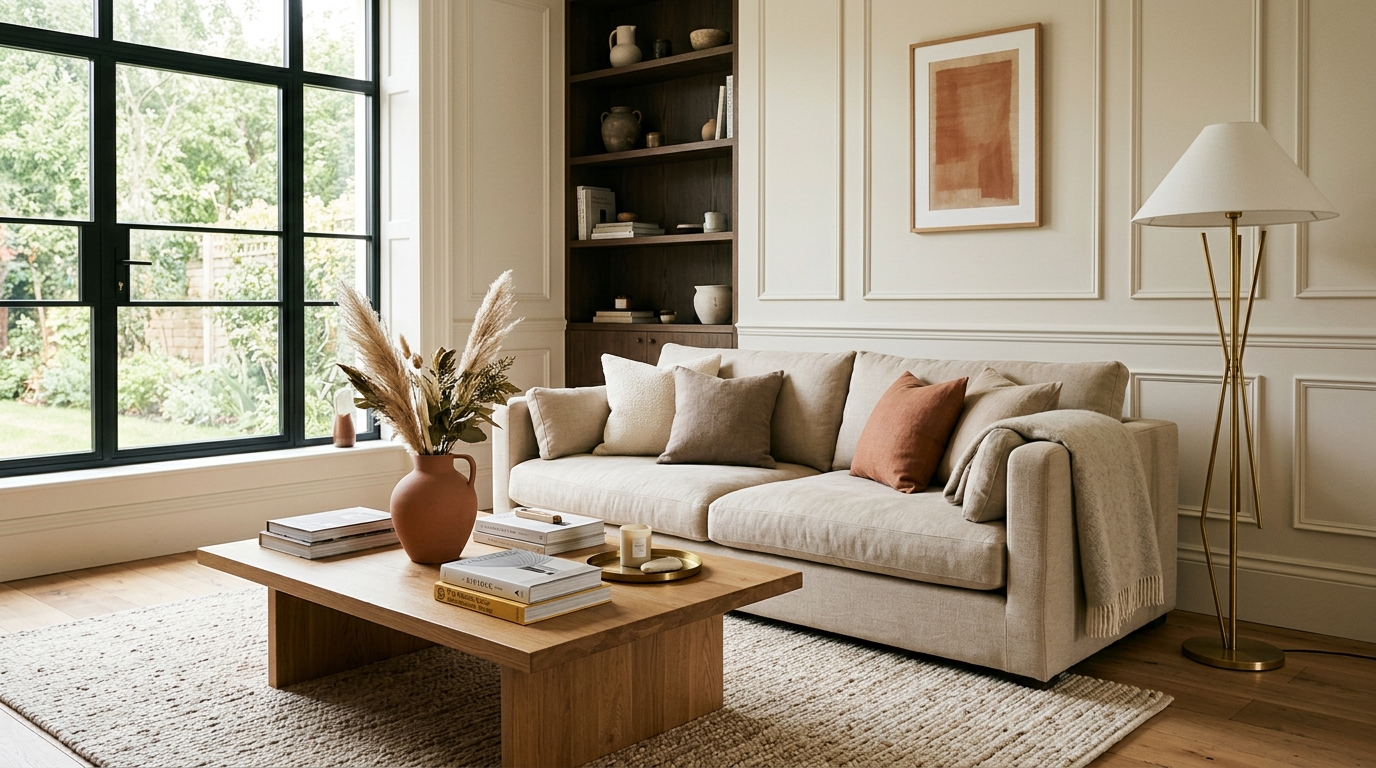
To add architectural texture to plain walls, install vertical acoustic wood slat panels (adding sound absorption and 3D depth) or mount solid hardwood floating shelves spaced 12 to 16 inches apart vertically. Style shelves using the 1/3 Rule: 1/3 books (vertical & horizontal), 1/3 sculptural ceramics, and 1/3 breathing negative space.
At a Glance: Key Takeaways
- Vertical wood slat acoustic paneling dampens room echoes while adding modern warmth.
- Solid steel hidden bracket rods must be screwed into wall studs to support 40+ lbs per shelf.
- Space floating shelves 12–16 inches apart vertically for balanced proportions.
- Apply the 1/3 Shelf Styling Formula: 1/3 books, 1/3 ceramics/plants, 1/3 empty negative space.
1. Modern Architectural Wall Textures
Flat drywall painted in a single color can feel sterile. Adding 3-dimensional texture creates shadow lines that transform the architectural personality of a room:
- Acoustic Oak Slat Paneling: Real wood veneer slats on recycled black polyester acoustic felt. Dampens harsh room reverberation while creating striking vertical shadow lines.
- Picture Frame Wainscoting (Box Moulding): Timeless Parisian elegance. Applied using lightweight primed pine or polyurethane moulding fastened with finishing nails.
- Thick Floating Hardwood Shelves: 2-inch thick solid white oak or walnut shelves with hidden steel rod brackets, perfect for open kitchen walls and living room alcoves.
Wall Texture Treatments Comparison
Use this reference table to calculate exact physical dimensions, ratios, and specifications before purchasing:
| Wall Treatment | Material Thickness | Acoustic Damping | Installation Time | Aesthetic Style |
|---|---|---|---|---|
| Acoustic Wood Slat Panels | 0.8 inches (Felt + Slat) | High (NRC 0.85) | 2 Hours (Screws / Glue) | Modern Scandinavian / Japandi |
| Picture Frame Box Moulding | 0.5 inches (Pine / Poly) | Low (Reflective) | 4 Hours (Nails + Caulk) | Modern Traditional / French Classic |
| Solid Oak Floating Shelves | 1.75 to 2.0 inches | Low | 1.5 Hours (Stud anchors) | Warm Contemporary / Farmhouse |
| Board & Batten Wainscoting | 0.5 inches MDF slats | Moderate | 5 Hours (Nails + Paint) | Craftsman / Transitional |
Wall Accents Constraints
Every successful decoration project must account for physical and environmental constraints:
Floating Shelf Sagging
Cheap hollow floating shelves with plastic brackets sag under heavy books. Only use solid wood shelves with solid steel welded bracket rods secured into at least two wall studs.
Caulking & Expansion Gaps
Wood moulding shrinks and expands with seasonal humidity. Always fill moulding joints with flexible paintable acrylic latex caulk, never rigid wood putty.
Outlet and Switch Cutouts
When installing wood slat panels, measure and cut precise electrical box openings with a multi-tool before applying wall adhesive.
How to Install and Style Heavy-Duty Floating Shelves
Execute this professional sequence to achieve flawless results without backtracking:
Locate and Mark Wall Studs
Use a magnetic or digital stud finder to locate 16-inch on-center wall studs.
Level and Mount Steel Bracket
Screw the heavy-duty hidden steel rod bracket directly into wall studs with 3-inch structural screws.
Slide Solid Wood Shelf onto Rods
Slide pre-drilled hardwood shelf onto bracket rods and secure bottom set-screws.
Maintain 12–16" Vertical Spacing
Repeat installation for upper shelves, maintaining 14 inches of vertical clearance between tiers.
Style with the 1/3 Formula
Arrange 1/3 books (mix vertical stacks and horizontal risers), 1/3 sculptural vases and trailing plants, and preserve 1/3 open negative space.
Common Mistakes & Countermeasures
Avoid these costly errors that compromise aesthetics, ergonomics, and budget:
Overcrowding Floating Shelves with Small Clutter
Project Execution Checklist
Track your physical progress. Checkboxes persist automatically on this device:
Frequently Asked Questions
How much weight can a floating shelf hold?
A solid hardwood shelf mounted into two wall studs using heavy-duty solid steel rod brackets can safely support 40 to 60 lbs per stud (80–120 lbs total).
How do you style books on floating shelves?
Group books in small clusters of 3 to 5: place some vertically between stone bookends and stack others horizontally to serve as risers for small ceramic objects.