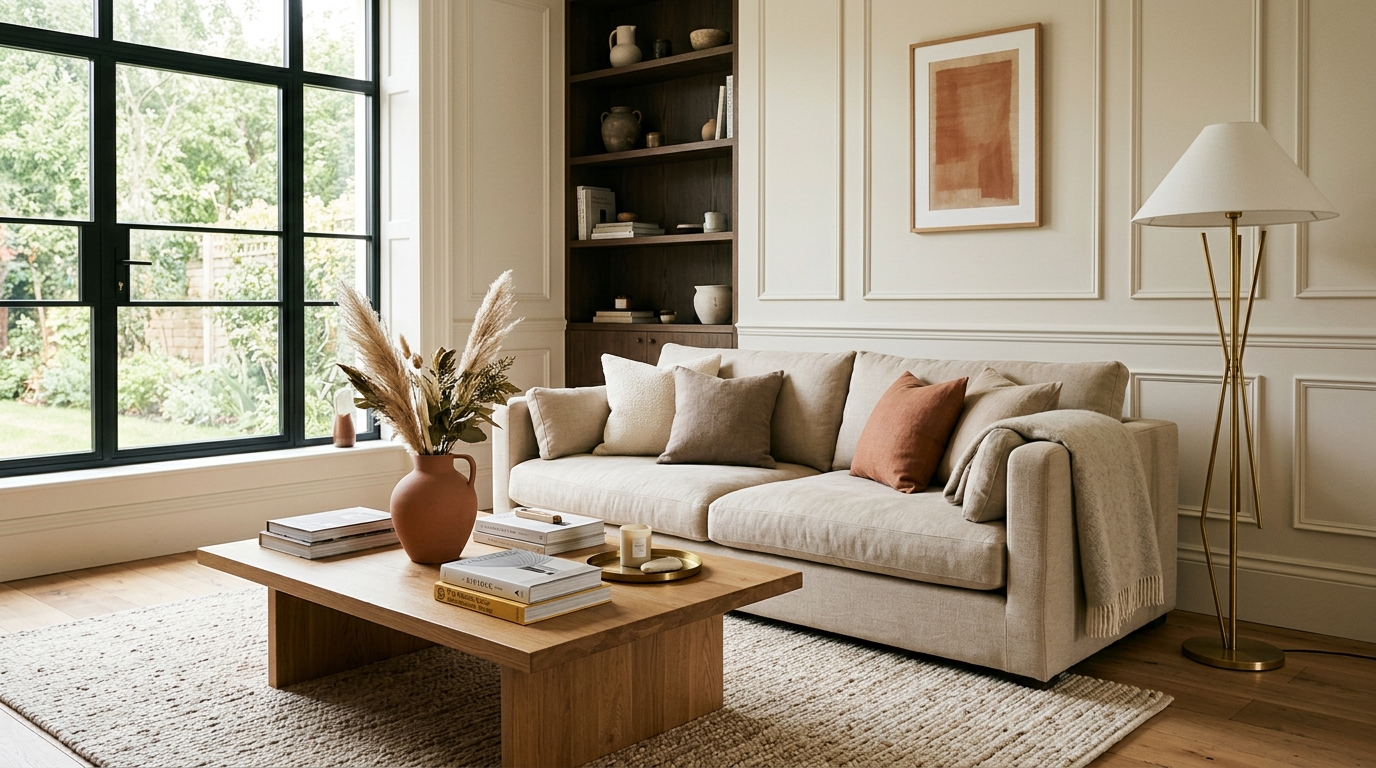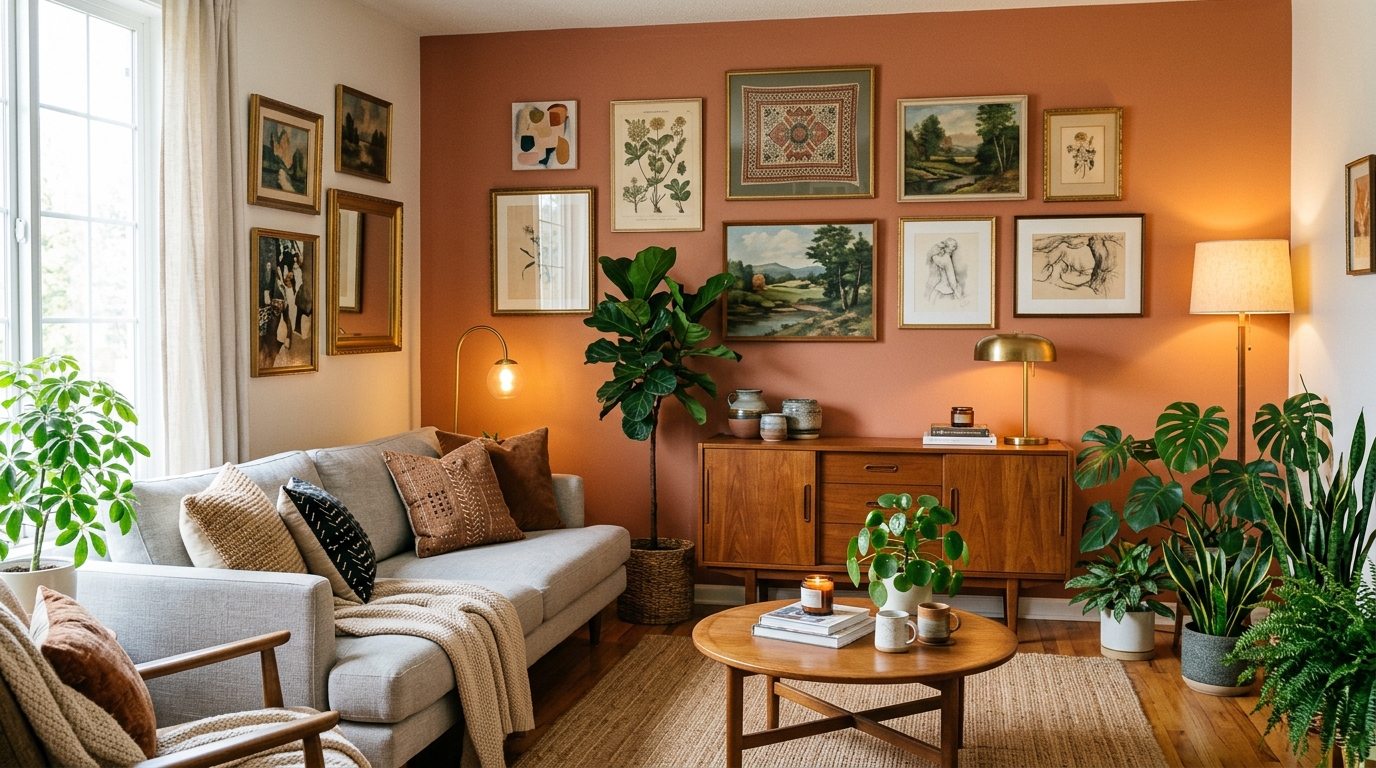
To select and combine wood furniture successfully, use the Janka Hardness Scale to specify durable hardwoods (White Oak: 1,360; Hard Maple: 1,450; Walnut: 1,010) for high-impact tables and floors. Mix up to 2–3 wood species in a room by matching their underlying undertones (warm amber vs cool grey) while varying grain density.
At a Glance: Key Takeaways
- Consult the Janka Hardness Scale: higher numbers resist dents and pet claw scratches.
- White Oak and Walnut are the premier hardwoods for modern interior durability and grain beauty.
- Mix wood species by matching undertones rather than trying to find identical color matches.
- High-quality architectural wood veneers on multi-ply cores resist warping better than solid wood in humid environments.

1. The Janka Hardness Scale & Core Decorative Species
Wood brings organic soul and grounding warmth to interior spaces. Understanding wood species prevents purchasing soft woods that dent under writing pens or delaminate under moisture:
- White Oak (Janka 1,360): Exceptional hardness, prominent open grain, and natural water-resistant tannins. The benchmark for modern Scandinavian and Transitional design.
- American Black Walnut (Janka 1,010): Medium-hard, rich chocolate-brown heartwood with elegant swirling grain. The premier choice for Mid-Century Modern and luxury statement credenzas.
- Hard Maple (Janka 1,450): Ultra-dense, fine tight grain with subtle blond tones. Extremely durable for heavy-use dining tables and cutting boards.
- Pine / Softwoods (Janka 380–690): Readily dents with fingernails; suitable only for rustic farmhouse accents, not high-traffic dining tables.
Hardwood Species Decorative Specs Matrix
Use this reference table to calculate exact physical dimensions, ratios, and specifications before purchasing:
| Wood Species | Janka Hardness Rating | Grain Pattern | Natural Undertone | Best Decorative Use |
|---|---|---|---|---|
| White Oak | 1,360 lbf (High) | Open, prominent ray fleck | Neutral to Warm Tan | Flooring, dining tables, vanities |
| Black Walnut | 1,010 lbf (Medium-High) | Flowing, wavy luxury grain | Deep chocolate / Purple-brown | Statement credenzas, coffee tables |
| Hard Sugar Maple | 1,450 lbf (Very High) | Subtle, closed tight grain | Light cream to blonde | Heavy-use dining tables & butcher blocks |
| Teak (Grade-A) | 1,070 lbf (High Oil) | Straight dense grain | Warm golden honey | Outdoor furniture, bathrooms, patio decks |
| Pine (Softwood) | 420–690 lbf (Low) | Knotted, wild rustic grain | Yellow-orange | Rustic wall cladding only (dents easily) |
Wood Material Constraints
Every successful decoration project must account for physical and environmental constraints:
Solid Wood Seasonal Expansion
Solid wide-plank wood tables expand and contract across the grain by up to 1/4 inch between winter and summer. Look for tabletop expansion clips (figure-8 fasteners) underneath, never rigid glue blocks.
Sunlight UV Darkening / Lightening
Walnut naturally lightens under sunlight over years, while cherry and oak darken to rich amber. Rotate tabletop decor occasionally to prevent uneven sun shadow marks.
Direct Water Exposure
Unsealed wood absorbs standing water, raising the grain and causing dark water rings. Apply a matte ceramic hard-wax oil (like Osmo Polyx-Oil) for waterproof protection that preserves natural matte texture.
How to Mix Multiple Wood Tones in One Room
Execute this professional sequence to achieve flawless results without backtracking:
Identify Dominant Wood (60–70%)
Identify the primary wood in your flooring or largest furniture piece (e.g., natural white oak).
Determine the Dominant Undertone
Determine whether the dominant wood undertone is warm (golden/yellow), neutral (greige/tan), or cool.
Select 1 Contrasting Secondary Wood
Choose a secondary wood that is at least 2 shades darker or lighter with shared undertones (e.g., walnut with white oak).
Bridge Woods with a Multi-Tonal Piece
Incorporate an area rug, artwork, or woven basket containing both light and dark wood tones to visually connect the species.
Repeat Secondary Wood Twice
Ensure the secondary wood appears in at least two places (e.g., walnut coffee table + walnut picture frames).
Common Mistakes & Countermeasures
Avoid these costly errors that compromise aesthetics, ergonomics, and budget:
Trying to Match All Woods Exactly (And Failing)
Project Execution Checklist
Track your physical progress. Checkboxes persist automatically on this device:
Frequently Asked Questions
Is solid wood always better than engineered wood veneer?
Not always. For wide cabinetry doors and large dining tables, high-grade architectural hardwood veneer over multi-ply Baltic birch core is superior to solid wood because it will never warp, cup, or crack from seasonal humidity swings.
How do you remove a white heat mark from a wood table?
Place a dry clean cotton towel over the white heat ring, set a household iron to medium dry heat (no steam), and iron gently over the towel for 15–20 seconds to evaporate trapped moisture from the lacquer.