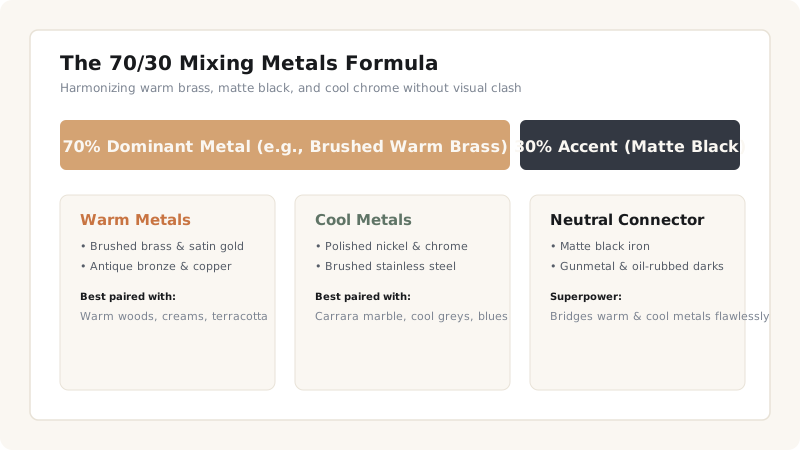
To mix metal finishes like an interior designer, follow the 70/30 rule: choose one dominant metal finish for 70% of your fixtures (e.g., brushed brass for cabinet hardware and faucets) and one complementary accent metal for 30% (e.g., matte black for light fixtures and mirror frames). Never mix more than 2 to 3 metal finishes in a single room.
At a Glance: Key Takeaways
- Apply the 70/30 rule: 1 dominant metal across 70% of fixtures + 1 accent metal for 30%.
- Categorize metals by temperature: Warm (Brass, Bronze, Copper) vs Cool (Chrome, Nickel).
- Matte black acts as a universal neutral connector that bridges warm and cool metals seamlessly.
- Vary metal textures: combine satin brushed finishes with textured forged iron.
1. The 70/30 Metal Proportional Rule & Temperature Families
Matching every single metal fixture in a house to the exact same chrome or satin nickel finish makes a home look like a spec-built rental. Professional interior design thrives on metal tension and layering:
- Warm Metal Family: Satin brass, unlacquered living brass, antique bronze, and copper. Adds psychological warmth, historic gravitas, and luxury.
- Cool Metal Family: Polished nickel, brushed stainless steel, and chrome. Adds crisp, clean, reflective precision.
- The Neutral Connector (Matte Black): Blackened steel and matte black iron have no color temperature bias; they ground spaces and allow warm brass and cool nickel to coexist in perfect harmony.
Metal Pairing Combinations Guide
Use this reference table to calculate exact physical dimensions, ratios, and specifications before purchasing:
| Dominant 70% Metal | Complementary 30% Accent | Bridging Connector | Best Interior Aesthetic | Visual Tone |
|---|---|---|---|---|
| Satin Brushed Brass | Matte Black Steel | Smoked glass / Walnut wood | Modern Transitional / Japandi | Warm, sophisticated, grounded |
| Polished Nickel | Antique Oil-Rubbed Bronze | White marble / Carrara | Classic Parisian / Traditional | Reflective, rich, timeless |
| Matte Black Iron | Warm Honey Brass | White oak / Natural linen | Contemporary Organic Modern | High-contrast architectural edge |
| Brushed Stainless Steel | Polished Chrome Accents | Charcoal quartz / Concrete | Modern Industrial / Minimalist | Crisp, sanitary, ultra-modern |
Metal Selection Constraints
Every successful decoration project must account for physical and environmental constraints:
Mismatched 'Gold' Finishes from Different Brands
One manufacturer's 'brushed brass' is yellow-green, while another's is copper-pink. Always order samples from the same brand family for matching suites of cabinet pulls.
Hard Water Spots on Polished Chrome
High-shine polished chrome shows water droplets and limescale instantly. Specify brushed finishes (brushed nickel or satin brass) in high-use family bathrooms.
Living Finish Patina Maintenance
Unlacquered brass naturally tarnishes and darkens with hand oils. If you want permanent consistent color, choose PVD (Physical Vapor Deposition) coated brass.
How to Coordinate Mixed Metals Across a Room
Execute this professional sequence to achieve flawless results without backtracking:
Select 70% Dominant Metal
Choose your primary finish for all repetitive functional hardware (cabinet pulls, door handles, main faucet).
Select 30% Accent Metal
Choose a high-contrast accent finish for focal fixtures (ceiling chandelier, mirror frame, wall sconces).
Distribute Metals by Vertical Plane
Keep all low-level cabinet hardware in the dominant metal (brass) and upper lighting fixtures in the accent metal (matte black).
Repeat Accent Metal at Least Twice
Never leave a single lone metal fixture; if using black light fixtures, pair with a black mirror frame or table base.
Cap Room at Maximum 2 to 3 Finishes
Never introduce a fourth metal into the same room to prevent visual clutter.
Common Mistakes & Countermeasures
Avoid these costly errors that compromise aesthetics, ergonomics, and budget:
Mixing Polished Chrome and Polished Nickel Together
Project Execution Checklist
Track your physical progress. Checkboxes persist automatically on this device:
Frequently Asked Questions
Can you mix black and brass hardware in the same kitchen?
Yes! Black and brass are the most popular designer combination. Use warm brass for cabinet handles and faucets, and matte black for light fixtures, counter stools, and window trim.
What is PVD finish on metal fixtures?
PVD (Physical Vapor Deposition) is a high-tech vacuum coating process that molecularly bonds the finish to the metal, making it completely immune to corrosion, scratching, and tarnishing.