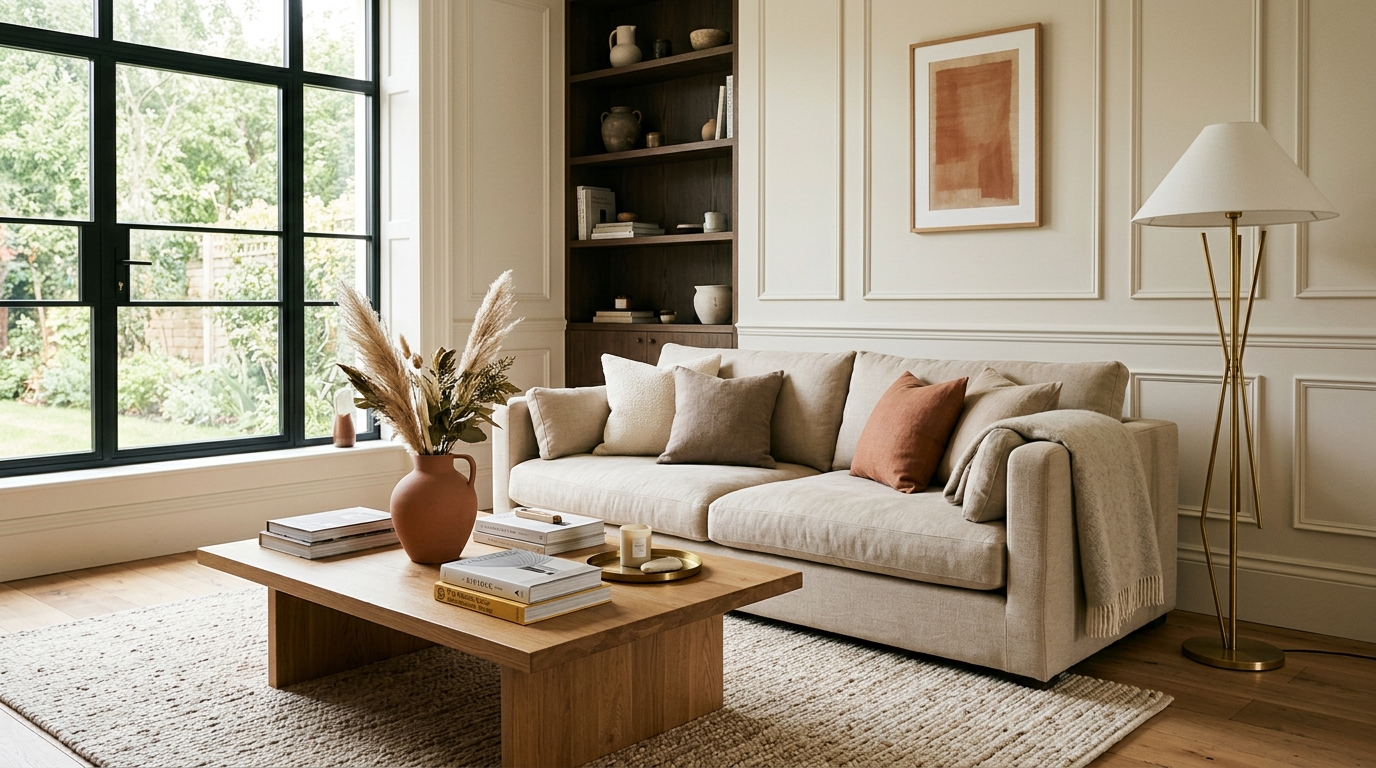
To successfully mix modern and traditional decor, use the 80/20 rule: commit 80% of the room to one dominant style (e.g., clean modern architectural lines) and 20% to the contrasting style (e.g., antique carved wood pieces, vintage rugs, or ornate gilded frames). Bridge the two styles using a restrained color palette, unified metal finishes, and natural organic materials.
At a Glance: Key Takeaways
- Apply the 80/20 balance: 80% clean contemporary foundation + 20% antique/vintage character.
- Unify disparate historical eras using a consistent 2-to-3 color restrained palette.
- Pair opposites: place an ultra-modern streamlined light fixture above an antique carved dining table.
- Bridge warm antique wood patinas with modern black iron, brass, and textured linen upholstery.
1. The 80/20 Transitional Design Rule
Mixing design eras creates a home that looks collected over a lifetime rather than purchased from a single catalog showroom. However, an even 50/50 split creates visual confusion where neither style dominates. The secret to effortless harmony is the 80/20 Rule:
- 80% Dominant Foundation: Choose one style to establish the room's primary architecture, large furniture silhouettes, and main envelope. Most commonly, this is clean-lined contemporary design (streamlined tailored sofas, modern minimalist lighting, crisp architectural trim).
- 20% Contrasting Character: Introduce curated focal points from the opposing era. This includes a rustic 19th-century French farmhouse coffee table, an antique Turkish Oushak wool rug, a gilded rococo wall mirror, or oil-painted vintage portraits.
The intentional friction between crisp modern precision and aged, imperfect antique patina creates captivating visual tension.
2. Harmonizing Wood Tones and Metal Finishes
The most common anxiety when mixing styles is clashing wood finishes. Matching all wood tones makes a room feel flat and sterile. Mixing wood tones successfully requires matching the undertone, not the exact stain darkness:
- Warm Wood Harmonization: Antique walnut, aged oak, warm cherry, and rattan share warm golden/amber undertones. They pair seamlessly with modern brass hardware and creamy linen fabrics.
- Cool Wood Harmonization: Ash, white oak, black ebonized timber, and weathered gray wood share cool neutral undertones. They pair cleanly with blackened iron and brushed steel.
- The 3-Wood Limit: Restrict any single room to a maximum of 2 to 3 distinct wood species to maintain cohesion without chaos.
3. The 'Pairing Opposites' Composition Technique
To make the combination look intentional rather than accidental, directly juxtapose opposite design elements:
- Modern Art in Antique Frames: Place an abstract minimalist color-block canvas inside a heavy, ornate 19th-century gold leaf frame.
- Contemporary Lighting Over Vintage Tables: Suspend a geometric mid-century brass mobile chandelier directly above a rustic reclaimed wood pedestal dining table.
- Traditional Rug Under Modern Sectional: Anchor a low-slung, boxy contemporary modular sofa on a distressed vintage floral Persian or Turkish wool runner.
Modern vs. Traditional Mixing Blueprint
Use this reference table to calculate exact physical dimensions, ratios, and specifications before purchasing:
| Room Anchor | Traditional Element (20%) | Modern Element (80%) | Connecting Bridge | Visual Result |
|---|---|---|---|---|
| Living Seating | Vintage distressed Persian rug | Low-profile tailored modern sofa | Solid cream linen pillows | Warm, grounded, sophisticated |
| Dining Zone | Heirloom rustic oak dining table | Modern cantilevered matte chairs | Matte black pendant lighting | Architectural focal friction |
| Entryway Foyer | Antique gilded rococo mirror | Minimalist fluted console table | Brushed brass modern vase | Dramatic high-contrast welcome |
| Bedroom Suite | Antique carved wooden nightstands | Streamlined upholstered platform bed | 2700K modern brass wall sconces | Quiet, curated luxury |
Transitional Decor Constraints
Every successful decoration project must account for physical and environmental constraints:
Antique Furniture Scale
Vintage Victorian and Edwardian pieces are often bulkier and taller than modern low-profile furniture; measure clearance to ensure they don't overpower 8-foot ceiling rooms.
Fabric Fragility
Antique upholstery is often delicate and dusty; reupholster heirloom chairs in modern high-performance linen or velvet with stain resistance.
Color Scheme Restraint
When mixing diverse eras and textures, keep the color palette strictly limited to 2 or 3 quiet neutral shades so the room doesn't feel cluttered.
10-Step Plan to Blend Modern and Traditional Decor
Execute this professional sequence to achieve flawless results without backtracking:
Choose Your 80% Dominant Foundation
Decide whether your base shell will be modern (clean lines, neutral walls) or traditional (classic millwork).
Select 2 to 3 Star Vintage Anchor Pieces
Choose your 20% character pieces: an antique credenza, a gilded mirror, or a vintage tribal rug.
Commit to a 3-Color Restrained Palette
Unify the era differences with a quiet palette (e.g., warm alabaster, soft charcoal, and olive green).
Audit Wood Undertones
Group furniture by warm (walnut/oak) or cool (ash/black) undertones to prevent clashes.
Pair Modern Seating with Antique Tables
Anchor a clean modern sofa beside a distressed antique chest or rustic coffee table.
Install Modern Architectural Lighting
Add sleek brass or black metal light fixtures to prevent vintage rooms from feeling like antique shops.
Juxtapose Art and Frames
Frame modern line drawings in classic wood frames, or vintage oil landscapes in minimal metal frames.
Layer Organic Tactile Textures
Introduce heavy woven linen drapery, wool boucle throws, and smooth marble tabletops.
Standardize Metal Hardware
Use unlacquered brass or matte black consistently across modern and vintage pieces alike.
Step Back and Assess the 80/20 Ratio
If the space feels like a museum, remove two vintage trinkets; if it feels sterile, add a rustic wooden bowl.
Common Mistakes & Countermeasures
Avoid these costly errors that compromise aesthetics, ergonomics, and budget:
The 50/50 Style Stalemate
Using Too Many Competing Wood Species
Overcomplicating the Color Scheme
Project Execution Checklist
Track your physical progress. Checkboxes persist automatically on this device:
Frequently Asked Questions
What is the difference between Transitional and Eclectic design?
Transitional design is the disciplined, structured blend of classic traditional and clean modern elements within a calm, neutral color palette. Eclectic design is a broader, high-energy mix of multiple historical eras, vibrant colors, and global textures.
Can I put an antique crystal chandelier in a modern minimalist room?
Yes! An ornate crystal chandelier suspended in a clean, minimalist white room with modern furniture creates a breathtaking designer statement, provided the rest of the room remains clutter-free.
How do I make heirloom dark wood furniture look modern?
Pair dark heirloom wood with crisp white walls, replace dated ornate handles with modern brass pulls, and place contemporary lighting and abstract art nearby.