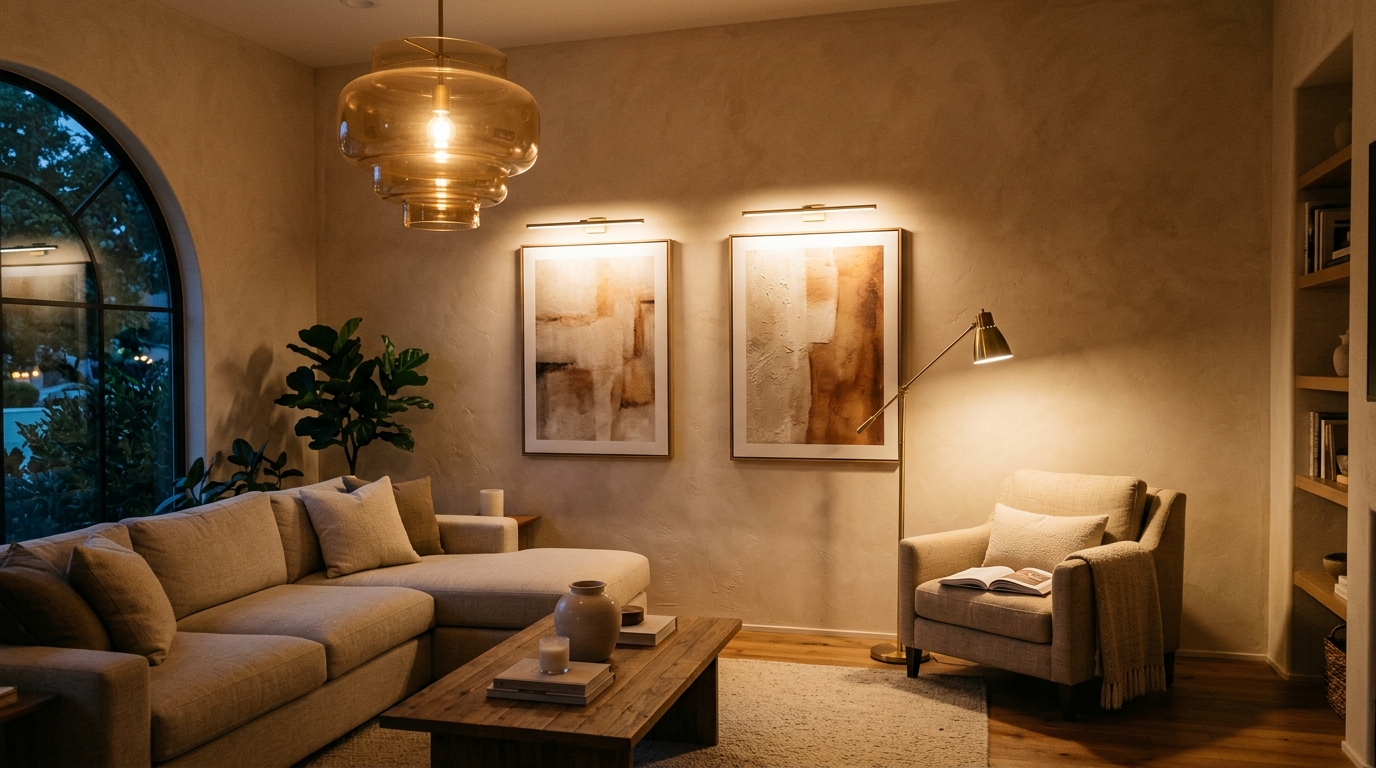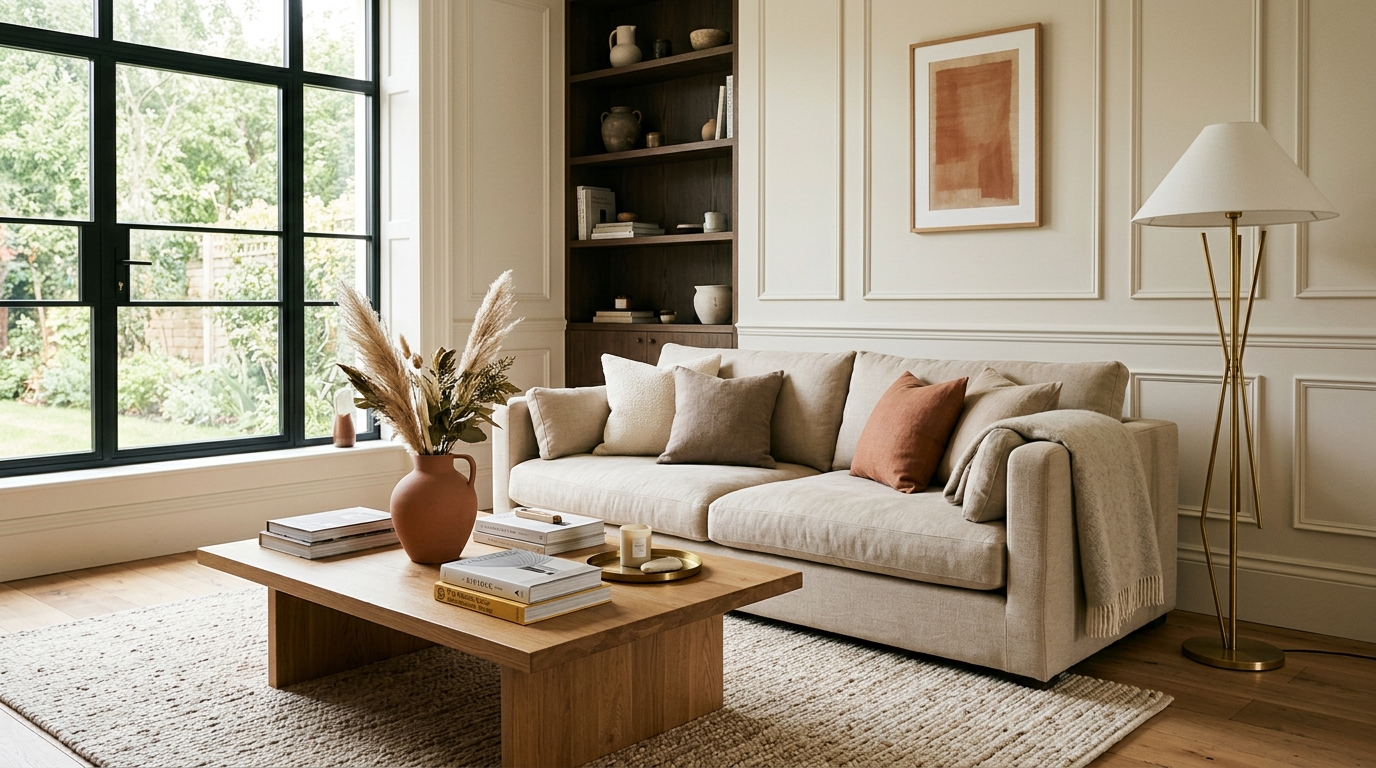
The most common home decoration mistakes are: 1) Using undersized 'postage stamp' rugs (furniture must anchor on the rug), 2) Hanging wall art too high (center must be at 57–60 inches eye-level), 3) Relying on harsh 5000K overhead ceiling lights instead of 2700K layered lamps, 4) Pushing all furniture against perimeter walls, and 5) Buying matching showroom furniture sets.
At a Glance: Key Takeaways
- Hanging wall art too high is the #1 visual mistake: center art strictly at 57–60 inches from the floor.
- Never use 5x7 rugs in living rooms; an 8x10 or 9x12 is required so front legs of all seating rest on the weave.
- Avoid matching showroom sets; mix wood patinas, metal accents, and upholstery textures for curated depth.
- Pull seating 12–18 inches off perimeter walls to create cozy conversational clusters and open corridors.
1. Scale Errors: The 'Postage Stamp' Rug and Micro-Furniture
The most frequent error in residential interior decoration is incorrect scale. Homeowners often buy small rugs and petite furniture out of fear of overcrowding a room, but undersized pieces actually make spaces feel smaller, fragmented, and cheap:
- The 'Floating Postage Stamp' Rug: Placing a 5x7 ft rug in the middle of a 12x16 ft living room with no furniture touching it creates an island effect that shrinks the room. The Fix: Upgrade to an 8x10 ft or 9x12 ft rug. At minimum, the front legs of every sofa and chair must sit securely on top of the rug.
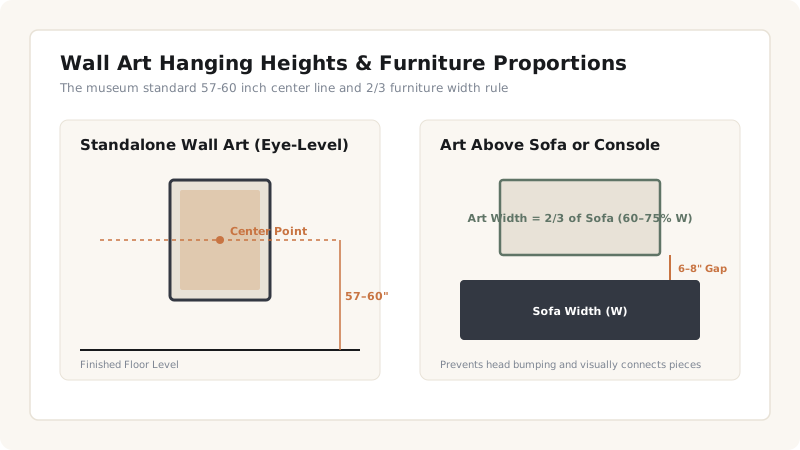
- The Tiny Wall Art Syndrome: A single 8x10 frame floating on a large 12-foot drywall expanse looks like an afterthought. The Fix: Artwork above furniture must span 60% to 75% (two-thirds) of the furniture's total width, or be arranged in a tightly spaced gallery grid (2 to 3 inches between frames).
2. Height Blunders: Art Too High & Curtains Too Low
Improper vertical positioning destroys architectural proportions. Two non-negotiable measurement standards correct 90% of visual imbalance:
- Art Hung at Sky-High Heights: People instinctively hang art near ceiling height or at standing eye level for very tall occupants. The Museum Standard: The vertical center of any standalone piece must be exactly 57 to 60 inches from the finished floor level. If hanging above a sofa or headboard, leave a tight 6 to 8-inch gap between the bottom of the frame and the top of the furniture.
- Curtains Mounted Directly on Window Frames: Mounting curtain rods on top of the window trim blocks valuable natural daylight and visually lowers the ceiling. The Fix: Mount curtain rods 4 to 6 inches below the ceiling (or crown molding) and extend the rod 10 to 12 inches wider than the window casing on each side.
3. Lighting Sins & The 'Matching Set' Catalog Trap
Two critical errors rob homes of personality and emotional comfort:
- The 5000K 'Hospital' Ceiling Glare: Installing cool-white or daylight LED bulbs (4000K–5000K) in living rooms and bedrooms triggers biological alertness, flattens room textures, and washes out skin tones. The Fix: Standardize every residential bulb to 2700K Warm White with CRI >90, and rely on 3 layers of perimeter lamps.
- The 5-Piece Showroom Furniture Package: Buying a matching sofa, loveseat, coffee table, and end table set makes a home look like a retail warehouse. The Fix: Mix materials. Pair a tailored linen sofa with a rich cognac leather armchair, a solid oak coffee table, and blackened iron side tables.
Decorating Mistakes & Professional Countermeasures
Use this reference table to calculate exact physical dimensions, ratios, and specifications before purchasing:
| Common Mistake | Visual / Physical Consequence | Professional Standard Fix | Execution Cost |
|---|---|---|---|
| Undersized 5x7 Rug | Shrinks room, creates tripping hazard | Upgrade to 8x10/9x12 (Front legs anchored) | Medium ($$) |
| Art Hung at 70" Height | Disconnects art from furniture & eye level | Lower to 57–60" centerline from floor | Zero Cost (5 mins) |
| Curtain Rod on Window Trim | Truncates ceiling height & cuts daylight | Mount rod 4-6" above frame, 10" wider | Zero Cost (Re-drill) |
| 5000K Daylight Bulbs | Sterile, cold, hospital-like atmosphere | Replace with 2700K high CRI (>90) LEDs | Low ($) |
| Perimeter Furniture Wall Hugging | Dead, cavernous center; awkward talking | Float sofa 12–18" off walls | Zero Cost (10 mins) |
Practical Execution Constraints
Every successful decoration project must account for physical and environmental constraints:
Wall Stud and Anchor Limitations
When lowering heavy wall art to 57 inches, use heavy-duty toggle bolts or screw directly into wood studs rather than relying on weak plastic drywall plugs.
Baseboard Radiator Clearances
When floating furniture 12 inches off walls, ensure upholstery does not rest against active hydronic or electric baseboard heaters (maintain 6" clearance).
Standard Drapery Lengths
Standard store-bought drapery comes in 84", 96", and 108" lengths; never buy 84" panels for 8-foot ceilings because mounting the rod high requires 96" panels hemmed to kiss the floor.
10-Step Room Audit and Mistake-Correction Protocol
Execute this professional sequence to achieve flawless results without backtracking:
Measure Art Centerlines with a Tape Measure
Measure from the floor to the vertical center of all wall art; lower any piece higher than 60 inches.
Check Furniture-to-Art Gaps
Ensure the bottom edge of frames over sofas and headboards sits 6 to 8 inches above the furniture back.
Audit All Light Bulb Kelvin Ratings
Check the stamp on every light bulb; replace all 4000K/5000K bulbs with 2700K warm white.
Inspect Rug Leg Anchorage
Verify that all front legs of seating furniture rest on the area rug; pull the rug forward if necessary.
Re-Mount Curtain Rods High and Wide
Move rods 4 to 6 inches above window frames and extend 10 inches past casings.
Pull Sofas Off Drywall Perimeters
Float major seating 12 to 18 inches off walls to create conversational intimate groupings.
Break Up Matching Furniture Suites
Move a matching end table or loveseat into a different room to introduce material variety.
Clear 40% of Small Surface Trinkets
Remove tiny knick-knacks and replace them with single, large sculptural bowls or books.
Add Plug-In Dimmers to Table Lamps
Install inline slider dimmers on lamps to control evening light levels.
Check 36-Inch Walking Pathway Clearances
Walk normal entry and exit paths to ensure no furniture corners obstruct circulation.
Common Mistakes & Countermeasures
Avoid these costly errors that compromise aesthetics, ergonomics, and budget:
The 'High-Water' Curtain Mistake
Relying on a Single Overhead Light Switch
Ignoring Traffic Bottlenecks
Project Execution Checklist
Track your physical progress. Checkboxes persist automatically on this device:
Frequently Asked Questions
Why is 57 inches the standard height for hanging artwork?
57 inches represents average human eye level and is the international exhibition standard used by museums (Louvre, MoMA, Tate). It ensures art is comfortably viewed whether standing or seated.
What size rug do I need for an 84-inch standard sofa?
An 84-inch sofa requires an 8x10 ft area rug at minimum, allowing at least 18 inches of rug to extend past each side of the sofa for proportional balance.
How can I fix a room that feels cold and uninviting?
Swap all cool white bulbs for 2700K warm lights, add a large textured wool area rug, hang floor-to-ceiling linen curtains, and introduce warm organic wood and brass accents.