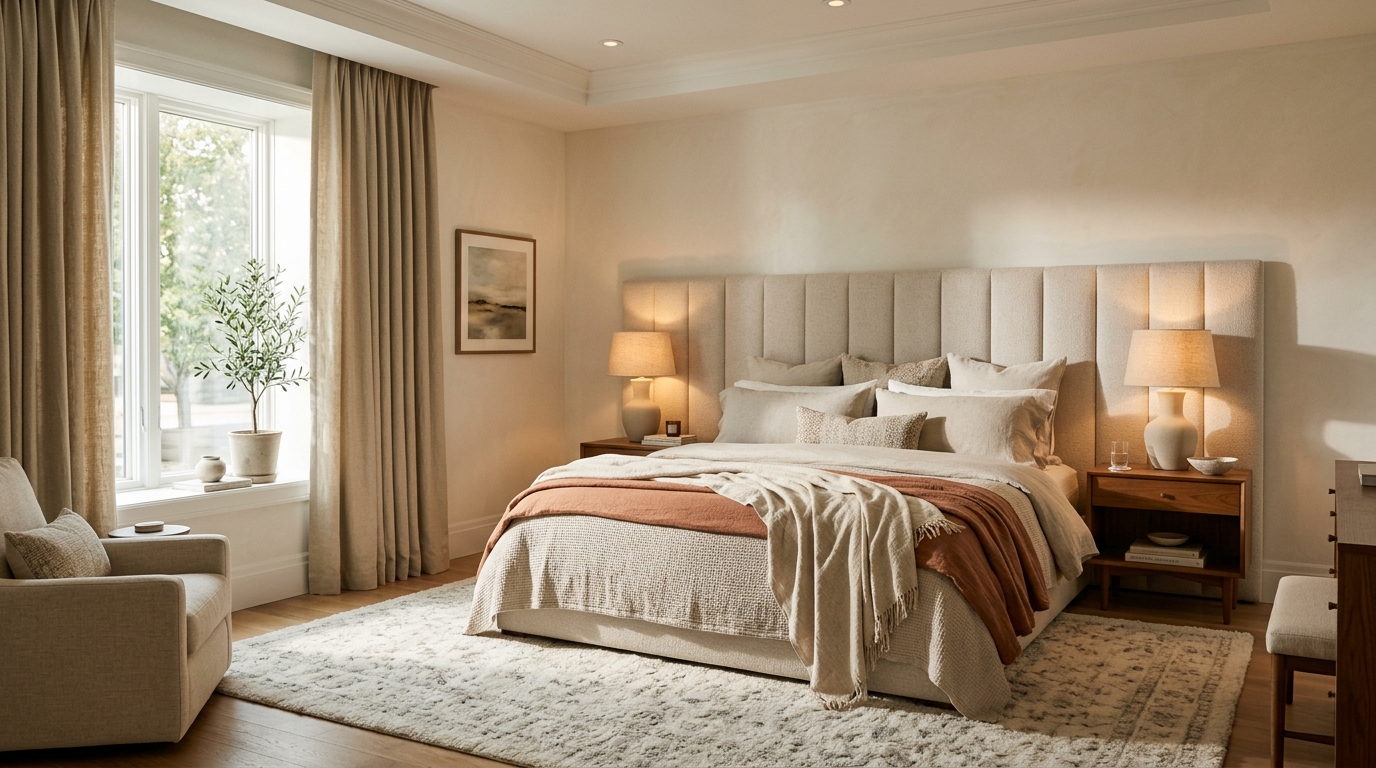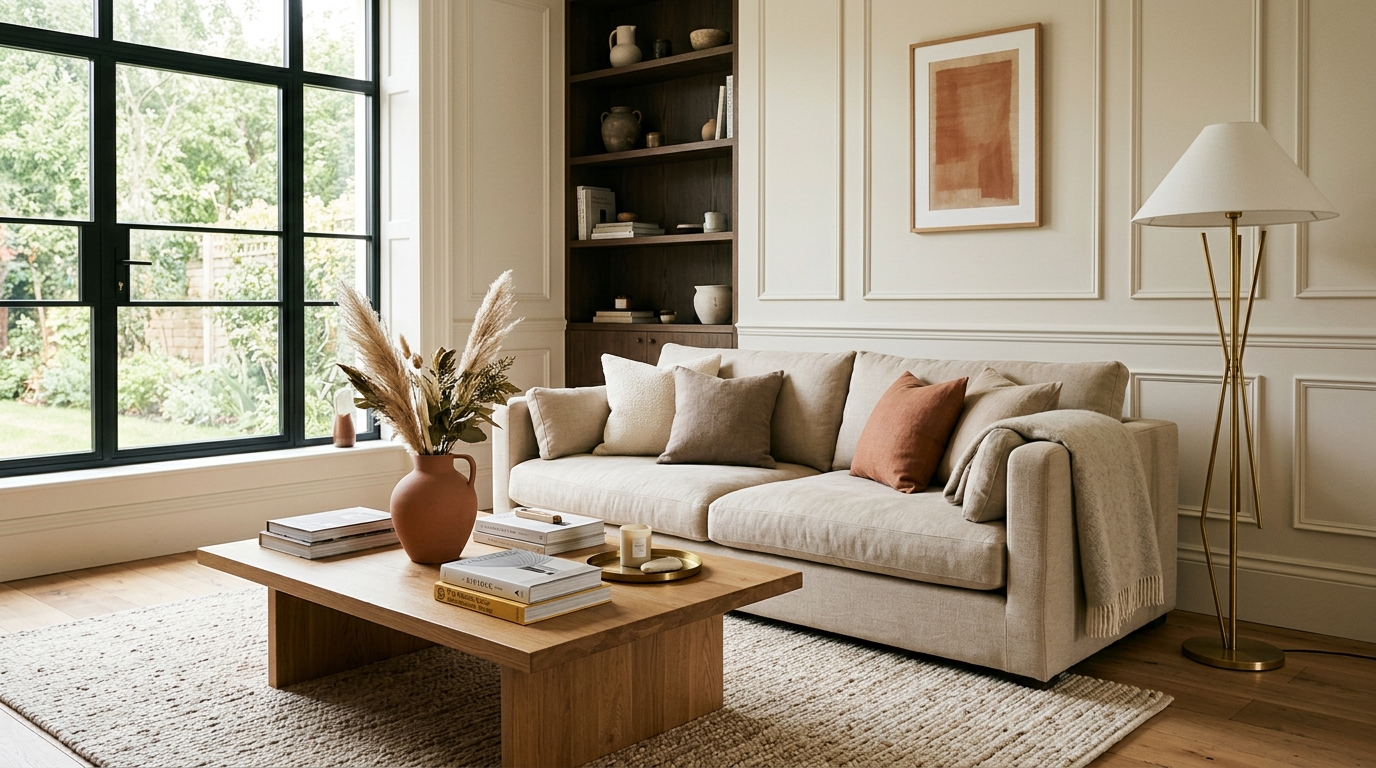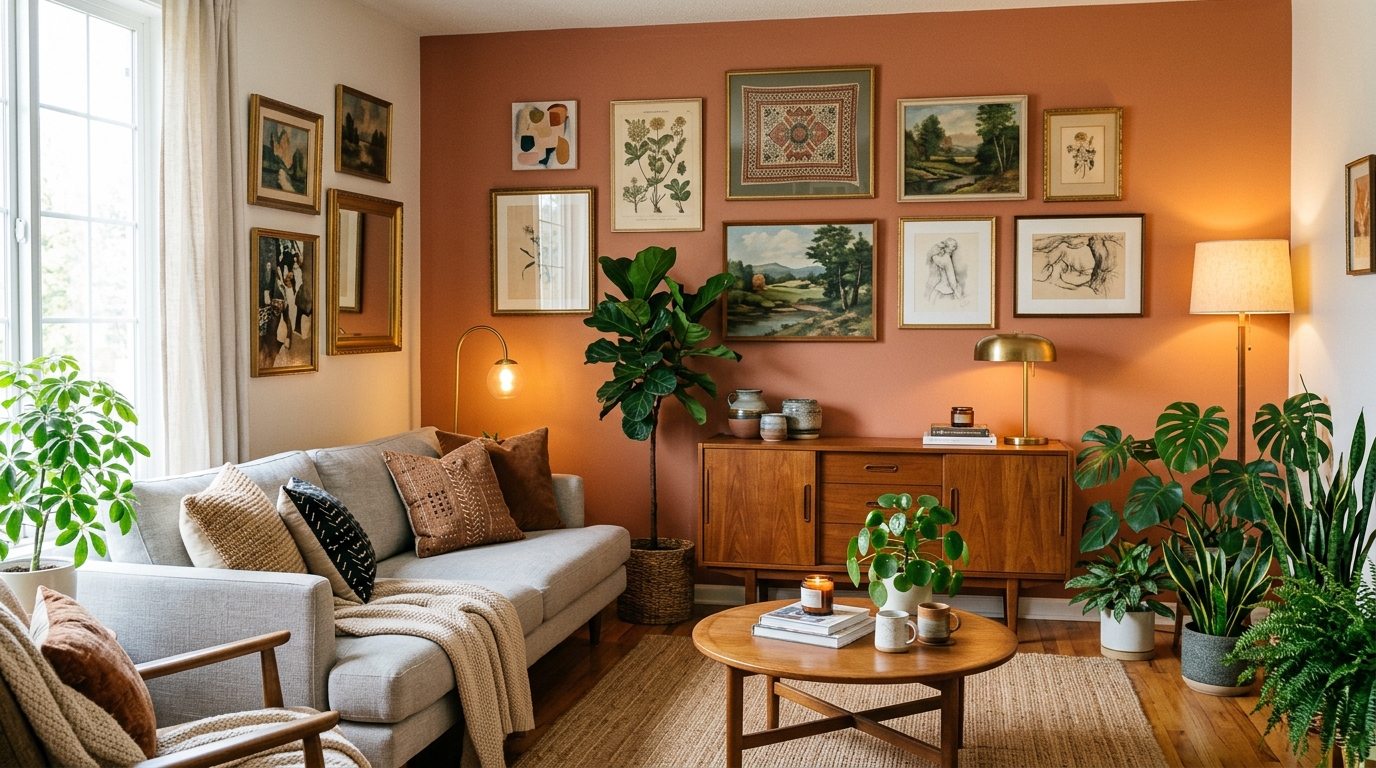
To plan a decoration budget, use the 50/30/20 capital allocation rule: 50% for core foundational touchpoints (sofas, mattresses, dining tables), 30% for atmospheric sensory elements (paint, 2700K lighting, heavy drapery, rug pads), and 20% for character accents and a non-negotiable 10% contingency buffer for hidden freight, hardware, and delivery taxes.
At a Glance: Key Takeaways
- Allocate 50% of funds to foundational daily touchpoint furniture that requires long-term durability.
- Allocate 30% to high-leverage sensory upgrades: paint, dimmable 2700K lighting, and floor-to-ceiling drapes.
- Reserve a mandatory 10% cash contingency buffer for hidden delivery fees, freight taxes, and mounting hardware.
- Calculate cost-per-year: spending $1,500 on a 10-year sofa ($150/yr) is cheaper than three $600 fast-furniture sofas ($300/yr).
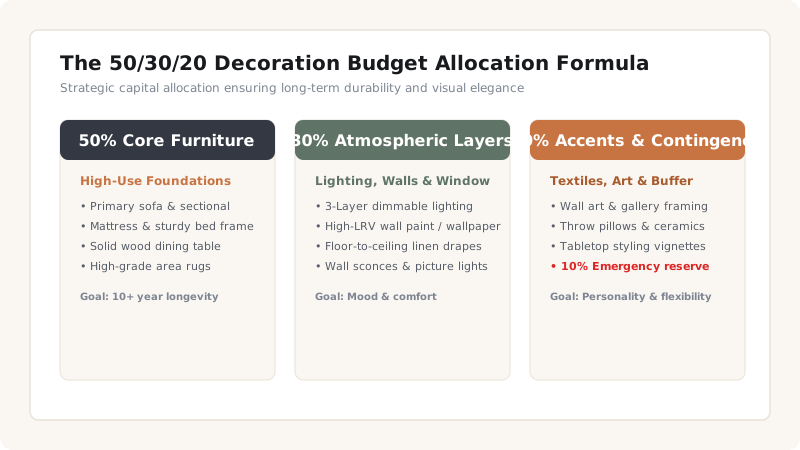
1. The 50/30/20 Capital Allocation Framework
Decorating projects routinely fail when budgets are drained on impulsive decorative knick-knacks, leaving zero funds for quality mattresses, comfortable sofas, or proper lighting. Master the 50/30/20 Decoration Budget Model:
- 50% to Core Foundational Anchors: Invest half your total capital in high-durability items your body physically uses daily—the primary sofa (solid kiln-dried hardwood frame, high-resilience foam), the master mattress, and the daily dining table.
- 30% to Sensory & Atmospheric Upgrades: Direct nearly a third of your funds to what transforms the room's mood—high-quality paint (color drenching), layered 2700K lighting fixtures on dimmers, dense 1/2-inch felt rug pads, and heavy linen-blend blackout drapery.
- 20% to Character, Art & Contingency: Allocate 10% to thrifted vintage accent tables, large framed art prints, and ceramics, and keep 10% in reserve as an emergency buffer for shipping surcharges, mounting brackets, and touch-up supplies.
3. The 'Cost-Per-Year' Durability Formula & High-ROI Swaps
Evaluate furniture purchases using the Cost-Per-Year Formula rather than initial checkout price:
Cost-Per-Year = (Initial Purchase Price + Maintenance) / Expected Lifespan in Years
- Cheap Flatpack Particle-Board Sofa: $600 purchase price / 2-year lifespan before sagging = $300 per year.
- Kiln-Dried Hardwood Performance Sofa: $1,600 purchase price / 12-year lifespan = $133 per year (over 50% cheaper over time).
- High-ROI Budget Swaps: Thrift solid wood secondary furniture (coffee tables, nightstands) on marketplace platforms for 80% off retail, and direct those savings into premium 2700K lighting and paint.
Room-by-Room Decoration Budget Allocation Guide
Use this reference table to calculate exact physical dimensions, ratios, and specifications before purchasing:
| Room Category | Recommended Total Budget | 50% Core Anchor | 30% Sensory Envelope | 20% Accent & Buffer |
|---|---|---|---|---|
| Living Room | $2,000–$4,500 | High-resilience 3-seater sofa | 8x10 rug, 3 lamps, paint, drapes | Thrifted coffee table, art, $300 buffer |
| Master Bedroom | $1,500–$3,200 | Hybrid mattress + platform bed | Double duvet, 2700K sconces, blackout drapes | Vintage nightstands, mirror, $200 buffer |
| Dining Room | $1,000–$2,200 | Solid wood table + 6 chairs | Dimmable chandelier, 8x10 low-pile rug | Sideboard decor, runner, $150 buffer |
| Small Apartment (Whole) | $4,000–$8,000 | Sofa, bed, drop-leaf table | Whole-home paint, lighting, 3 rugs | Storage ottomans, art, $600 buffer |
Decoration Budget Constraints
Every successful decoration project must account for physical and environmental constraints:
Cash Flow Phase Staggering
Do not purchase everything in one week; execute Phase 1 (painting and core bed/sofa) in Month 1, and Phase 2 (textiles, lighting, art) in Month 2 to smooth out credit card debt.
Return Shipping Penalties
Returning large furniture online often incurs 15% to 25% restocking fees plus return freight costs ($200+); measure doorways, stairwells, and room floorplans three times before ordering.
Fast-Furniture Depreciation
Particle-board furniture has zero secondary resale value; solid wood, brass, and genuine marble hold 40% to 60% of their value on resale marketplaces.
10-Step Decoration Budget Planning Protocol
Execute this professional sequence to achieve flawless results without backtracking:
Establish Maximum Hard Financial Ceiling
Define total available cash budget without relying on high-interest credit lines.
Subtract 10% Emergency Contingency Buffer
Set aside 10% immediately into a separate buffer account for freight, taxes, and hardware.
Allocate 50% to Core Touchpoint Furniture
Price and source primary sofa, mattress, and dining table with durable specs.
Allocate 30% to Sensory & Lighting Upgrades
Budget for paint, 2700K lighting fixtures, area rugs, felt pads, and drapes.
Allocate Remaining 10% to Accents and Thrifted Pieces
Assign funds for vintage secondary tables, framed prints, and ceramics.
Create an Itemized Master Spreadsheet
List every item with columns: Projected Cost, Actual Cost, Tax/Freight, and Status.
Audit Hidden Delivery and Mounting Costs
Call retailers to confirm white-glove delivery fees and factor in toggle bolt costs.
Scout Secondary Markets for Solid Wood Items
Hunt estate sales and marketplace listings for vintage coffee tables and nightstands.
Stagger Purchases in Two 30-Day Phases
Execute foundational paint and seating first, followed by lighting and textiles.
Conduct Post-Project Expense Reconciliation
Compare spreadsheet estimates against actual receipts to reconcile buffer funds.
Common Mistakes & Countermeasures
Avoid these costly errors that compromise aesthetics, ergonomics, and budget:
Spending 80% of the Budget on Furniture and $0 on Lighting
Forgetting Freight Delivery Taxes and Fees
Buying Disposable Fast-Furniture for Daily Seating
Project Execution Checklist
Track your physical progress. Checkboxes persist automatically on this device:
Frequently Asked Questions
What is the single most cost-effective decorating investment?
Interior paint. Applying two coats of quality eggshell paint ($100) transforms the visual scale, conceals drywall flaws, and establishes whole-room cohesion at a fraction of furniture costs.
How much should I spend on an area rug?
A high-quality 8x10 flatweave wool or dense synthetic area rug typically costs $180 to $400, plus $50 for a dense 1/2-inch felt pad. It anchors the entire room and lasts 5 to 10 years.
How do I avoid overspending during home decoration?
Keep an itemized spreadsheet, enforce the 10% contingency buffer, stagger purchases in phases, and never buy decorative accessories until the foundational furniture and lighting are in place.