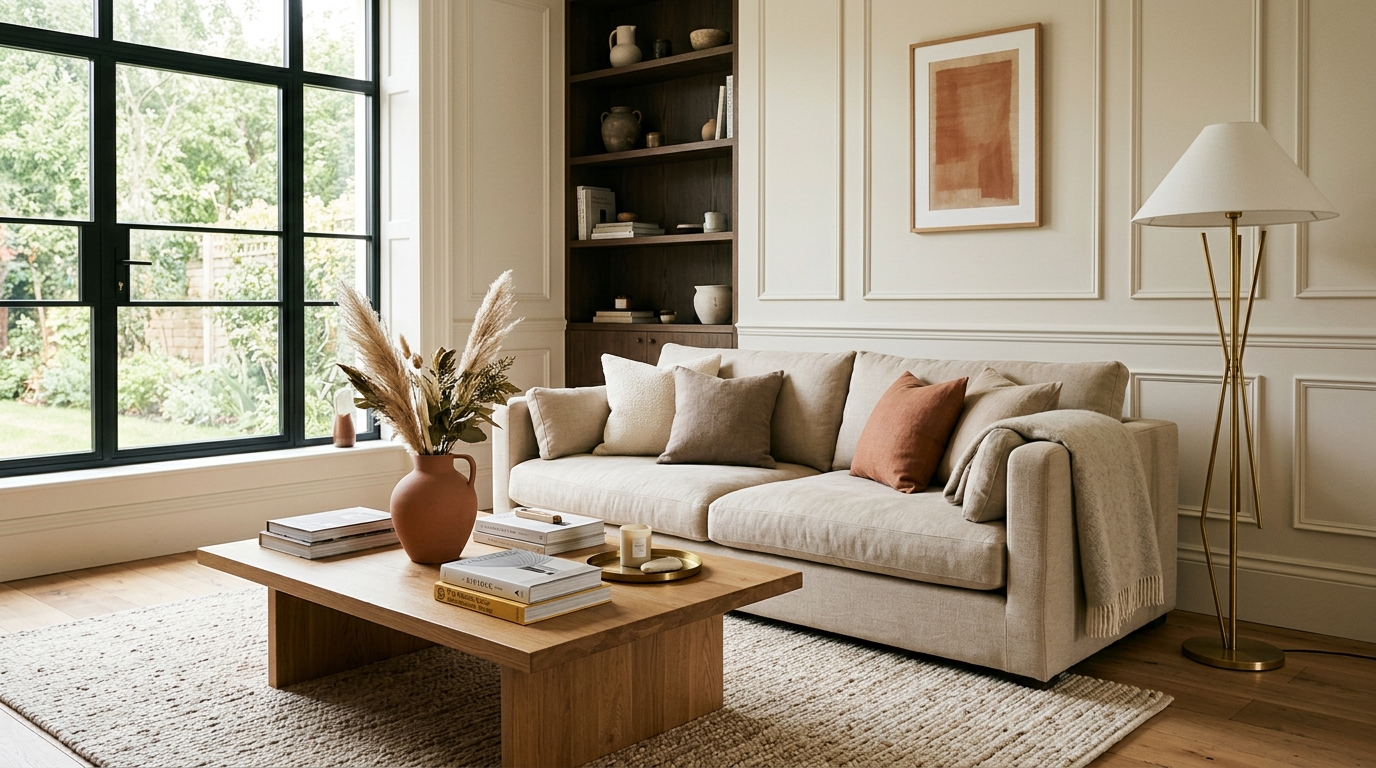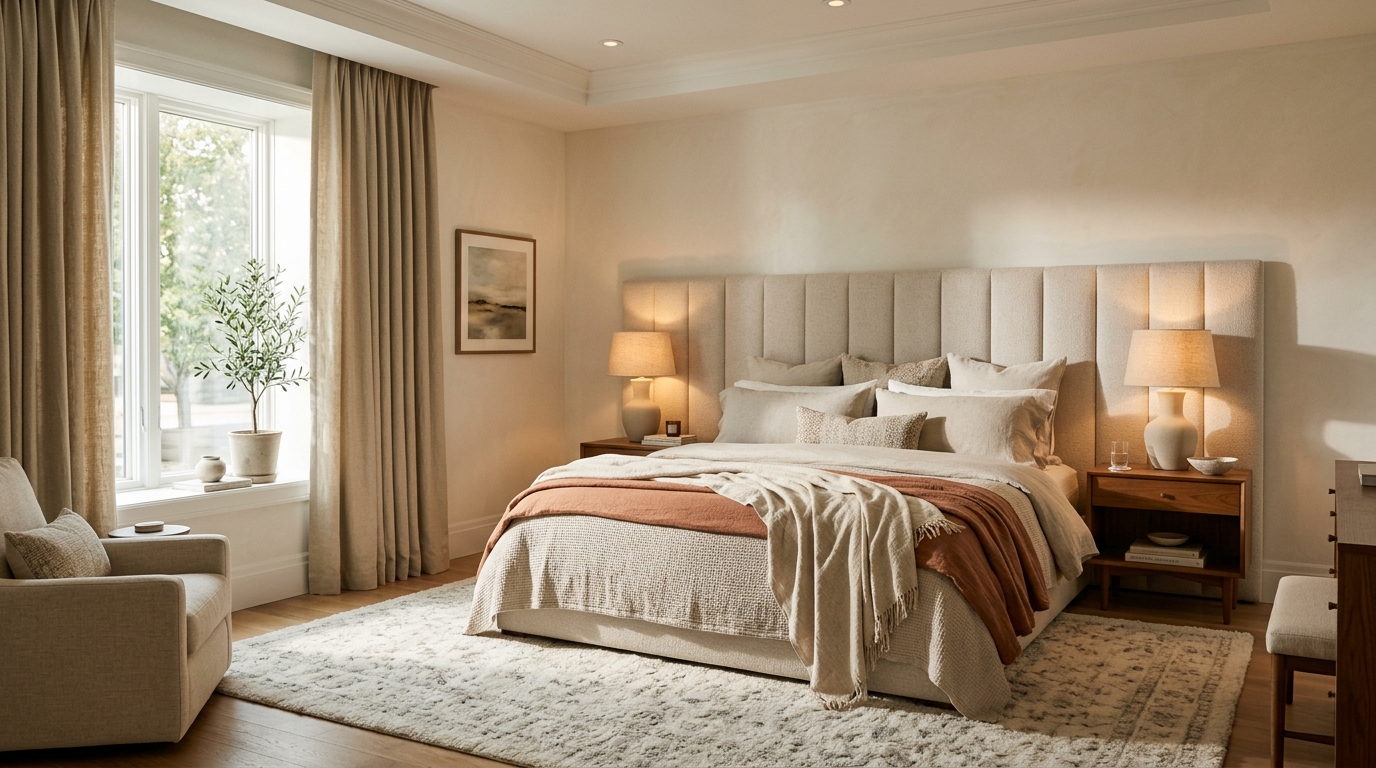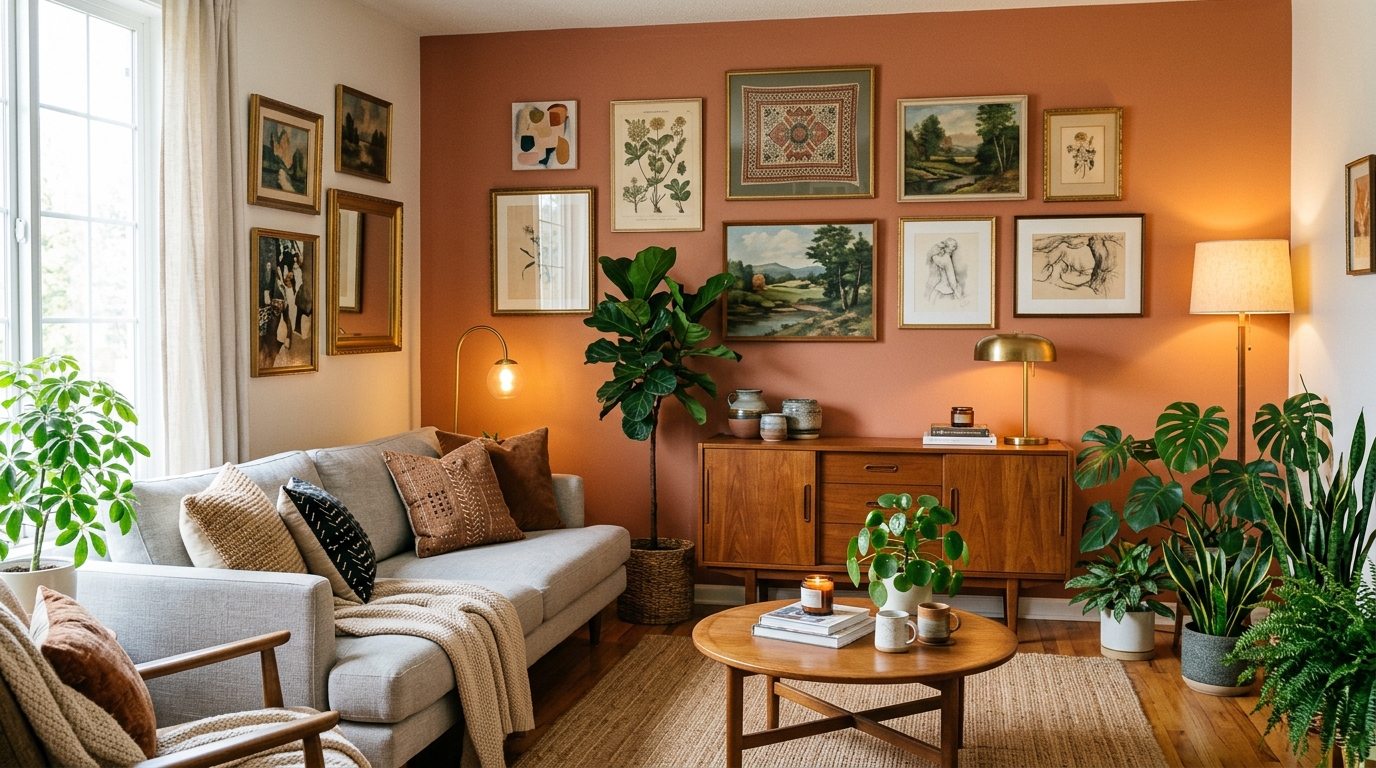
To decorate a home on a budget, allocate 50% of your funds to foundational daily pieces (sofa, mattress), 30% to high-impact atmospheric elements (paint, floor-to-ceiling drapes, 2700K lighting), and 20% to thrifted accents. Maximize perceived value through paint zoning, architectural hardware swaps, oversized matting on inexpensive art prints, and deliberate decluttering.
At a Glance: Key Takeaways
- Paint delivers the highest return-on-investment: color-drenching transforms cheap drywall into custom luxury.
- Swap generic builder-grade cabinet knobs and switch plates for solid brass or matte black architectural hardware.
- Thrift solid wood secondary furniture (coffee tables, dressers) rather than buying disposable particle-board items.
- Hang extra-long floor-to-ceiling curtains (mounted 4-6" above window) to double the room's perceived height.
1. The 50/30/20 Capital Prioritization Framework
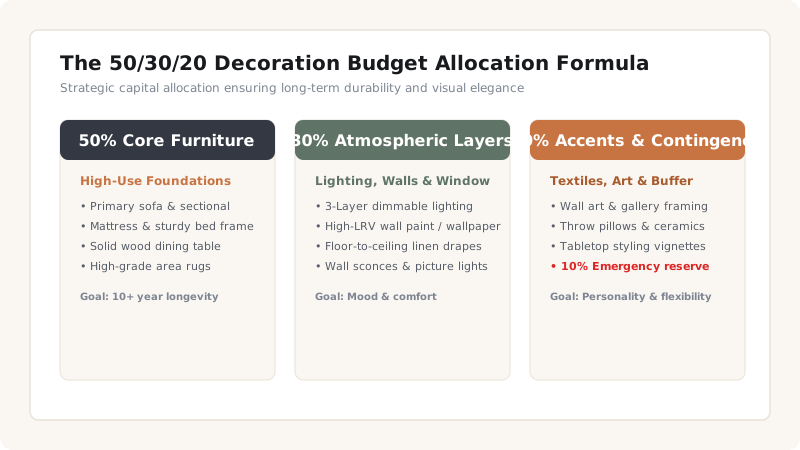
Decorating on a budget fails when funds are trickled away on dozens of cheap decorative trinkets that result in visual clutter without structural comfort. To build a home that looks and feels luxurious on a modest budget, follow the 50/30/20 Rule:
- 50% to Core Touchpoints: Direct half your budget to the pieces your body physically touches daily—your primary sofa, mattress, and dining chairs. High-resilience cushions and solid joinery prevent costly replacements within 2 years.
- 30% to Sensory & Atmospheric Upgrades: Paint, layered 2700K lighting fixtures, high-density rug pads, and heavy linen-blend drapery. These elements alter the room's scale, acoustic reverberation, and lighting quality.
- 20% to Character, Art & Buffer: Thrifted vintage ceramics, large-scale framed prints, architectural pottery, and a 10% cash buffer for unexpected delivery/mounting supplies.
2. High-Impact Paint Techniques & Color Drenching
Paint remains the single most cost-effective decorating tool in existence. A $60 gallon of quality paint can completely alter the perceived dimensions and mood of a room. Two high-impact techniques deliver designer-grade results on a DIY budget:
- Color Drenching: Painting walls, baseboards, doors, radiator covers, and crown molding in the identical hue (using eggshell on walls and satin/semi-gloss on trim). This eliminates distracting visual breaks, conceals uneven drywall, and gives standard 8-foot rooms a custom, architectural envelope.
- Two-Tone Architectural Zoning: In bedrooms or dining areas without architectural molding, paint the lower 36 to 42 inches in a deep grounding tone (e.g., rich olive or slate) and the top portion in a warm off-white. This visually anchors furniture without expensive wainscoting.
3. Hardware Upgrades & The 'High-End Textile' Illusion
Standard builder-grade fixtures communicate 'low budget' instantly. You can radically elevate a space in one afternoon with targeted component swaps:
- Cabinet & Door Hardware: Replace hollow aluminum kitchen and wardrobe handles with heavyweight solid brass, oil-rubbed bronze, or matte black steel pulls.
- Switch Plates & Outlet Covers: Swap yellowed plastic outlet plates for screwless matte wall plates.
- Custom-Look Drapery Hack: Purchase standard budget 96-inch or 108-inch drapery panels, iron in drapery pleat tape, insert pinch-pleat pins, and hang them from brass ring clips mounted just below the ceiling. This creates custom $1,000 drapery looks for under $80.
- Down-Insert Pillow Upgrade: Replace flat synthetic pillow inserts with slightly oversized feather/down inserts (e.g., place a 22x22 inch feather insert into a 20x20 inch pillow cover) for a plush, karate-chop editorial aesthetic.
Budget Decorating High-ROI Priority Guide
Use this reference table to calculate exact physical dimensions, ratios, and specifications before purchasing:
| Upgrade Element | DIY Cost | Visual & Practical Impact | Where to Source | Difficulty |
|---|---|---|---|---|
| Full Room Color Drench | $60–$120 | Massive: Erases flaws & expands room | Local Paint Retailer | Moderate DIY |
| Cabinet Hardware Swap | $30–$80 | High: Adds tactile weight & bespoke feel | Online Architectural Hardware | Easy DIY (Screwdriver) |
| Pinch-Pleat High Curtains | $50–$100 | High: Adds vertical height & acoustic damp | Budget Home Retailers + Pleat Tape | Easy DIY (Drill & Iron) |
| Thrifted Solid Wood Table | $40–$120 | High: Delivers authentic patina & longevity | Estate Sales, Thrift Shops, Marketplace | Easy (Sand & Wax) |
| 2700K Lamp & Dimmer Plugs | $30–$60 | Massive: Erases harsh ceiling glare | Hardware Store / Online Lighting | Zero Installation |
Budget Execution Constraints
Every successful decoration project must account for physical and environmental constraints:
Fast-Furniture Quality Trap
Avoid buying particle-board flatpack furniture for items subjected to dynamic weight (sofas, beds, dining chairs); they delaminate and sag within 18 months.
Shipping & Assembly Overhead
Account for freight shipping costs and tool requirements; buying locally on secondary marketplaces often saves 30% in hidden delivery fees.
Tool Availability
A basic cordless drill, magnetic level, stud finder, and high-density foam paint rollers are essential investments that prevent costly drywall repair.
10-Step Budget Home Transformation Sequence
Execute this professional sequence to achieve flawless results without backtracking:
Declutter and Empty Surfaces
Remove every non-essential accessory, broken furniture piece, and visual distraction to evaluate the true architectural space.
Establish the 50/30/20 Budget Cap
Set a firm total budget and allocate 50% to core furniture, 30% to atmospheric finishes, and 20% to character.
Execute Deep Cleaning & Wall Repair
Spackle holes, sand baseboards, clean windows, and scrub grime off doors to establish a fresh foundational canvas.
Paint Walls and Baseboards
Apply 2 coats of quality eggshell paint, utilizing color drenching or warm high-LRV neutrals.
Swap Out Hardware and Switch Plates
Replace all standard handles with heavyweight solid hardware and install clean screwless plates.
Scout Secondary Markets for Solid Wood
Source vintage solid oak, walnut, or teak coffee tables, credenzas, and nightstands from secondary platforms.
Install Floor-to-Ceiling Drapery
Mount extra-long curtains 4-6 inches above window frames with pinch-pleat pins.
Eliminate Overhead Glare With 2700K Lamps
Add table and floor lamps at eye level with plug-in dimmer cords.
Frame Large Prints with Oversized Mats
Print high-resolution public domain museum art and place in large budget frames with 3-inch white mats.
Style Surfaces with Organic Elements
Bring in architectural branches, propagated house plants, and stacked books to add life and texture.
Common Mistakes & Countermeasures
Avoid these costly errors that compromise aesthetics, ergonomics, and budget:
Scattering Dozens of Small Knick-Knacks
Leaving Furniture with Particle-Board Veneers Exposed
Buying Small Picture Frames
Project Execution Checklist
Track your physical progress. Checkboxes persist automatically on this device:
Frequently Asked Questions
What is the cheapest way to make a living room look expensive?
Install floor-to-ceiling drapes mounted just below the ceiling line, replace central cool ceiling bulbs with 2700K warm table lamps on dimmers, and remove all small clutter in favor of a few large curated objects.
How can I get large wall art on a budget?
Download high-resolution copyright-free artwork from museum digital archives (Met, Rijksmuseum), print them at standard poster sizes (24x36 inches) for $15–$20 at local print shops, and frame them in affordable poster frames with DIY cardstock mats.
Is thrifting furniture sanitary and safe?
Thrifting solid wood, metal, stone, and glass pieces is completely safe and durable after cleaning with mild soap and wood wax. Inspect any vintage upholstered pieces thoroughly or re-cover removable seat cushions with new performance fabric.