
Design architectural stair balustrades by forging 16mm solid mild steel balusters spaced to reject a 4-inch sphere (typically 2 balusters per tread). Fasten baluster tops to a 1/4-inch steel core rail capped with a solid brass handrail, and anchor bottom stems 2 inches deep into stone or hardwood treads using non-shrink structural epoxy or molten lead.
At a Glance: Key Takeaways
- 4-Inch Sphere Code Compliance (IRC R311.7.8.4): Openings between balusters must prevent passage of a 4-inch sphere.
- Solid Brass Cap Rail over Steel Core: 1/4" flat steel core bar provides structural rigidity while solid brass cap provides tactile warmth.
- Stone Tread Anchoring Chemistry: Pure molten lead or structural epoxy (Hilti HIT-RE 500) locks baluster stems without fracturing stone.
- Hand-Forged Scrollwork & Collars: Traditional black-smithing techniques join scroll elements with hot-wrapped metal collars.
- Architectural Hand-Rubbed Patinas: Living unlacquered brass and blackened iron sealed with microcrystalline Renaissance wax.
In-Depth Guides in this Directory
Explore specialized subtopic blueprints, technical dimensions, and execution checklists:
Baluster Code Spacing: 4" Sphere Rules & Rake Math
Master stair baluster building code compliance: IRC R311.7.8.4 four-inch sphere spacing math, level vs rake pitch spacing formulas, 2-per-tread layout geometry, and bottom triangle gaps.
Brass Stair Handrails: Steel Core Rails & Concealed Fastening
Master solid brass architectural handrail installation: extruded solid brass cap profiles, continuous 1/4" flat steel core rails, countersunk underside tapping, and thermal expansion slots.
Stone Tread Anchors: Molten Lead vs Structural Epoxy
Master balustrade stone anchoring: traditional molten lead caulking (sulfur/lead physics), high-strength structural pure epoxy (Hilti HIT-RE 500), core-drilling stone, and preventing tread cracking.
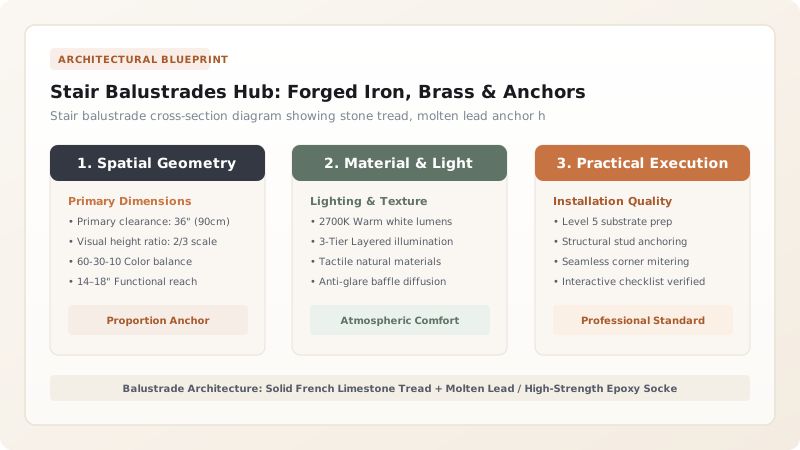
1. Building Code Safety: The 4-Inch Sphere & 200-Lb Guardrail Load
Under building safety codes (IRC Section R311.7.8), stair balustrades must satisfy two strict structural safety mandates:
- The 4-Inch Sphere Test: No opening anywhere in the balustrade (including between balusters and under the bottom rail) may permit the passage of a 4-inch (102mm) diameter sphere.
- 200-Lb Top Rail Point Load: The handrail and supporting balusters must resist a 200-lb (0.89 kN) concentrated load applied in any outward or downward direction with zero failure.
To master layout math, review forged iron baluster 4-inch code spacing and explore solid brass cap rail joinery.

2. Metal Capping & Chemical vs Molten Lead Anchoring
Attaching a soft decorative brass handrail directly to thin iron balusters will cause screws to strip under lateral forces. Fabricators weld a continuous 1/4" × 1-1/2" Flat Steel Core Rail across the top of all balusters, then screw the Solid Extruded Brass Cap Rail from underneath through slotted expansion holes.
At the tread level, baluster stems are anchored into core-drilled holes using molten lead or high-strength structural epoxy. Coordinate with helical curved stairs and gallery trim.
Balustrade Materials & Fabrication Standards
Use this reference table to calculate exact physical dimensions, ratios, and specifications before purchasing:
| Component | Optimal Material Specification | Joinery Method | Visual Style |
|---|---|---|---|
| Vertical Balusters | 16mm Solid Mild Steel (Forged) | Welded to core rail / Anchored in tread | Classic French / Georgian luxury |
| Decorative Scrolls | 12mm × 6mm Forged Flat Bar | Hot-wrapped mechanical iron collars | Artisanal ornate detailing |
| Top Handrail Cap | Solid Extruded Architectural Brass | Concealed bottom screws to core rail | Warm, tactile living metal glow |
| Hollow Tube Spindles (Avoid) | Thin 1mm hollow stamped tube | Set-screw shoes (Rattles loose) | Low-end tract home builder grade |
Stone Tread Hydrostatic Freeze Cracking Constraints
Every successful decoration project must account for physical and environmental constraints:
Water Entering Baluster Socket Freezing and Splitting Marble Treads
Water seeping into exterior or entryway baluster sockets expands upon freezing, shattering stone treads; fill sockets 100% void-free with non-shrink structural epoxy, and install a decorative cast bronze escutcheon shoe bedded in silicone over each socket hole.
How to Fabricate and Install an Iron & Brass Balustrade
Execute this professional sequence to achieve flawless results without backtracking:
Laser Core-Drill 25mm Holes in Treads
Drill 25mm diameter × 50mm deep sockets into stone or wood treads spaced at strict 4" code intervals.
Weld 1/4" Flat Steel Core Rail on Site
Tack-weld continuous 1/4" × 1-1/2" steel core rail across baluster tops matching exact stair rake angle.
Inject Structural Epoxy or Pour Molten Lead
Plumb balusters, fill tread sockets with Hilti HIT-RE 500 epoxy or molten lead, and let cure 24 hours.
Tap Core Rail for Underside Brass Fasteners
Drill and tap M5 machine screw holes every 12 inches along the underside of the steel core rail.
Fasten Solid Brass Cap Rail
Slide extruded brass handrail profile over core rail; secure with countersunk brass machine screws from beneath.
Apply Black Patina and Renaissance Wax
Wipe chemical black patina over ironwork and buff with microcrystalline wax for an antique museum finish.
Common Mistakes & Countermeasures
Avoid these costly errors that compromise aesthetics, ergonomics, and budget:
Installing Only 1 Baluster Per Tread on 10-Inch Treads
Project Execution Checklist
Track your physical progress. Checkboxes persist automatically on this device:
Frequently Asked Questions
How do you maintain unlacquered brass handrails on stairs?
Living unlacquered brass oxidizes naturally, developing rich golden-brown highlights where hands touch it. Clean periodically with a damp microfiber cloth and buff with Renaissance Micro-Crystalline Wax twice a year to protect against tarnishing.


