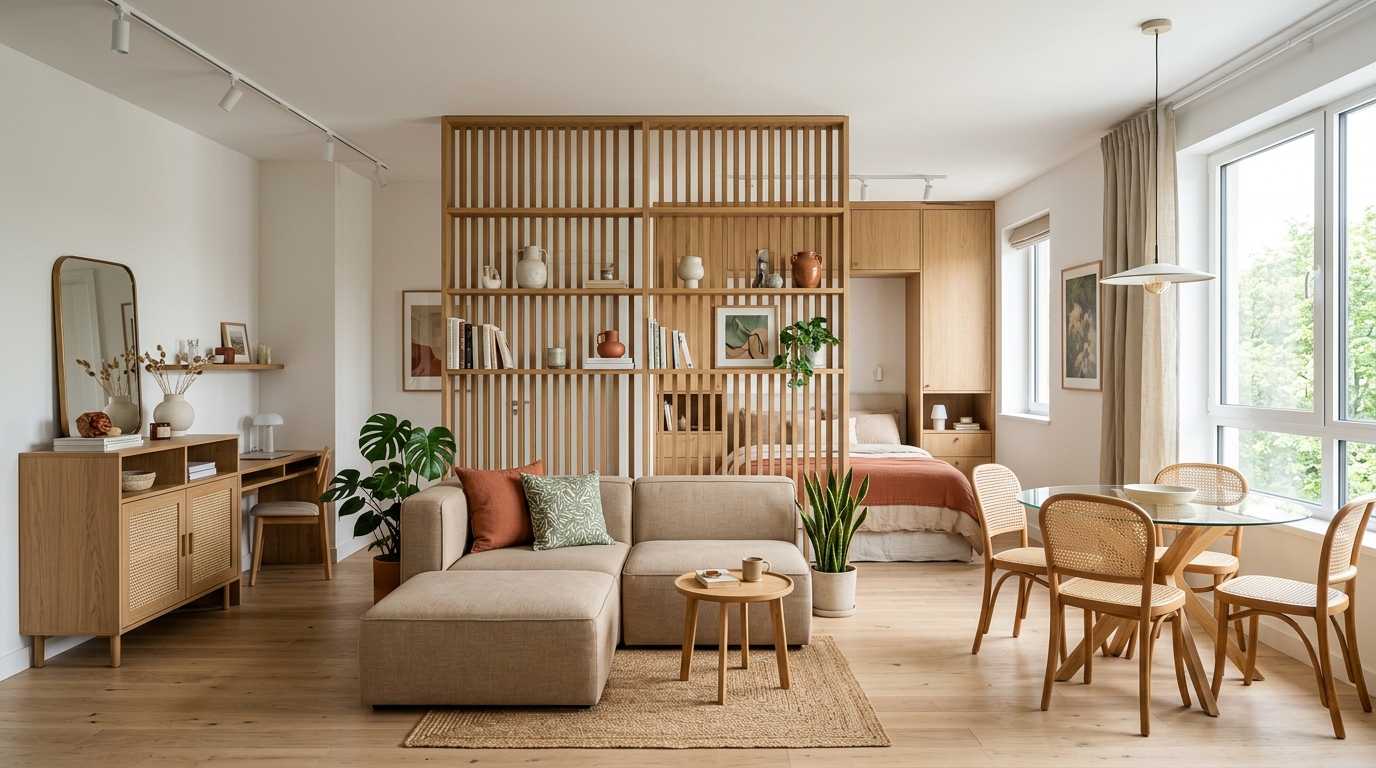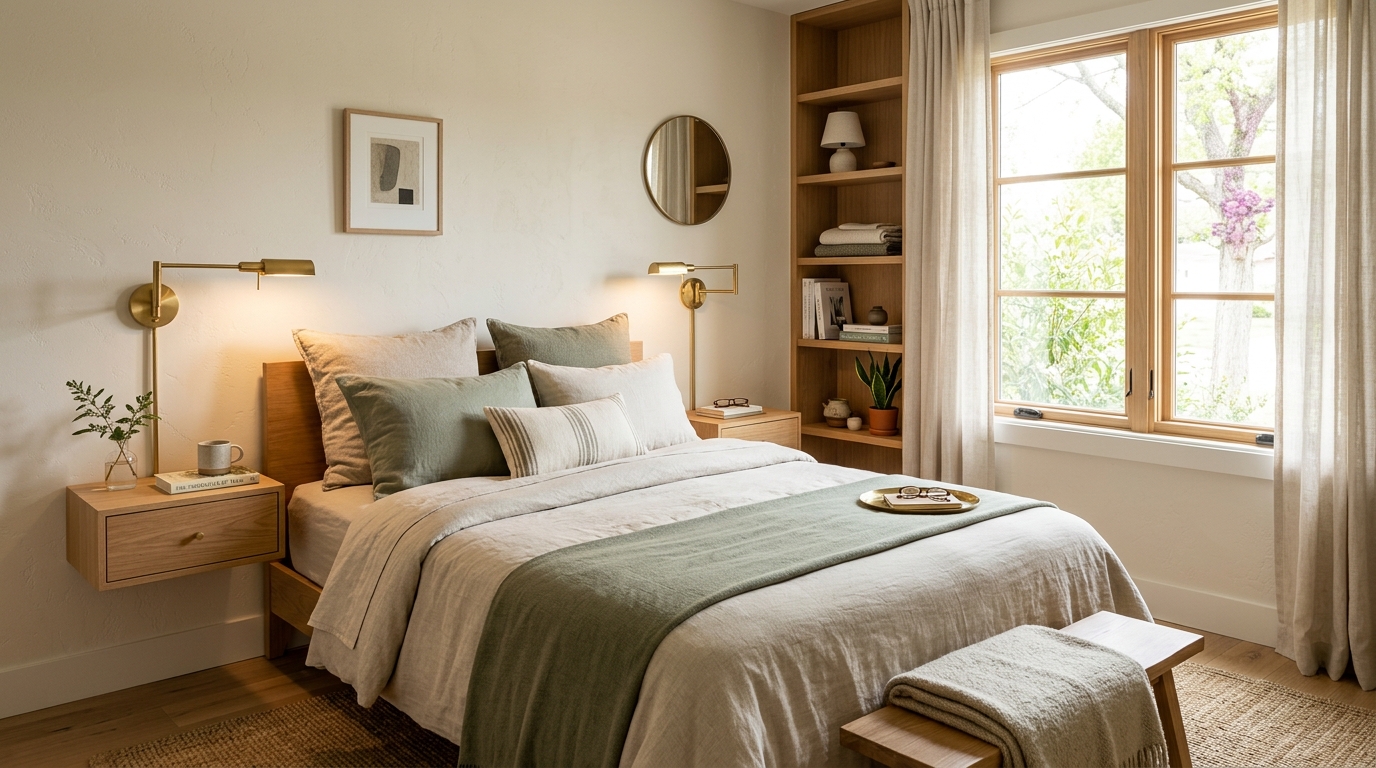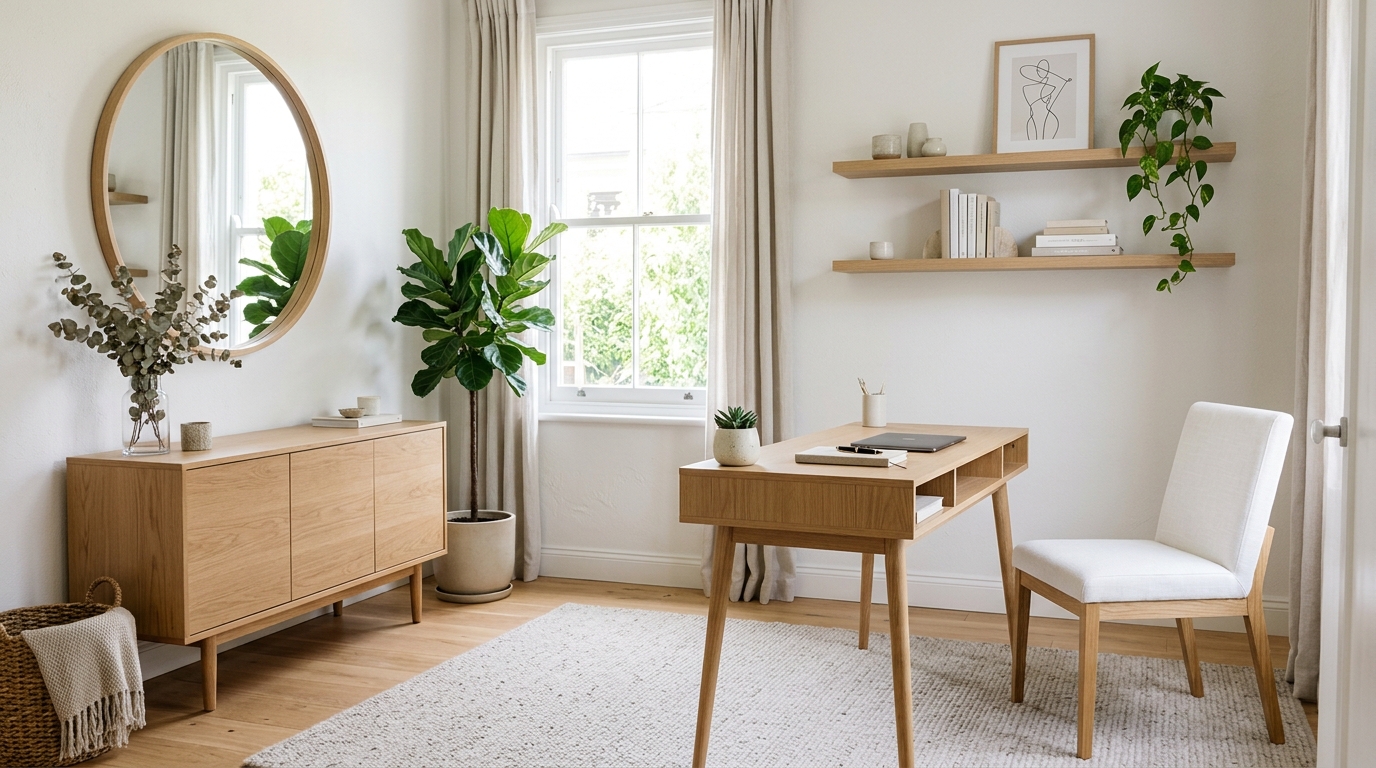
To make a small room look bigger, implement these 10 optical illusions: 1) Paint walls, baseboards, and doors in one low-contrast high-LRV (>65) color, 2) Mount curtain rods right at the ceiling line, 3) Choose leggy furniture with 6–8" floor clearance, 4) Position an oversized mirror opposite windows, 5) Use clear glass/acrylic tables, 6) Lay one large area rug rather than small mats, 7) Hang one large statement artwork, 8) Install floating wall storage, 9) Eliminate overhead glare with warm perimeter lamps, and 10) Ruthlessly eliminate visual clutter.
At a Glance: Key Takeaways
- Low-contrast color drenching blurs corners, making it impossible for the brain to detect where walls end.
- Mount drapery rods 2–4 inches below the ceiling line to optically double perceived room height.
- Position large mirrors perpendicular or opposite to windows to double daylight and visual depth.
- Follow the 'Fewer, Larger' rule: one large 8x10 rug and one large canvas make rooms feel expansive.
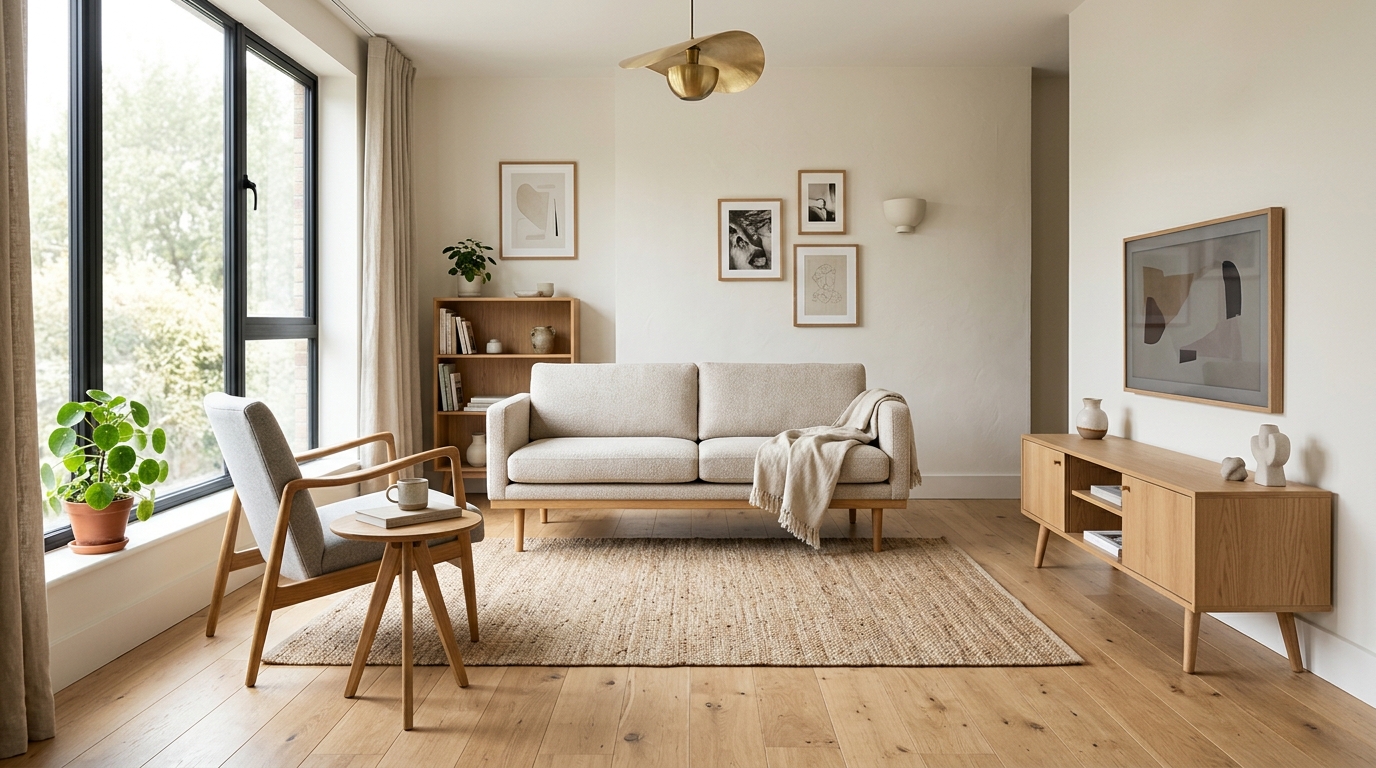
1. Optical Illusion 1–3: Blurring Room Boundaries & Contrast
The human brain determines room dimensions by tracking visual contrast lines—where dark baseboards meet light walls, where door casings frame openings, and where distinct corners meet. Eliminating high contrast tricks the brain into perceiving infinite depth:
- 1. Monochromatic Trim & Wall Painting: Paint baseboards, door trims, radiator covers, and walls the identical color (eggshell on walls, satin on trim). Without a high-contrast dark horizontal baseboard cutting off the bottom of the wall, the eye perceives the wall as extending all the way down to the floor.
- 2. High Light Reflectance Value (LRV >65): Use paint with an LRV of 65 to 75 (soft warm whites, pale greiges, gentle muted sages). These shades reflect 70% of natural sunlight into dark shadows.
- 3. Softened Ceilings: Never paint the ceiling stark hospital white against warm walls. Tint your ceiling paint with 10% to 15% of your wall color formula to soften the junction line and make ceilings feel higher.
2. Optical Illusion 4–6: Light Bouncing & Transparent Sightlines
Manipulate light reflection and material transparency to expand perceived square footage:
- 4. The 45-Degree Window Mirror Placement: Hang a large 36x60 inch mirror on the wall adjacent to or opposite your main window. Position it so it catches the outside sky and landscape, reflecting natural daylight into the darkest room corner and creating the illusion of a second window opening.
- 5. Clear Glass, Acrylic & Open Wire Furniture: Solid wood and stone coffee tables act like heavy blocks in the middle of a room. Glass-topped, Lucite, or open-frame metal tables allow your eyes to see straight through to the rug below, eliminating visual mass.
- 6. Leggy Silhouettes: Choose sofas, chairs, and credenzas raised 6 to 8 inches off the floor on slender tapered legs. Seeing continuous floor extending beneath furniture makes the room feel twice as large.
3. Optical Illusion 7–10: Vertical Height & Scale Precision
Complete the optical expansion with vertical height and proportional scale:
- 7. Ceiling-to-Floor Full-Wall Drapery: Mount curtain rods just below the ceiling line and let panels kiss the floor. Hang panels wide so they frame the window glass when open, making standard windows feel grand.
- 8. The 'Fewer, Larger' Furniture & Art Paradox: One large 8x10 rug and one large 30x40 inch statement art canvas create calm, uncluttered gallery luxury. Multiple tiny rugs and dozens of small frames make the room feel chaotic and tiny.
- 9. Floating Wall Storage: Wall-mounted media units and floating nightstands keep floor corners open and clean.
- 10. The 30% Negative Space Rule: Keep at least 30% of tabletop and shelving surfaces completely empty to give the room psychological breathing room.
The 10 Optical Expansion Illusions Summary Matrix
Use this reference table to calculate exact physical dimensions, ratios, and specifications before purchasing:
| Technique | What to Avoid | What to Do Instead | Perceived Impact |
|---|---|---|---|
| 1. Color Envelope | High-contrast dark trim on white walls | Color-drench walls and trim in same tone | Blurs corners; expands perimeter |
| 2. Curtain Hanging | Rods mounted directly on window frame | Mount rod 2-4" below ceiling line | Doubles perceived ceiling height |
| 3. Mirror Staging | Small mirror in dark hallway | Large mirror opposite natural window | Doubles natural daylight & depth |
| 4. Furniture Legs | Skirted sofas touching the floor | Slender 6–8" raised tapered legs | Reveals continuous unbroken floor |
| 5. Table Materials | Heavy dark solid wood box table | Clear glass or open metal frame | Eliminates central visual mass |
| 6. Rug Sizing | Tiny 3x5 or 5x7 floating mats | One large 8x10 or 9x12 area rug | Unifies room into one expansive zone |
Optical Expansion Constraints
Every successful decoration project must account for physical and environmental constraints:
Mirror Reflection Clutter Trap
Never position a large mirror so that it reflects an unmade bed, laundry basket, or cluttered kitchen sink; ensure it reflects a clean architectural window view, artwork, or plant.
Glass Table Fingerprints
Glass coffee tables show smudges easily in homes with toddlers and pets; choose tempered satin frosted glass or wire-frame wood-top nesting tables as a low-maintenance alternative.
Curtain Hemming Precision
Curtains that drag 3 inches on the floor look sloppy and collect dust in small rooms; hem panels to float exactly 1/4-inch above the floor or lightly kiss the baseboard.
10-Step Protocol to Make Any Small Room Look Bigger
Execute this professional sequence to achieve flawless results without backtracking:
Audit and Edit Clutter
Remove 40% of small decorative accessories, unnecessary side tables, and visual noise.
Paint Walls and Trim in Monochromatic High-LRV Neutral
Apply 2 coats of warm cream or greige (LRV >65) across walls, doors, and baseboards.
Tint Ceiling Paint with 10% Wall Color
Softens the sharp perimeter line where the wall meets the ceiling.
Mount Drapery Rods 2–4" Below Ceiling
Extend rods 10" wider than window casing and hang floor-length curtains.
Position a 36x60" Mirror Opposite Window
Mount mirror to catch outdoor sky and bounce daylight into dark corners.
Swap Bulky Furniture for Leggy Silhouettes
Select seating and credenzas with 6-8" exposed wood or brass legs.
Incorporate a Glass or Open-Wire Coffee Table
Maintain clear, see-through sightlines across the area rug.
Lay One Large Appropriately Sized Area Rug
Anchor the room with a single 8x10 rug so all front furniture legs sit on top.
Install Floating Wall Units & Plug-In Sconces
Frees floor perimeter by mounting storage and lighting on vertical walls.
Enforce 30% Negative Space on Surfaces
Leave generous empty space on coffee tables, credenzas, and bookshelves.
Common Mistakes & Countermeasures
Avoid these costly errors that compromise aesthetics, ergonomics, and budget:
Pushing All Furniture Against the Walls
Using Many Small Rugs
Hanging Dark, Heavy, Opaque Drapery on Window Frames
Project Execution Checklist
Track your physical progress. Checkboxes persist automatically on this device:
Frequently Asked Questions
Does white paint always make a small room look bigger?
Not always. In rooms with poor natural light, pure stark white looks shadowy, dingy, and cold. Use a warm off-white or pale greige with warm undertones (LRV 65–75) to reflect light softly.
Can I put large furniture in a small room?
Yes! One properly proportioned, tailored large sofa is far better than a cluttered collection of small chairs, provided it has clean lines, shallow depth (32–34"), and exposed legs.
Where is the best place to hang a mirror to make a room look bigger?
Directly opposite or adjacent to your largest window. This reflects outdoor daylight and greenery into the room, creating the optical illusion of a second window.