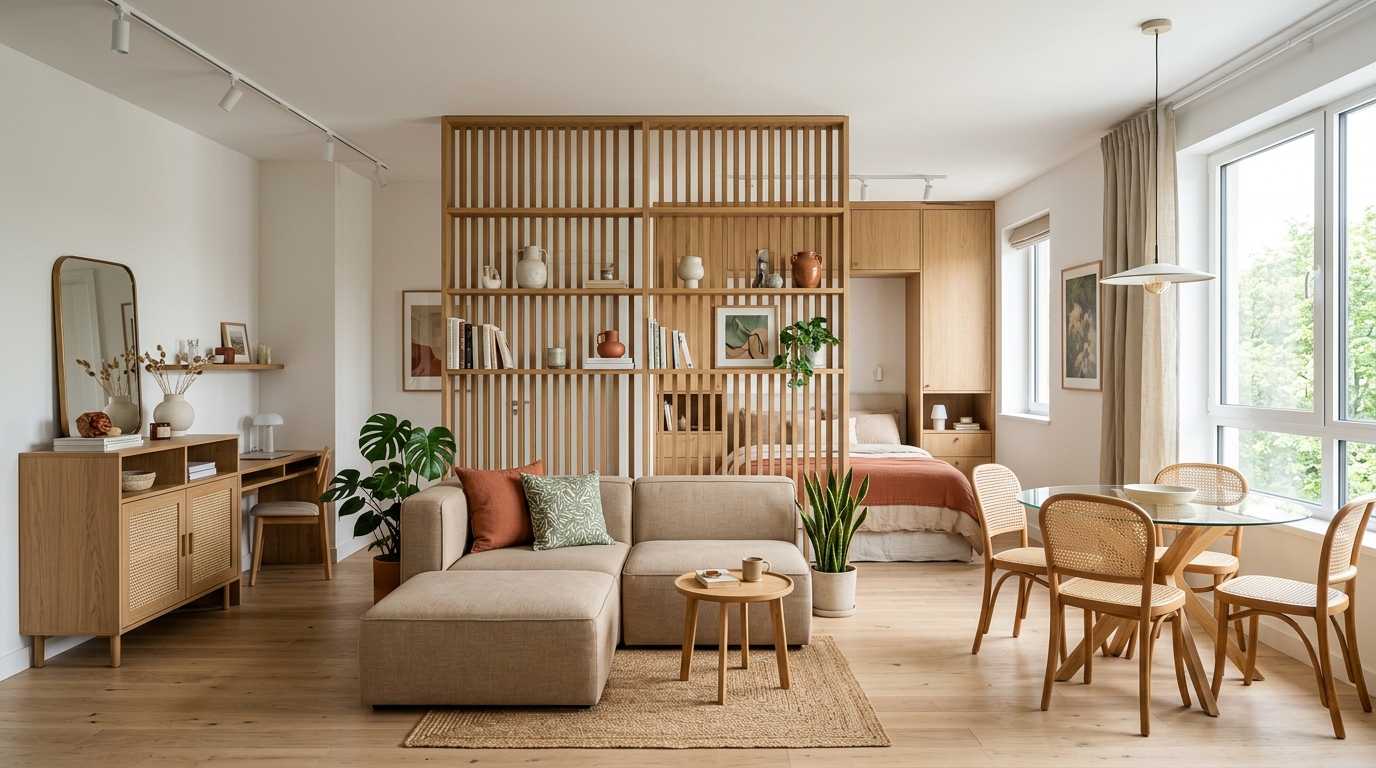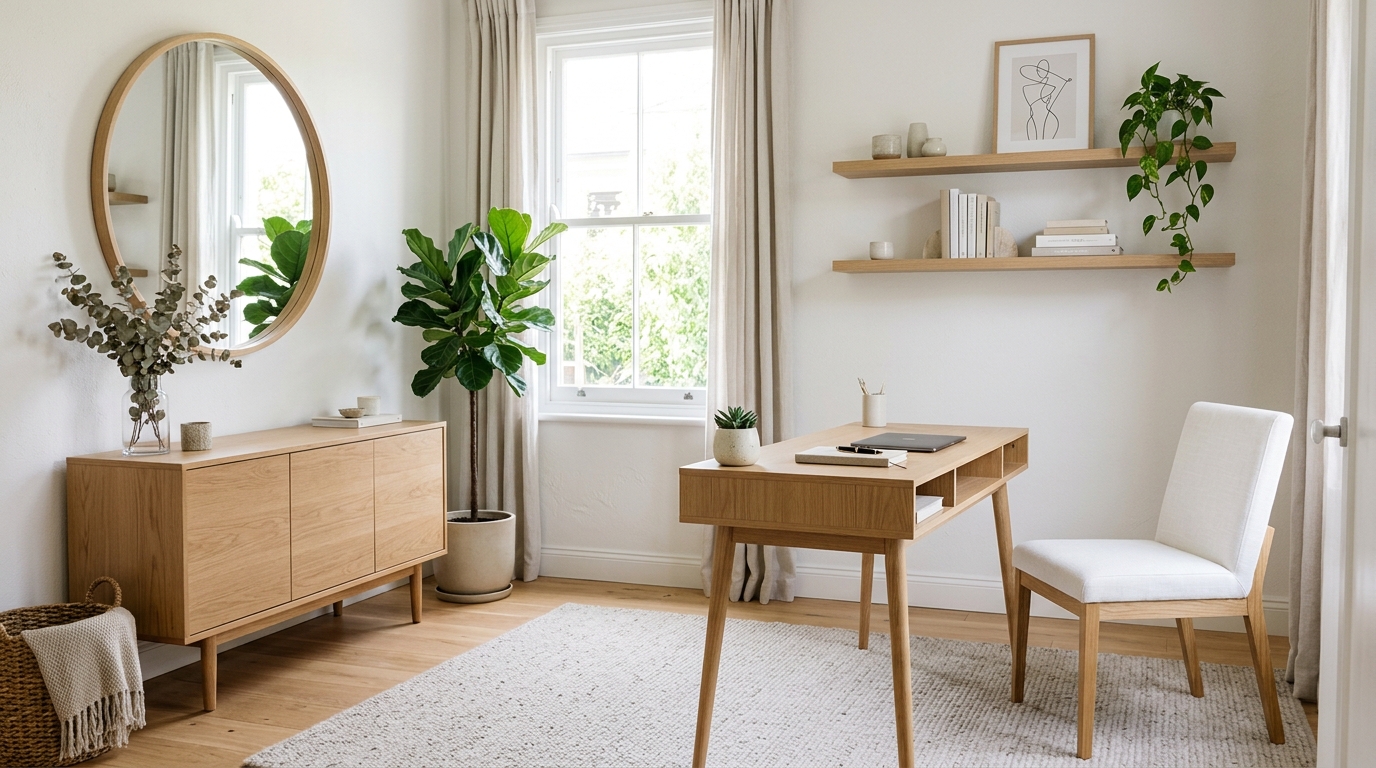
To decorate a small space while maximizing storage, follow the principle of decorative concealment: choose dual-purpose furniture (storage beds, lift-top coffee tables, storage ottomans), install floor-to-ceiling vertical shelving, use uniform natural woven lidded baskets to hide visual clutter, and implement the 'One In, One Out' rule to prevent accumulation.
At a Glance: Key Takeaways
- Choose dual-purpose furniture: storage beds, lift-top coffee tables, and hollow storage ottomans.
- Hide visual noise inside matching woven seagrass, rattan, or linen lidded storage boxes.
- Utilize dead vertical space above door frames, above kitchen cabinets, and along high hallway walls.
- Maintain a 70/30 closed-to-open storage ratio: 70% concealed behind doors and 30% curated display.
1. The 70/30 Closed-to-Open Storage Ratio
The primary reason small homes look cluttered is an over-reliance on open shelving. When every book, cable, game, and appliance is visible, the human brain registers it as chaotic visual noise. Master the 70/30 Storage Formula:
- 70% Closed Storage (Concealed Utility): Store everyday items—paperwork, routers, electronics, seasonal blankets, medicine, and extra linens—behind solid cabinet doors, inside drawers, or within opaque lidded storage boxes.
- 30% Open Storage (Curated Artistry): Reserve open shelves strictly for visually pleasing, curated items: stacked books, ceramic sculptures, framed photographs, and trailing potted plants.
- Matching Storage Containers: On any open shelf, use identical woven seagrass or linen-covered storage bins. A uniform texture creates a calm, organized visual rhythm.
2. High-Capacity Dual-Purpose Furniture
Every major furniture piece in a small home must offer hidden cubic storage capacity:
- Hydraulic Lift-Up Storage Beds: A gas-piston hydraulic bed lifts the entire mattress effortlessly, revealing 30 to 45 cubic feet of completely dust-free storage underneath—the equivalent of an entire 6-drawer dresser.
- Lift-Top Coffee Tables: The top panel lifts upward and forward to create a comfortable ergonomic work-from-home laptop desk, while the hollow interior holds laptops, chargers, and board games.
- Storage Benches & Ottomans: Place an upholstered storage bench at the foot of the bed or in the entryway to hold shoes, winter coats, and workout equipment while serving as seating.
3. Exploiting 'Dead' Airspace: Over-Door & Ceiling Zones
Most homes waste the top 24 inches of vertical space near the ceiling. Capture this cubic volume with strategic architectural additions:
- High Over-Door Floating Shelves: Mount a 10-inch deep floating shelf 12 inches below the ceiling above entryways, bathroom doors, and bedroom closets to store off-season blankets and luggage.
- Vertical Floor-to-Ceiling Millwork: Use vertical bookcase extender units that reach all the way to the crown molding, utilizing space that would otherwise collect dust.
- Under-Cabinet Hanging Rails: In kitchens and bathrooms, mount brass hanging rails with S-hooks beneath cabinets to suspend mugs, cooking utensils, and towels without consuming countertop space.
Small-Space Storage Strategy Matrix
Use this reference table to calculate exact physical dimensions, ratios, and specifications before purchasing:
| Furniture / Storage Type | Hidden Capacity | Best Room Location | What to Store Inside | Visual Impact |
|---|---|---|---|---|
| Hydraulic Lift Storage Bed | 35–45 Cu.Ft. | Master / Small Bedroom | Luggage, winter coats, extra duvets | Clean, sleek upholstered base |
| Lift-Top Coffee Table | 8–12 Cu.Ft. | Living Room | Laptops, remotes, board games | Modern architectural coffee table |
| 9" Tilt-Out Shoe Cabinet | 12–16 Pairs of Shoes | Entryway Hallway | Daily footwear, dog leashes, umbrellas | Ultra-slim 9" wall projection |
| Matching Linen Storage Bins | Modular (per shelf) | Open Bookcase Shelves | Cables, paperwork, office supplies | Uniform, calm texture |
| Over-Door High Floating Shelf | 6–8 Cu.Ft. | Bathroom / Laundry / Bedroom | Toilet paper, off-season gear | Utilizes previously dead airspace |
Small-Space Storage Constraints
Every successful decoration project must account for physical and environmental constraints:
Weight Capacity of Floating Shelves
Floating shelves mounted into hollow drywall with plastic anchors can hold only 10–15 lbs; always anchor heavy book storage directly into solid wood studs or use steel heavy-duty toggle bolts (rated 50+ lbs).
Moisture in Bathroom Storage
Woven wicker and seagrass baskets in small, windowless bathrooms can develop mildew from shower steam; use washable woven polypropylene or powder-coated metal wire baskets with fabric liners.
The 'Hoarding' Storage Trap
Adding more storage containers without decluttering simply delays clutter buildup; enforce a strict 'One In, One Out' policy for clothing, decor, and books.
10-Step Small-Space Storage and Styling Sequence
Execute this professional sequence to achieve flawless results without backtracking:
Execute Deep Decluttering (One In, One Out)
Donate or discard clothing, duplicate kitchen utensils, and broken accessories.
Audit Open vs. Closed Storage (70/30 Rule)
Ensure 70% of storage is behind closed doors and only 30% is open display.
Upgrade to a Hydraulic Lift Storage Bed
Gain 35+ cubic feet of dust-free under-mattress storage for luggage and coats.
Install a 9-Inch Slim Entryway Shoe Cabinet
Keep the front door clear of shoe piles with a sleek vertical tilt-out unit.
Incorporate a Lift-Top Work/Storage Coffee Table
Consolidate remote work and living room storage into one dual-purpose piece.
Mount Over-Door High Floating Shelves
Add high shelves 12" below ceilings above bedroom and bathroom doors.
Standardize Storage Bins with Matching Lids
Use identical woven seagrass or linen bins on open shelves to hide visual noise.
Install Vertical Wall Hooks and Peg Rails
Hang coats, bags, and hats vertically rather than piling them on chairs.
Add Under-Shelf Hanging Wire Baskets
Slide wire basket organizers under kitchen and pantry shelves to use dead vertical gaps.
Style Open Shelving with 40% Negative Space
Leave breathing room around curated books and ceramics to keep shelves looking light.
Common Mistakes & Countermeasures
Avoid these costly errors that compromise aesthetics, ergonomics, and budget:
Using Clear Plastic Storage Totes on Open Display
Overfilling Every Single Shelf Edge-to-Edge
Buying Furniture Without Storage Capacity
Project Execution Checklist
Track your physical progress. Checkboxes persist automatically on this device:
Frequently Asked Questions
How can I hide cords and electronics in a small living room?
Use a hollow storage box with cable routing cutouts (cable management box), or place power strips inside a closed media cabinet with ventilation holes and route cables through self-adhesive wall raceways.
What is the best way to organize shoes in a narrow hallway?
Install a specialized vertical tilt-out shoe cabinet (e.g., IKEA Trones or Hemnes). They project only 7 to 9 inches from the wall while storing 12 to 16 pairs of shoes vertically off the floor.
How do I keep a small space organized long-term?
Enforce the 'One Touch' rule (put items directly into their designated storage spot immediately after use) and the 'One In, One Out' rule (every time a new item is purchased, donate or recycle an existing item).