
Grotesque Masks, Putti, and Monstrous Caryatid Motifs represent the pinnacle of figurative architectural stone sculpture in the Sicilian Baroque. Created following the 1693 earthquake, master sculptors carved high-relief console brackets displaying an exuberant theatrical pantheon: laughing satyrs with protruding tongues, horned demons, voluptuous sirens, roaring lions, and chubby putti. Beyond their visual drama, these figures functioned as protective apotropaic talismans, shielding the aristocratic household from envy and malevolent spirits.
At a Glance: Key Takeaways
- Apotropaic Theatricality: Sculptural grotesques acting as magical barriers (scaccia-malocchio) against the evil eye.
- Commedia dell'Arte Influences: Exaggerated theatrical facial expressions, grimaces, and pantomime gestures in stone.
- Deep 3D Undercutting: Carving mouths, hair curls, and animal jaws in full round to cast dramatic Mediterranean shadows.
- Noble Aristocratic Pride: Heraldic beasts (lions, eagles, horses) asserting feudal authority over public streetscapes.
- Dynamic Multi-Tier Composition: Consoles layered with human, animal, and vegetative foliage forms in continuous rhythm.
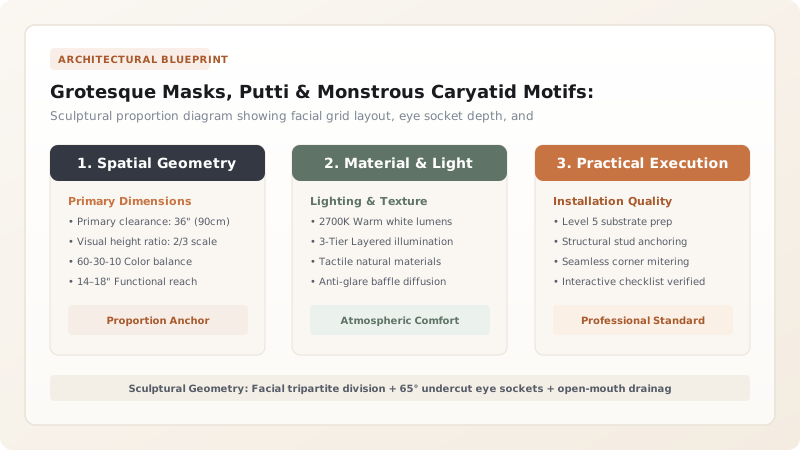
1. Apotropaic Magic & The Sicilian Cult of the Mask
In the popular psychology of 18th-century Sicily, the house was a vulnerable sanctuary constantly threatened by the unseen forces of fate, witchcraft, and the destructive envy of others (the malocchio or evil eye). Nowhere was this boundary more exposed than the balcony, where the private aristocratic salon met the turbulent public street.
By sculpting horrifying grotesques (mascheroni) with bulging eyes, bared fangs, and wagging tongues directly beneath the balcony floor, sculptors created an apotropaic mirror: an evil spirit or envious passerby looking up would be confronted by a terrifying visage that deflected the curse back onto its source.
2. Figurative Typologies: Satyrs, Sirens, Putti & Beasts
The repertoire of the Sicilian console sculptor (the scarpellino) drew from classical mythology, Spanish court culture, and Christian theology:
- Satyrs & Bacchic Demons: Figures with pointed ears, goat horns, and grapevine wreaths celebrating sensual abandonment.
- Monstrous Sirens & Harpies: Voluptuous female torsos transitioning into scaly fish tails or lion claws, supporting the balcony on their muscular shoulders (caryatids).
- Winged Putti: Chubby, joyful cherubs blowing trumpets or holding fruit garlands, symbolizing heavenly favor and dynasty fertility.
- Heraldic Menagerie: Roaring Barbary lions, snarling leopards, and winged griffins representing the military valor and noble lineage of the resident prince or duke.
3. The Sculptural Technique: Achieving Dramatic Chiaroscuro
Sicilian sculptors understood that their work would be viewed from below under the blinding, near-vertical sunlight of Mediterranean summers. Subtly modeled bas-relief would wash out and appear completely flat.
To create powerful visual drama, sculptors practiced extreme deep undercutting (sottosquadro). Using curved gouges, drill augers, and rasps, they bored deep behind the cheeks, hollowed out the eyes to a depth of 40mm to 60mm, and opened the mouth cavity completely. These cavernous recesses generated pools of pitch-black shadow (chiaroscuro) that defined crisp facial silhouettes from 15 meters below on the cobblestone street.
Baroque Console Iconography & Architectural Distribution
Use this reference table to calculate exact physical dimensions, ratios, and specifications before purchasing:
| Iconographic Motif | Symbolic Meaning | Typical Placement | Carving Relief Depth (mm) |
|---|---|---|---|
| Grotesque Grimacing Mask | Apotropaic defense (Scaccia-malocchio) | Central console beneath piano nobile | 120mm - 180mm Deep Relief |
| Winged Putto with Garland | Heavenly blessing & family fertility | Flanking bedroom and bridal chamber | 80mm - 140mm Deep Relief |
| Roaring Heraldic Lion | Feudal strength & royal justice | Flanking ceremonial reception salon | 140mm - 200mm Full Sculpture |
| Winged Siren / Caryatid | Sensual beauty & load-bearing Atlas | Corner terminal consoles | 150mm - 220mm Full Round |
Craft & Weathering Constraints
Every successful decoration project must account for physical and environmental constraints:
Extreme Thinness of Projections
Sculpted horns, tongues, and animal ears projecting beyond the stone body are highly vulnerable to impact during rigging.
Pigeon Guano Acidity
Bird droppings accumulating on projecting carved features release uric acid, etching delicate facial features over time.
Protocol for Carving an Authentic Baroque Grotesque Console
Execute this professional sequence to achieve flawless results without backtracking:
Terracotta Maquette Modeling
Sculpt small-scale clay model (bozzetto) to study shadow depths under simulated 60° overhead sunlight.
Rough Mass Roughing Out
Block out primary anatomical planes on calcarenite quarry block using heavy pitching tools and tooth chisels (gradine).
Auger Cavity Drilling
Bore pilot holes in deep shadow zones (mouth interior, ear canals, and under-jaw) using manual spoon augers or drill bits.
Deep Undercut Sculpting
Connect drilled cavities with curved gouges; carve deep undercuts behind hair curls, bared teeth, and furrowed brows.
Water Drainage Incline Channeling
Carve subtle 5° downward drainage slopes inside open mouth cavities and eye sockets to prevent rainwater accumulation.
Rasp & Pumice Surface Softening
Smooth skin surfaces using curved iron rasps (scuffini) and wet pumice, leaving fine tool marks that catch raking light.
Common Mistakes & Countermeasures
Avoid these costly errors that compromise aesthetics, ergonomics, and budget:
Carving open mouth or ear cavities with flat bottoms that trap standing rainwater
Polishing calcarenite console faces with modern silicone abrasives
Project Execution Checklist
Track your physical progress. Checkboxes persist automatically on this device:
Frequently Asked Questions
Where can the most famous grotesque Baroque balcony consoles be seen?
The most celebrated examples in the world are on the facade of Palazzo Nicolaci di Villadorata in Noto, Sicily, which features six grand balconies supported by consoles carved as winged horses, sirens, roaring lions, and grimacing theatrical masks.
How do conservators repair a broken mask jaw on a historic console?
Conservators execute a 'tassello' repair: the fractured area is cut back cleanly, an exact matching piece of aged Noto calcarenite is carved to match surviving historic photographs, and it is bonded using internal titanium micro-dowels and lime-pozzolan paste.


