
Engineer transparent enclosures for double-sided fireplaces by installing 5mm thick Robax Pyroceram ceramic-glass panels rated for continuous 1,400°F exposure. Prevent black soot buildup by routing a narrow 3/16" air-wash slot at the top of the glass frame that directs a continuous laminar sheet of pre-heated air down the interior face, suspending panels in top-hung stainless steel sliding tracks.
At a Glance: Key Takeaways
- Robax Pyroceram Glass-Ceramic (5mm): Zero thermal expansion coefficient, resisting direct flame contact and thermal shock from ice water splashing.
- Laminar Air-Curtain Wash System: Continuous downward curtain of clean air that physically repels unburnt carbon and soot from adhering to the glass.
- Top-Hung Heavy-Duty Roller Tracks: Precision stainless steel ball-bearing rollers mounted in the cool ceiling cavity, eliminating floor track debris.
- Zero-Clearance Thermal Gaskets: High-density graphite-impregnated fiberglass rope gaskets providing airtight seals around panel perimeters.
- Guillotine Counterbalanced Retraction: Counterweight pulleys allowing the glass panels to slide vertically up into the wall cavity for open fires.
1. Material Physics: Glass-Ceramic vs Tempered Glass & Zero Thermal Expansion
Standard tempered glass explodes into thousands of pebbles at temperatures above 500°F (260°C). Installing tempered glass in a high-efficiency fireplace is an extreme safety hazard.
Fireplace engineers specify Pyroceram (Robax) Lithium-Aluminosilicate Glass-Ceramic. This material has a Near-Zero Coefficient of Thermal Expansion. It can withstand continuous operating temperatures of 1,250°F (680°C) with short spikes to 1,400°F (760°C). Even if splashed with freezing ice water while in direct contact with raging flames, Pyroceram will not shatter. Master island fireplace concepts in the island fireplace hub.

2. Aerodynamics: Air-Wash Fluid Dynamics & Counterbalanced Guillotine Tracks
The biggest aesthetic flaw of wood-burning glass doors is that they turn pitch-black with soot within 30 minutes of lighting.
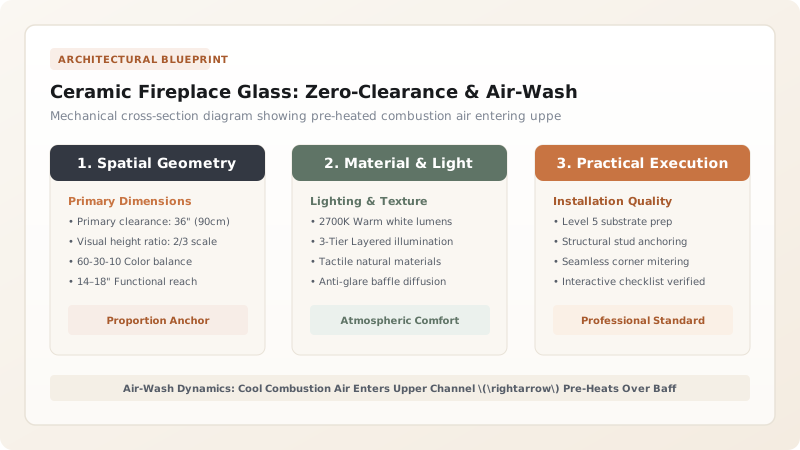
Modern high-end fireplaces solve this with an Aerodynamic Air-Wash System. Pre-heated fresh air is introduced through a calibrated 3/16-inch Slot across the Top of the Glass Frame. Because cooler air is denser than burning combustion gas, it cascades downward along the inner face of the glass like an invisible sheet of air. This prevents smoke particles from making contact with the glass, keeping it Crystal Clear for Months of Continuous Burning. Study cantilever hoods in cantilever smoke hoods and examine stone plinths in granite hearth plinths.
Fireplace Glazing Materials Comparison
Use this reference table to calculate exact physical dimensions, ratios, and specifications before purchasing:
| Glazing Material | Max Operating Temperature | Thermal Shock Resistance | Safe Application |
|---|---|---|---|
| Robax / Pyroceram Glass-Ceramic (Optimal) | 1,400°F (760°C) | Immune to thermal shock (Zero expansion) | Direct flame contact, wood & gas fireplaces |
| Tempered Soda-Lime Glass (Danger) | 450°F to 500°F | Zero (Shatters instantly if splashed or overheated) | Low-heat decorative outdoor torches only |
| Borosilicate Glass (Pyrex) | 850°F (450°C) | Moderate (Can crack under direct wood fire) | Laboratory ovens / Low-output gas units |
| Fused Quartz Crystal Plate | 1,800°F (1,000°C) | Extreme | Industrial kilns (Extremely expensive for residential) |
Top-Hung Roller Bearing Heat Seizure
Every successful decoration project must account for physical and environmental constraints:
Mounting Sliding Glass Roller Bearings Inside the Hot Firebox Header Seizing Rollers
Standard steel ball bearings packed with petroleum grease seize solid when exposed to temperatures exceeding 300°F; always isolate roller hardware in an insulated, ventilated ceiling pocket above the thermal barrier, using high-temperature ceramic ball bearings lubricated with dry graphite flake.
How to Install a Guillotine Ceramic Glass Enclosure with Air-Wash
Execute this professional sequence to achieve flawless results without backtracking:
Frame Concealed Pocket Above Fireplace Opening
Construct non-combustible steel stud pocket above fireplace header to receive the glass panel when raised.
Mount Precision Linear Vertical Guide Rails
Bolt 316 stainless steel linear guide rails to vertical jambs, checking parallel spacing with a laser micrometer.
Hang Lead Counterweights with Stainless Steel Aircraft Cables
Rig 7×19 strand stainless aircraft cables over high-temp pulleys, matching counterweight mass exactly to the glass frame weight.
Install 5mm Robax Ceramic Glass into Gasketed Steel Frame
Cushion glass inside welded steel frame with graphite fiberglass rope gasket; avoid metal-to-glass direct contact.
Calibrate Air-Wash Deflector Slot Across Upper Frame Edge
Adjust top air baffle to maintain continuous 3/16" slot; verify uniform air suction with smoke pencil test.
Test Guillotine Vertical Glide and Balance
Slide glass up and down; confirm effortless movement and verify that panel holds position anywhere along its travel.
Burn Test Fire and Verify Zero Soot Accumulation
Build hot oak kindling fire; observe air-wash flow; confirm glass remains crystal-clear during full 4-hour burn.
Common Mistakes & Countermeasures
Avoid these costly errors that compromise aesthetics, ergonomics, and budget:
Using Ammonia-Based Glass Cleaners on Ceramic Glass
Project Execution Checklist
Track your physical progress. Checkboxes persist automatically on this device:
Frequently Asked Questions
What is the difference between tempered glass and ceramic glass?
Tempered glass is structural glass treated for impact resistance, but it fails thermally above 500°F. Ceramic glass (Pyroceram) is a polycrystalline ceramic that behaves like glass optically but has zero thermal expansion, resisting direct fire at 1,400°F.


