
Fabricate and suspend floating island fireplace smoke hoods by welding an overhead structural gantry of HSS 6×6 steel tubing in the ceiling rafters. Hang the 1/4" thick welded steel smoke hood from four 3/4" Grade 8 threaded rods with vibration-damping neoprene washers, and connect the canopy apex to an insulated stainless steel chimney pipe via a telescoping thermal expansion slip joint.
At a Glance: Key Takeaways
- HSS Structural Gantry: Welded hollow structural steel framework spanning between primary building columns in the ceiling attic space.
- 1/4-Inch Hot-Rolled Carbon Steel Plate: Thick plate construction preventing heat oil-canning and metallic tinny resonances.
- Telescoping Flue Thermal Slip Joint: Allows the chimney pipe to expand up to 1-1/2 inches vertically without bending the ceiling canopy.
- Internal Ceramic Fiber Insulation: 1-inch 2,300°F ceramic blanket lining inside the hood, keeping the exterior metal surface safe and cool.
- High-Temperature Gunmetal Black Patina: Cold-blackened steel finish sealed with microcrystalline wax for a velvety, non-reflective architectural aesthetic.
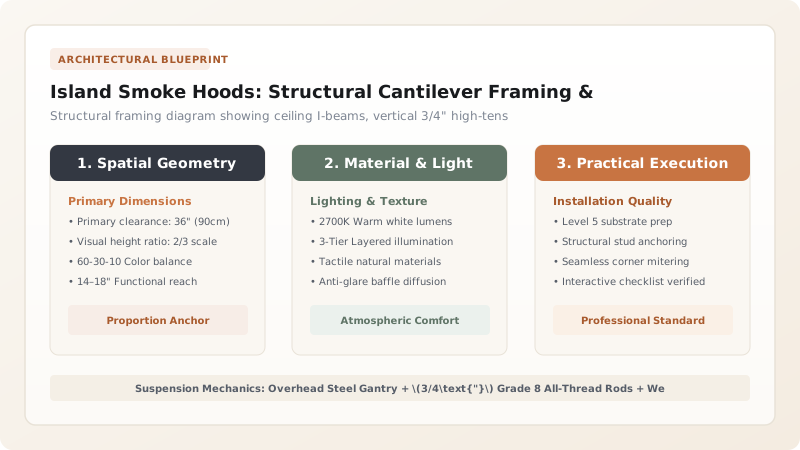
1. Structural Steel Engineering: Overhead Gantries & All-Thread Suspension
A 5-foot square or conical steel smoke canopy fabricated from 1/4-inch plate weighs between 800 and 1,500 pounds. Standard residential wood ceiling joists cannot carry this concentrated overhead load.
Structural engineers design a dedicated Overhead Steel Gantry fabricated from HSS 6×6×3/8" Square Tubing or W8×24 Wide-Flange Steel I-Beams bolted directly to the building's structural columns. Four 3/4-inch High-Tensile Threaded Rods (ASTM A193 B7) drop through the finished ceiling, threading into reinforced corner lugs inside the hood. Precision turnbuckle nuts allow the installer to level the floating hood to within 1/32 of an inch. Master the complete island design in the island fireplace hub.

2. Thermal Physics: Telescoping Expansion Sleeves & Mechanical Fan Sizing
When an island fire burns, the first 10 feet of chimney pipe can heat from 60°F to 800°F, causing the metal pipe to Grow Vertically by over 1 Inch. If welded rigidly, this expansion will buckle the hood or push through the roof deck.
Fabricators engineer a Telescoping Double-Slip Flue Collar with graphite packing that glides smoothly during heat cycles. To guarantee that every wisp of smoke enters the hood, a Rooftop Chimney Fan (Induced Draft) creates an air capture velocity of at least 50 Feet Per Minute (FPM) across the entire open perimeter area between the hearth plinth and the hood lip. Explore glass barriers in ceramic glass enclosures and stone plinths in granite hearth plinths.
Smoke Hood Material & Fabrication Options
Use this reference table to calculate exact physical dimensions, ratios, and specifications before purchasing:
| Hood Material | Thickness / Gauge | Heat Distortion Resistance | Visual Aesthetic |
|---|---|---|---|
| Hot-Rolled Carbon Steel Plate (Optimal) | 1/4" (6.35mm thick plate) | Exceptional (Zero oil-canning or warping) | Architectural matte black / Industrial patina |
| Architectural Silicon Bronze Plate | 3/16" (4.76mm solid bronze) | High (Resists thermal warping) | Living chemical antique bronze patina |
| Sheet Metal Clad on Studs (Avoid) | 20-Gauge sheet metal over light track | Very Poor (Bows, pops, and rattles when hot) | Commercial drywall aesthetic |
| Cast Aluminum Canopy | 3/8" Cast segments | Moderate (Lower melting point / Gas only) | Heavy textured antique reproduction |
Hood Thermal Oil-Canning Buckling Noise
Every successful decoration project must account for physical and environmental constraints:
Thin 1/8" Steel Hood Plates Popping and Booming Loudly from Thermal Oil-Canning
Fabricating wide flat-sided smoke hoods from thin 1/8" (11-gauge) steel causes the sheets to pop and bang like a drum as they expand; always specify 1/4" minimum plate thickness and weld continuous 2" × 2" internal structural angle-iron stiffening ribs diagonally across all flat interior hood panels.
How to Frame, Suspend, and Connect a Steel Island Smoke Hood
Execute this professional sequence to achieve flawless results without backtracking:
Mount HSS Steel Gantry in Roof Cavity Above Opening
Bolt HSS 6×6 steel tubes to structural building columns; verify dead-level orientation with rotary laser.
Drop Four 3/4" Grade 8 Threaded Suspension Rods
Drill through ceiling drywall; drop threaded rods with rubber isolation washers and double locking nuts.
Weld 1/4" Steel Smoke Hood with Internal Diagonal Stiffeners
MIG-weld 1/4" steel plates; weld 2×2 internal angle stiffeners; grind exterior seams perfectly smooth.
Hoist Hood on Chain Falls and Fasten to Suspension Rods
Rig lifting straps; hoist hood to specified height (typically 30"–36" above hearth); thread rods into internal lifting lugs.
Install Telescoping Stainless Steel Flue Expansion Sleeve
Slide male stainless chimney section 4" into female hood collar; pack with graphite braided packing rope.
Mount Variable-Speed Induced Draft Fan on Chimney Top
Install rooftop chimney power fan (minimum 1,200 CFM rating); wire controller to fireplace wall switch.
Apply High-Temperature Chemical Blackening Patina
Clean steel with solvent; apply cold selenium blackening patina; buff with Renaissance microcrystalline wax.
Common Mistakes & Countermeasures
Avoid these costly errors that compromise aesthetics, ergonomics, and budget:
Hanging the Smoke Hood Too High Above the Hearth
Project Execution Checklist
Track your physical progress. Checkboxes persist automatically on this device:
Frequently Asked Questions
How do you calculate the capture velocity for an island fireplace hood?
Capture velocity is calculated by multiplying the perimeter open area between the hearth and the hood by 50 FPM. For an island with 16 feet of open perimeter and a 2.5-foot gap (40 sq ft of opening), the fan must move at least 2,000 CFM of air.


