
Design custom pleated draperies with a 2.5x fabric fullness ratio (finished panel width = 2.5 times window rod span). Reinforce headers with 4-inch heavy non-woven buckram crinoline, insert adjustable 4-prong steel pin hooks set for a 1/2-inch floor clearance, and select Euro top-pinch pleats for modern transitional elegance.
At a Glance: Key Takeaways
- 2.5x Fabric Fullness Standard: Essential to create deep, luxurious fabric folds that stack neatly when opened.
- Euro Top-Pinch (Parisian Pleat): Tacked at the very top edge, allowing drapery fabric to flare out in relaxed, flowing columns.
- 4-Inch Heavy Buckram Stiffener: Permanent non-woven crinoline inside the header keeps pleats standing rigid without sagging.
- Adjustable Steel Pin Hooks: Heavy 1-1/2" steel hooks allow 1-inch fine vertical tuning to dial in exact floor hems.
- The 1/2-Inch Floor Clearance Rule: Floats draperies 1/2" above finished hardwood for frictionless drawing without gathering dust.
In-Depth Guides in this Directory
Explore specialized subtopic blueprints, technical dimensions, and execution checklists:
French vs Euro Pleats: Workroom Math & 2.5x Fullness
Master professional drapery workroom mathematics: French 3-finger pinch vs Euro top-tack pleat formulas, calculating pleat depths and spaces, and 2.5x fullness seam spacing.
Pin Hook Height: Ring Drops & 1/2" Floor Break Math
Master drapery pin hook installation: calculating curtain ring drop eyelet offsets, setting 4-prong heavy steel pin hook heights, and dialing in exact 1/2-inch floor float hems.
Buckram & Crinoline: Header Weights & 4" Interfacings
Master drapery header stabilization: 4-inch non-woven buckram crinoline interfacings, fabric weight matching (light vs heavy draperies), and preventing header flop and sag.
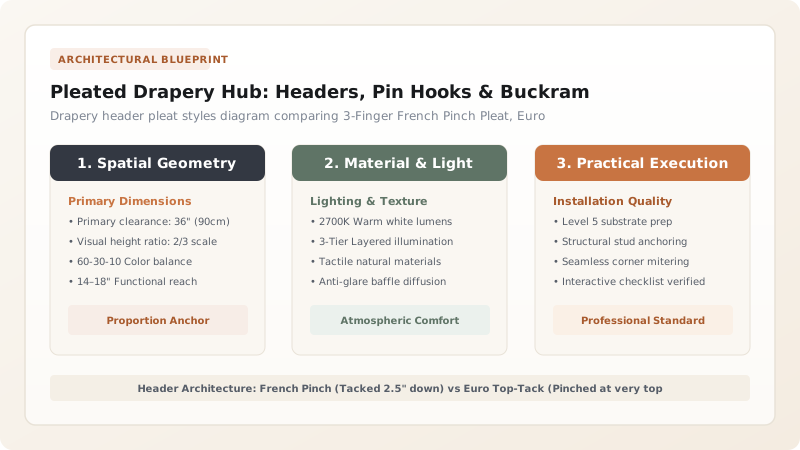
1. Fabric Geometry: Calculating 2.5x Fullness & Stackback
Ready-made store-bought curtains feature skimpy 1.5x fullness. When drawn closed, they pull flat like a cheap sheet, losing all vertical shadow lines and acoustic dampening.
Bespoke custom workrooms calculate drapery yardage using 2.5x Fullness (250% of track width). Every 50-inch finished panel requires 125 inches of flat fabric, folded into structured 3-finger French pleats or Euro top-tacks reinforced with heavy buckram, delivering museum-grade vertical drape and acoustic sound absorption.

Pleated Drapery Header Styles & Fullness Ratios
Use this reference table to calculate exact physical dimensions, ratios, and specifications before purchasing:
| Pleat Style | Fabric Fullness Ratio | Tacking Point Location | Visual Aesthetic |
|---|---|---|---|
| Euro Top-Pinch / Parisian (Optimal) | 2.5x Fullness | Tacked at top 1/4" edge | Modern Transitional / Clean luxury |
| Traditional French Pinch (3-Finger) | 2.5x - 3.0x Fullness | Tacked 2.5" - 3.0" below top | Formal Traditional / Georgian grand |
| Inverted Box Pleat | 2.0x - 2.5x Fullness | Hidden interior box fold | Architectural Minimalist / Tailored |
| Ripplefold S-Wave System | 2.0x - 2.6x Fullness | Snap tape on carriers | Contemporary Scandinavian / Hospitality |
Stackback Window Glass Obstruction Constraints
Every successful decoration project must account for physical and environmental constraints:
Heavy Drapery Stack Blocking 30% of Window Glass and Natural Daylight
Pleated drapes require 1/3 of total rod length for stackback when drawn open; extend the drapery rod 12 to 18 inches past the window frame on both sides so panels rest completely over drywall, leaving 100% of glass unobstructed.
How to Measure and Hang Pleated Drapery
Execute this professional sequence to achieve flawless results without backtracking:
Mount Rod High and Wide
Mount rod 4" to 8" above window casing (or 2" below ceiling) and 12" past casing on each side.
Measure Finished Length to Floor
Measure from the bottom of the curtain ring eyelet down to the floor; subtract 1/2" for clear float.
Insert 4-Prong Pin Hooks into Pleats
Insert steel pin hooks into the back of each pleat, setting the hook height to align with ring eyelets.
Hang Panels and Dress the Folds
Hook into rings, fold fabric into vertical flutes by hand, and loosely tie with ribbon for 48 hours ('training the drapes').
Steam with Vertical Fabric Steamer
Steam fabric from top to bottom to release packaging creases and relax linen fibers into smooth columns.
Common Mistakes & Countermeasures
Avoid these costly errors that compromise aesthetics, ergonomics, and budget:
Using Flimsy 1.5x Fullness Ready-Made Grommet Curtains
Project Execution Checklist
Track your physical progress. Checkboxes persist automatically on this device:
Frequently Asked Questions
What is the difference between a floor float, kiss, and puddle hem?
A float hem hovers 1/2" above the floor (best for active drawing and cleanliness). A kiss hem touches the floor surface precisely with zero break. A puddle hem extends 2 to 4 inches onto the floor for dramatic, romantic formal bedrooms.


