
Choose 1/2-inch reflective tempered fire glass for modern fire tables in wet or rainy climates because its non-porous surface absorbs zero moisture and cannot explode. Choose black volcanic lava rock for rustic, natural landscapes, but ensure the fire pit is covered with a waterproof lid to prevent dangerous steam-explosion popping.
At a Glance: Key Takeaways
- Tempered Glass Resilience (1,300°F): Specially treated to withstand extreme burner temperatures without melting or smoking.
- Zero Water Absorption (Fire Glass): Eliminates the steam-expansion popping hazard associated with wet outdoor stones.
- Reflective Mirror Coating: Mirrored metallic backing bounces dancing flames, doubling visual illumination at night.
- Lava Rock Thermal Mass: Retains and radiates residual heat longer after the gas burner is turned off.
1. Material Science: Thermal Shock & Steam Superheating
Using standard landscape gravel, river pebbles, or recycled beer bottles in a gas fire pit is extremely hazardous. Ordinary glass shatters violently into sharp shards at \(300^{\circ}\text{F}\), while river stones contain trapped water pockets that expand into steam bombs, launching rock shrapnel up to 20 feet.
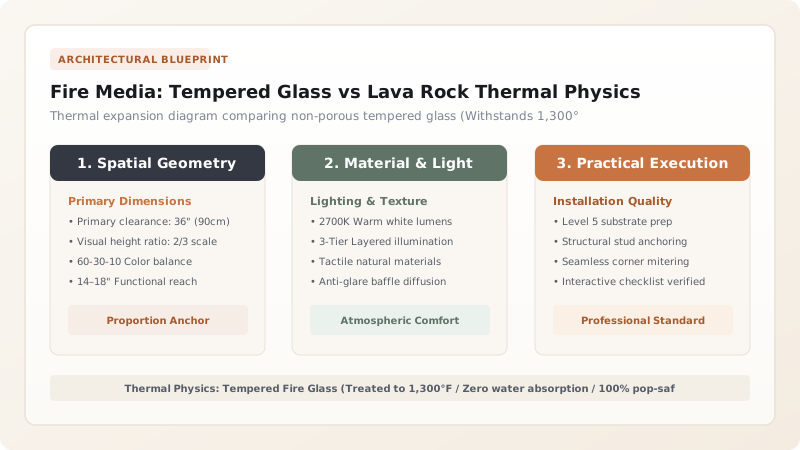
Certified Tempered Fire Glass undergoes extreme thermal quenching, altering its internal crystal structure so it withstands continuous \(1,300^{\circ}\text{F} (700^{\circ}\text{C})\) heat with zero thermal shock. Non-porous glass cannot absorb water, making it the safest choice for exposed outdoor patios.

Fire Table Media Comparison
Use this reference table to calculate exact physical dimensions, ratios, and specifications before purchasing:
| Fire Media Type | Max Heat Tolerance | Moisture Explosion Risk | Aesthetic Style |
|---|---|---|---|
| 1/2" Reflective Tempered Glass (Optimal) | 1,300°F (700°C) | 0% (Zero porosity / Completely safe) | Contemporary, luxury modern resort |
| Volcanic Lava Rock (Pre-Cured) | 1,400°F (800°C) | Moderate (Can pop if soaked with rain) | Rustic, organic mountain modern |
| Refractory Ceramic Fire Balls | 1,500°F+ | 0% (Engineered ceramic) | Mid-century geometric sculptural |
| Standard River Rocks (FORBIDDEN) | 250°F (FAILS) | EXTREME EXPLOSION HAZARD | SEVERE LIFE-SAFETY HAZARD |
Fire Glass Depth Flame Suffocation Constraints
Every successful decoration project must account for physical and environmental constraints:
Pouring Too Much Fire Glass Suffocating the Gas Burner
Covering the burner with more than 2 inches of glass restricts oxygen flow, causing gas to pool and ignite in dangerous 'mini-explosions' (delayed ignition); maintain a strict 1-to-1.5-inch media depth over the burner ports.
How to Calculate and Install Fire Glass
Execute this professional sequence to achieve flawless results without backtracking:
Calculate Glass Quantity Formula
Formula: (Length" × Width" × 1.5" Depth) / 19 = Total lbs of Fire Glass needed.
Inspect Burner Pan Weep Holes
Ensure burner pan bottom drainage holes are completely unobstructed.
Rinse Glass in Mesh Colander
Rinse fire glass with water to wash off fine manufacturing dust; let dry 100%.
Pour 1.5" Even Layer Over Burner
Gently spread glass across the pan, covering burner ports with exactly 1/2" to 1" of glass.
Test Ignition and Check Flame Height
Light burner, verifying smooth instant ignition across all ports without popping.
Common Mistakes & Countermeasures
Avoid these costly errors that compromise aesthetics, ergonomics, and budget:
Using Landscape Lava Gravel from a Garden Center in a Fire Table
Project Execution Checklist
Track your physical progress. Checkboxes persist automatically on this device:
Frequently Asked Questions
Does fire glass ever need to be replaced?
High-quality tempered fire glass never degrades, melts, or burns. If it becomes dusty or smudged with soot over several years, simply scoop it out, wash it in a bucket of soapy water, rinse, and return it to the pan.


