
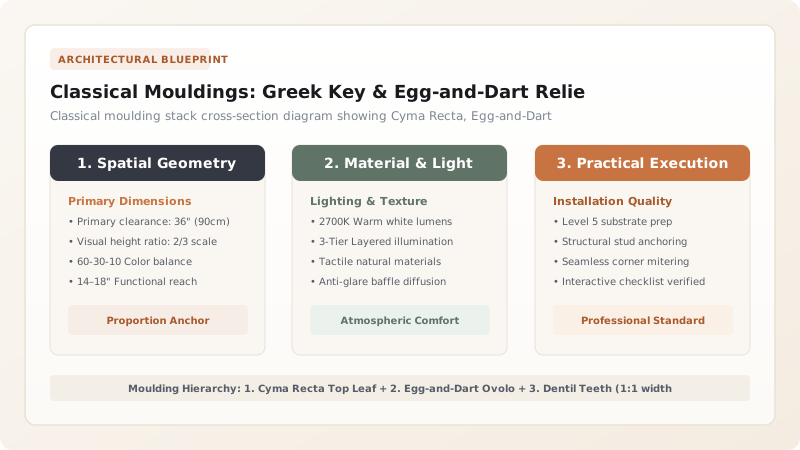
Incorporate classical ornamentation by layering mouldings in strict Vitruvian hierarchy: top with a sweeping Cyma Recta leaf crown, transition through an Egg-and-Dart carved ovolo bed moulding, and ground with a continuous Greek Key (Meander) fretwork frieze or dentil tooth band.
At a Glance: Key Takeaways
- Egg-and-Dart (*Ovolo*): Alternating egg-shaped convex ovals and sharp downward dart arrows symbolizing life and death.
- Greek Key (*Meander Fret*): Continuous geometric interlocking labyrinth band symbolizing eternity and infinity.
- Dentil Tooth Spacing Rule: Dentil tooth width must equal the gap between teeth (1:1 ratio) for true classical rhythm.
- Acanthus Leaf Modillions: Sculptural carved brackets projecting horizontally under the cornice corona.
- Solid Wood vs Cast Gypsum: Hand-carved solid basswood or cast gypsum plaster provides razor-sharp relief.
1. Classical Syntax: The Hierarchy of Architectural Profiles
In classical architecture, ornamentation is never placed randomly. Every carved motif is assigned to a specific geometric moulding profile (*The Classical Syntax*):
- Convex Ovolo Curves receive Egg-and-Dart carvings (the curved egg complements the convex profile).
- Concave Cavetto Hollows receive Fluting or Waterleaf carvings.
- Flat Vertical Fascias & Friezes receive Greek Key (Meander) or Acanthus scroll guilloche patterns.
Violating this syntax (e.g. putting egg-and-dart on a flat board) destroys the harmonious optical rhythm established by ancient Greek architects.

Classical Moulding Motifs & Profile Positions
Use this reference table to calculate exact physical dimensions, ratios, and specifications before purchasing:
| Classical Relief Motif | Moulding Profile Category | Symbolic Meaning | Optimal Placement |
|---|---|---|---|
| Egg-and-Dart | Convex Ovolo / Bed Moulding | Life (Egg) & Death (Dart) | Directly beneath crown corona |
| Greek Key (Meander) | Flat Vertical Frieze / Band | Infinity, Unity & Eternity | Fireplace mantels & door architraves |
| Dentil Blocks | Horizontal Bed Tooth Course | Rafter tail ends (Structure) | Cornice entablature bed |
| Acanthus Leaf Scroll | Cyma Recta / Modillion Brackets | Enduring immortality | Ceiling perimeter crown & capitals |
Dentil Corner Miter Bisecting Constraints
Every successful decoration project must account for physical and environmental constraints:
Dentil Teeth Colliding Awkwardly at 45-Degree Inside Corners
Cutting dentil moulding at random lengths results in sliced half-teeth that look broken; calculate corner layouts so 45° miter cuts land exactly in the center of a dentil tooth or center of a space on both intersecting walls.
How to Build a Multi-Layer Classical Entablature
Execute this professional sequence to achieve flawless results without backtracking:
Install 1x6 Solid Wood Frieze Board
Nail flat 1x6 poplar board against the wall studs directly below the ceiling.
Mount Greek Key Inlay Trim
Glue and pin a 2-inch carved Greek key meander band across the center of the frieze board.
Fasten Dentil Bed Moulding Course
Install dentil moulding course, adjusting layout so corners bisect teeth symmetrically.
Install Egg-and-Dart Ovolo Moulding
Fasten egg-and-dart moulding directly above dentils using 18-gauge finish brad nails.
Cap with Cyma Recta Crown Cornice
Install top 4-inch crown moulding springing between egg-and-dart and the finished ceiling.
Common Mistakes & Countermeasures
Avoid these costly errors that compromise aesthetics, ergonomics, and budget:
Using Cheap Plastic Resin Mouldings that Smudge Paint Details
Project Execution Checklist
Track your physical progress. Checkboxes persist automatically on this device:
Frequently Asked Questions
Can Greek key mouldings be used on modern cabinetry?
Yes! Inset Greek key fretwork bands applied to modern shaker cabinet doors or floating vanities create an exquisite 'Modern Hollywood Regency' or 'Transitional Neoclassical' accent.


