
Route low-voltage TV cables through walls by installing a 2-inch flexible non-metallic conduit (ENT Smurf tube) connected between dual-gang open-back low-voltage mounting brackets. Cap both wall openings with nylon brush wall plates, maintaining a minimum 6-inch bend radius to ensure thick HDMI 2.1 cable heads slide freely.
At a Glance: Key Takeaways
- 2-Inch Diameter Standard: Easily accommodates multiple thick braided HDMI 2.1, optical audio, and power supply cables.
- 6-Inch Minimum Bend Radius: Long-radius sweep curves prevent stiff high-speed cables from jamming during pulls.
- Nylon Pull-String Provision: Always leave a heavy 200-lb test nylon pull string inside the conduit for future cable upgrades.
- Dual-Gang Brush Plates: Dense nylon bristles provide a clean aesthetic finish while preventing insect and dust passage.
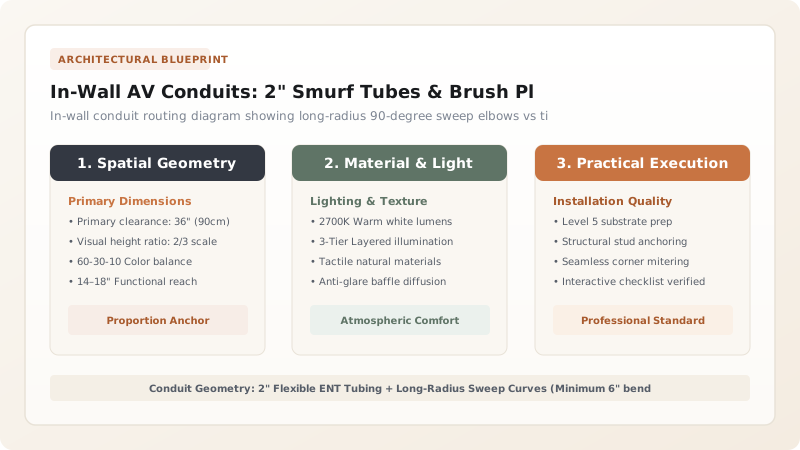
1. Conduit Engineering: Bend Radii & Friction Coefficient
Modern 8K HDMI 2.1 cables feature heavy braided shielding, ferrite cores, and rigid molded connector plugs measuring up to 1.25 inches in width. Attempting to pull these cables through standard 1-inch plumbing pipe or tight 90-degree plumbing elbows results in pinched, permanently ruined copper conductors.
A true architectural AV path requires 2-inch Electrical Nonmetallic Tubing (ENT) with a minimum 6-inch sweep radius. The smooth corrugated interior minimizes pulling friction, allowing new cables to be added or replaced in under 5 minutes.

Conduit Sizing vs Cable Capacity
Use this reference table to calculate exact physical dimensions, ratios, and specifications before purchasing:
| Conduit Inner Diameter | Max HDMI Plugs Passed | Bend Radius Required | Future-Proof Rating |
|---|---|---|---|
| 2.00" Flexible ENT (Optimal) | 3 - 4 Heavy HDMI 2.1 Plugs | 6.0" Minimum Sweep | 100% Future-Proof (8K / Fiber ready) |
| 1.50" Flexible Tubing | 2 Standard HDMI Plugs | 5.0" Sweep | Adequate for basic TV setup |
| 1.00" Rigid PVC Pipe | 1 Slim HDMI Plug (TIGHT FIT) | 4.0" Sweep | POOR: Plugs jam frequently |
| 3/4" Electrical Conduit | 0 HDMI Plugs (Connectors will not fit) | 3.0" Tight 90° | FORBIDDEN: Low-voltage only (Bare wire) |
Horizontal Wall Fireblock Stud Obstruction Constraints
Every successful decoration project must account for physical and environmental constraints:
Horizontal Wood Fireblocking in Stud Bay Blocking Vertical Conduit Path
Homes over 8 feet tall have horizontal 2x4 fireblocks midway up the wall; use a 2-1/8" self-feed wood boring bit on an extension rod (or open a 4-inch drywall patch) to drill through the center of the fireblock for the 2" conduit.
How to Install an In-Wall AV Conduit with Brush Plates
Execute this professional sequence to achieve flawless results without backtracking:
Trace Dual-Gang Low-Voltage Brackets
Trace low-voltage mounting rings behind TV mount (54" height) and behind console (18" height).
Cut Drywall Openings
Use a jab saw to cut openings, checking inside the bay for electrical wires or plumbing pipes.
Route 2" Flexible Smurf Tubing
Feed 2" ENT conduit through the wall cavity, securing top and bottom ends into the brackets.
Fish Nylon Pull String
Tie a small foam ball to a nylon mason's line and vacuum it through with a shop vac.
Pull Cables and Install Brush Plates
Tape HDMI cables to the pull string, pull through conduit, and screw on dual-gang brush wall plates.
Common Mistakes & Countermeasures
Avoid these costly errors that compromise aesthetics, ergonomics, and budget:
Pulling Out the Pull-String Without Tying a Replacement Line
Project Execution Checklist
Track your physical progress. Checkboxes persist automatically on this device:
Frequently Asked Questions
Can you run in-wall conduit through an exterior insulated wall?
Yes, but routing conduit through exterior walls compresses fiberglass insulation, reducing R-value. It is always best to choose an interior partition wall for wall-mounted TV conduits whenever possible.


