
Clad Kachelofen masonry heaters using authentic hollow-backed ceramic *Kachel* tiles. Pack the rear hollow rim (*steeg*) with a damp blend of fireclay and crushed brick (*chamotte*), wire adjacent tiles together with 12-gauge solid copper loops, and leave a 1/2-inch free-floating expansion gap lined with ceramic wool between the tile skin and the hot internal refractory core.
At a Glance: Key Takeaways
- Hollow-Backed *Steeg* Rims: The rear of each ceramic tile features a 2-inch deep raised lip creating a structural packing pocket.
- Clay and Chamotte Core Pack: Hollow backs are packed with damp fireclay and crushed refractory brick to add thermal mass.
- 12-Gauge Solid Copper Tie Wires: Hand-twisted wire loops through tile pre-drilled holes holding the entire tile facade in flexible tension.
- 1/2-Inch Decoupled Expansion Gap: Prevents the superheated expanding core from pushing outward against the delicate glazed tiles.
- Hand-Dipped Ceramic Majolica Glazes: Fired at 1,900°F, creating deep emerald green, cobalt blue, or creamy ivory radiant heat surfaces.
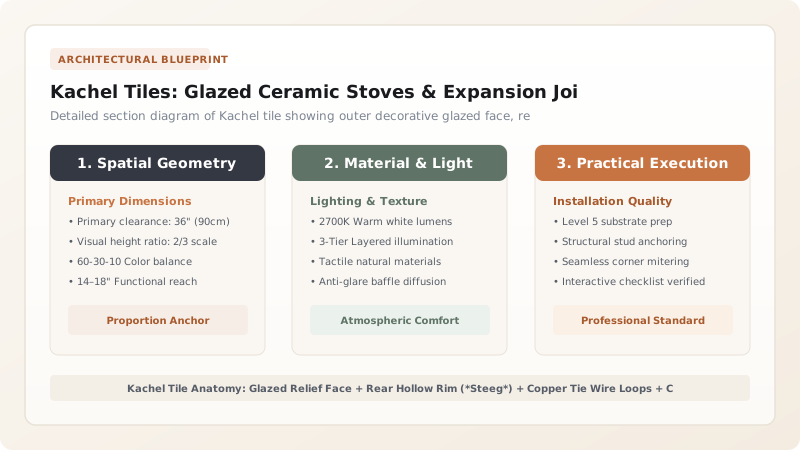
1. Ceramic Engineering: The *Steeg* Hollow Rim & Copper Wiring Tension
Standard bathroom tiles glued to a masonry heater with thin-set will crack and explode off the wall within weeks. Traditional Austrian Kachel Tiles are engineered specifically for thermal cycling.
Each tile is cast with a deep rear collar called the *Steeg*. The mason drills holes through adjacent steeg ribs and threads 12-Gauge Solid Copper Wire through the tiles. Twisting these wires with pliers creates a self-supporting, flexible cage that holds all tiles in tight alignment without any rigid cement mortar between the tile faces. Explore the complete masonry heater architecture in our Kachelofen hub.

2. Thermal Isolation: The 1/2-Inch Core Decoupling Gap & Chamotte Packing
The internal firebox and flue core reach temperatures above 1,500°F, expanding significantly during a burn cycle.
To isolate this movement from the outer glazed shell, stove builders leave a 1/2-inch to 3/4-inch Continuous Air Gap between the core and the tiles. This gap is lined with High-Temperature Ceramic Wool Blanket. The hollow backs of the tiles are packed solid with Damp Clay-Chamotte Mortar, which conducts heat evenly from the gap into the ceramic surface, warming the tiles to a safe, comfortable 120°F to 140°F (49°C to 60°C). Learn about flues in multi-flue serpentine channels and examine soapstone cores.
Masonry Stove Cladding Systems Comparison
Use this reference table to calculate exact physical dimensions, ratios, and specifications before purchasing:
| Cladding Method | Thermal Shock Tolerance | Surface Temperature Comfort | Aesthetic Historical Prestige |
|---|---|---|---|
| Wire-Tied Ceramic Kachel Tiles (Optimal) | Exceptional (Copper wires flex under heat) | 120°F to 145°F (Comfortable to lean against) | 5 / 5 (Austrian & Bavarian royal chalet) |
| Natural Polished Soapstone Slabs | Exceptional (High thermal inertia) | 130°F to 160°F | 4 / 5 (Scandinavian & Finnish minimalist) |
| Thin Ceramic Tiles Glued with Mortar (Avoid) | Very Poor (Tiles crack and pop off in 1 yr) | 180°F to 220°F (Dangerous hot spots) | 1 / 5 (Suburban DIY failure) |
| Lime-Parged Stucco Finish | High (Flexible lime accommodates heat) | 120°F to 140°F | 4 / 5 (Rustic Mediterranean / Swiss farmhouse) |
Rigid Grout Joint Cracking Flaking
Every successful decoration project must account for physical and environmental constraints:
Grouting Ceramic Kachel Tile Seams with Hard Modern Sanded Tile Grout
Standard sanded Portland tile grout dries rock-hard with zero elasticity; as the Kachel tiles expand and breathe, rigid grout fractures into white powder and falls out; strictly grout Kachel tile face seams with traditional flexible lime-clay-chalk paste or high-temperature elastomeric silicone matched to glaze colors.
How to Wire, Pack, and Set Ceramic Kachel Tiles
Execute this professional sequence to achieve flawless results without backtracking:
Inspect Hand-Glazed Kachel Tiles for Uniform Rim Dimensions
Check rear *steeg* rims; grind high spots on diamond plate to ensure tiles stack perfectly square without rocking.
Drill Copper Wire Holes Through Rear Steeg Rims
Drill 3/16" holes through the side and top rims of each tile using a diamond core bit, positioned 1/2" back from face.
Mix Traditional Clay-Chamotte Thermal Packing Blend
Mix 1 part dry fireclay, 2 parts crushed calcined firebrick (chamotte grog), and clean water to a stiff putty consistency.
Pack Hollow Tile Backs Solid with Chamotte Putty
Press damp clay-chamotte mixture firmly into the rear cavity of each tile, striking flush with the rear steeg collar.
Thread 12-Gauge Copper Tie Wires Between Adjoining Tiles
Insert soft copper wire loops through matching holes in adjacent tiles; twist ends tightly with lineman's pliers.
Maintain 1/2" Decoupling Gap to Hot Internal Core
Place 1/2" ceramic fiber insulation blanket against the core before raising the tile courses, ensuring zero rigid contact.
Fill Visible Face Seams with Flexible Lime-Chalk Grout
Pack tile face joints with colored lime-chalk putty; wipe clean with damp sponge; buff glaze to high specular gloss.
Common Mistakes & Countermeasures
Avoid these costly errors that compromise aesthetics, ergonomics, and budget:
Omitting Copper Wire Loops Between Adjacent Tiles
Project Execution Checklist
Track your physical progress. Checkboxes persist automatically on this device:
Frequently Asked Questions
Can you sit on a Kachelofen heated bench?
Yes! Authentic Kachelofen stoves frequently incorporate an integrated heated bench (*Ofenbank*). The exhaust channels loop under the ceramic-tiled bench seat, warming it to a deeply soothing 105°F to 115°F—the ultimate alpine luxury.


