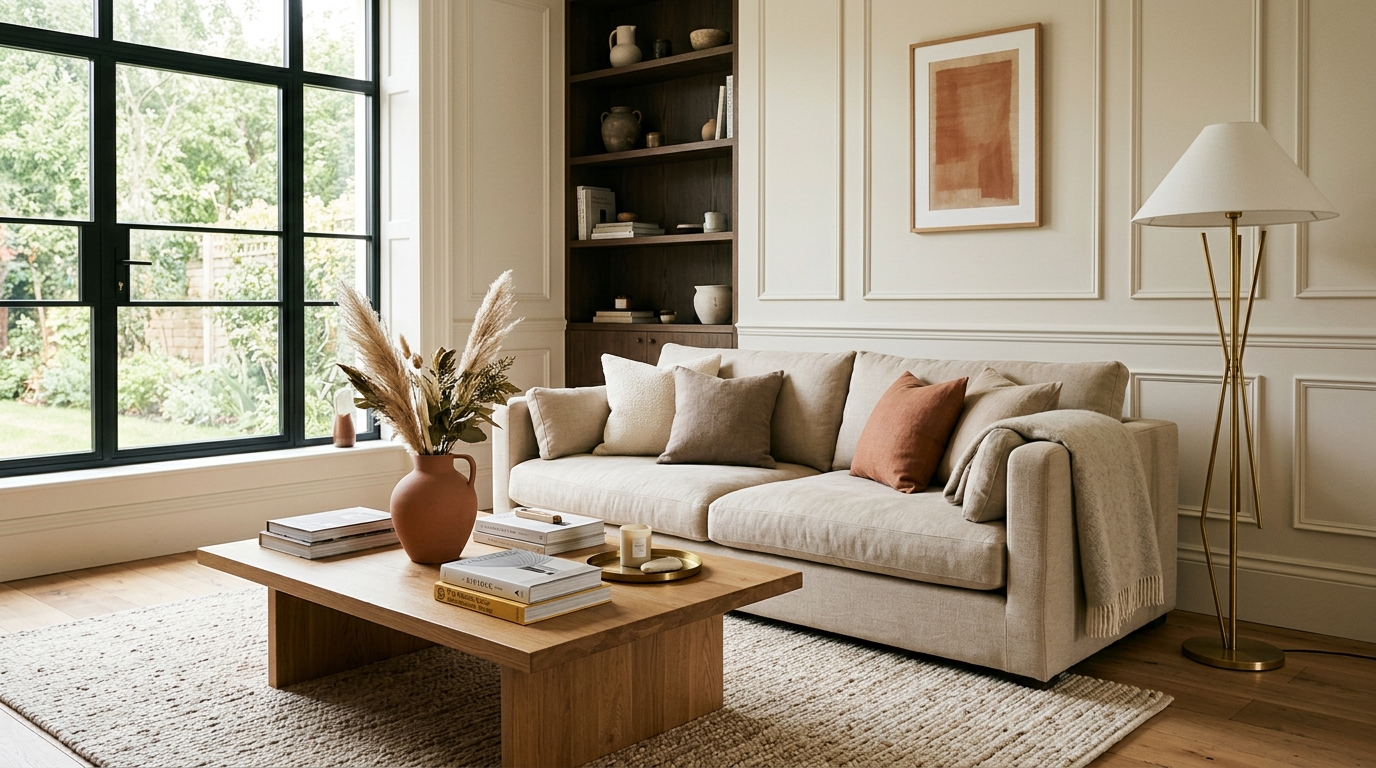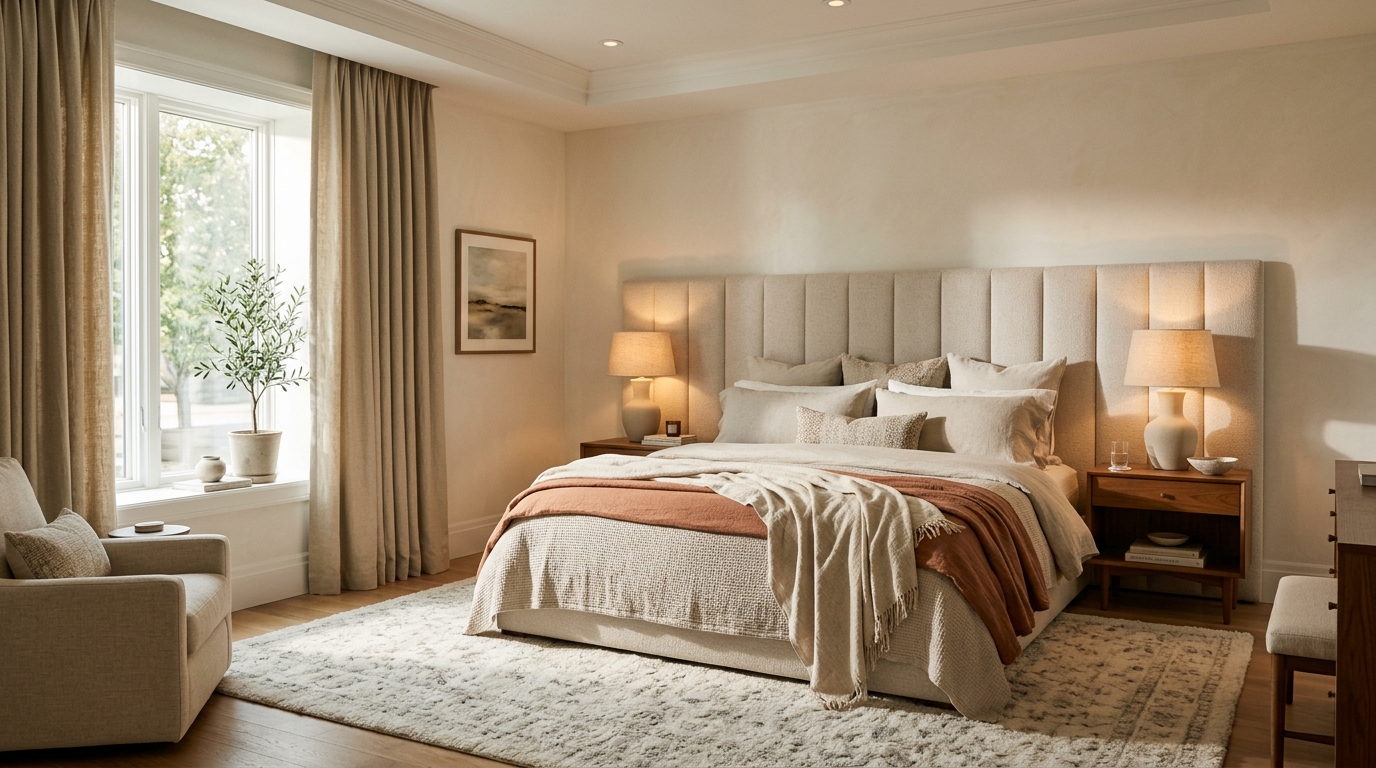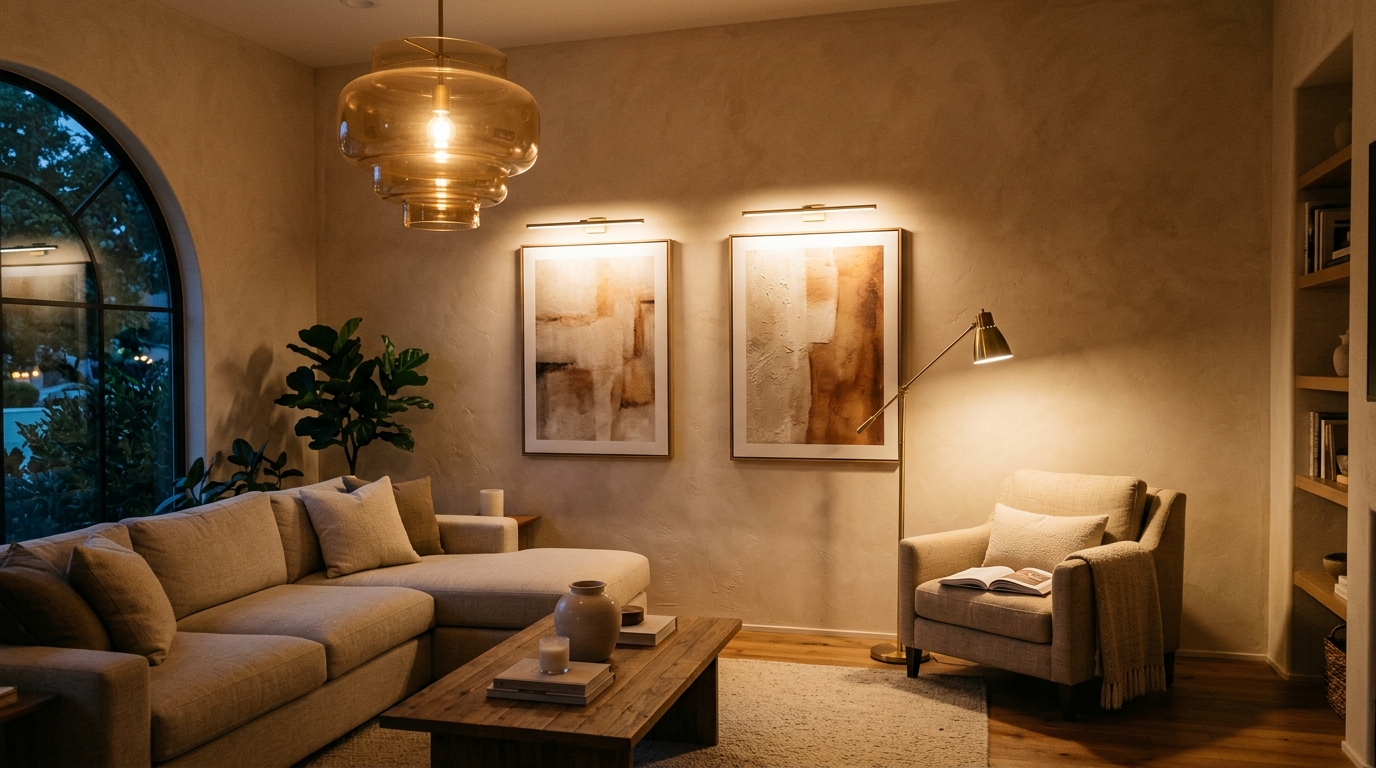
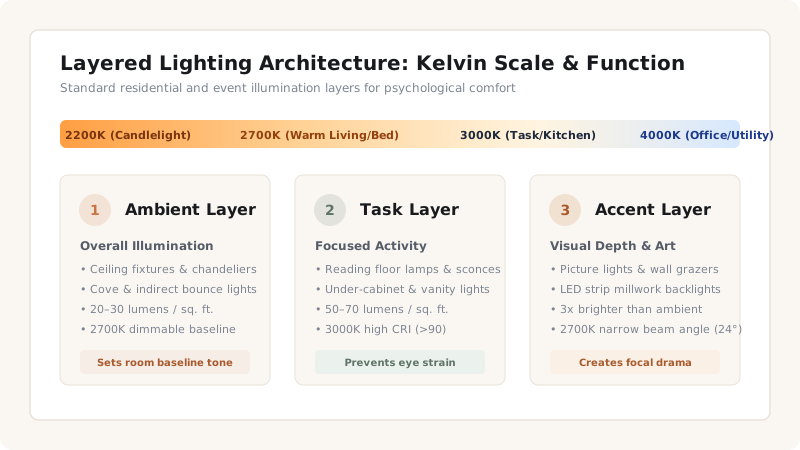
To choose living room lighting, establish a 3-layer system providing 20 to 30 lumens per square foot. Size your central ceiling fixture using the formula: Room Length (ft) + Width (ft) = Chandelier Diameter (inches). Place table and floor lamps at seated eye level (38–42 inches), add wall sconces on dimmers, and standardize every bulb at 2700K Warm White with CRI >90.
At a Glance: Key Takeaways
- Calculate chandelier diameter: Room Length (ft) + Room Width (ft) = Fixture Diameter in inches.
- Position table and floor lamp shades at 38–42 inches from the floor (seated eye level) to prevent direct glare.
- Mount wall sconces at 60–66 inches from the floor on dimmable circuits for evening mood lighting.
- Standardize all living room bulbs at 2700K warm white; avoid cool commercial 4000K-5000K LEDs.
1. Sizing Your Central Living Room Fixture
An undersized ceiling fixture looks like a floating toy, while an oversized fixture overwhelms the room. Use the standard interior design sizing formula:
Fixture Diameter (inches) = Room Length (feet) + Room Width (feet)
- Example: In a 14x18 ft living room: 14 + 18 = 32 inches. Your chandelier or flush mount should measure approximately 30 to 34 inches in diameter.
- Hanging Height Clearances: In an open living room where people walk beneath the fixture, maintain at least 7 feet (84 inches) of clear vertical space between the bottom of the fixture and the finished floor. If the fixture hangs directly over a coffee table, it can hang lower (6.5 feet) as long as it does not obstruct TV sightlines.
2. Eye-Level Perimeter Illumination (Table & Floor Lamps)
The true comfort of a living room comes from light emitted at human eye level, not from the ceiling. Follow these height rules:
- Table Lamp Heights: When sitting on the sofa, the bottom edge of the lampshade should sit at seated eye level (38 to 42 inches from the floor). This ensures the bulb is concealed by the shade, preventing harsh direct glare into occupants' eyes.
- Reading Floor Lamps: Position directional floor lamps beside reading chairs, with the light source positioned 42 to 48 inches high and slightly behind the reader's shoulder to illuminate reading pages without casting head shadows.
- The Triangle Rule: Distribute at least 3 lamps around the perimeter of the room in a rough equilateral triangle to ensure balanced, shadowless ambient glow.
3. Wall Sconces, Picture Lights & Dimming Systems
Accent lighting adds dramatic depth and texture:
- Wall Sconces: Mount flanking sconces beside fireplaces, media units, or bookshelves at 60 to 66 inches from the finished floor level.
- Picture Lights: Mount picture lights 6 to 8 inches above framed artwork, choosing a fixture width that is one-half to two-thirds the width of the art frame.
- Independent Circuit Dimming: Put overhead fixtures, floor lamps, and sconces on separate dimmers to transition effortlessly from vibrant afternoon family games to intimate late-night movie viewing.
Living Room Fixture Specification Matrix
Use this reference table to calculate exact physical dimensions, ratios, and specifications before purchasing:
| Fixture Type | Lumens Output | Mounting Height | Color Temperature | Dimmer Required? |
|---|---|---|---|---|
| Central Chandelier | 2,000–3,000 lm | Min 7 ft clearance from floor | 2700K (Warm White) | Essential |
| Sofa End-Table Lamp | 600–800 lm | Shade bottom at 38–42" from floor | 2700K (CRI >90) | Yes (Inline dimmer) |
| Reading Floor Lamp | 800–1,000 lm | 42–48" focused beam height | 2700K–3000K | Yes |
| Flanking Wall Sconce | 400–600 lm | 60–66" from floor level | 2700K (Diffused) | Essential |
| Art Picture Light | 300–500 lm | 6–8" above top of art frame | 2700K (CRI >95) | Yes |
Living Room Lighting Constraints
Every successful decoration project must account for physical and environmental constraints:
Low 8-Foot Ceilings
Do not hang hanging chandeliers in walking paths with 8-foot ceilings; select semi-flush or flush-mount fixtures that drop no more than 10 to 12 inches from the ceiling.
Reflections on Glossy TV Screens
Never place unshielded table lamps directly opposite a television; the bulb reflection will create distracting glare on the screen.
Trailing Extension Cords
When placing lamps on floating sofa tables, run flat under-rug extension cords or install a flush floor receptacle directly beneath the sofa.
10-Step Living Room Lighting Execution Protocol
Execute this professional sequence to achieve flawless results without backtracking:
Calculate Room Lumen Requirement
Multiply room square footage by 20–25 lumens/sq.ft. to establish your total lumen target.
Size Central Fixture Using Length+Width Formula
Determine chandelier diameter in inches by adding room length and width in feet.
Verify 7-Foot Walking Clearance Beneath Ceiling Mounts
Ensure chandelier bottom sits at least 84 inches above the floor.
Position 2 End-Table Lamps Beside Sofa
Select table lamps whose shades sit at 38–42 inches from the floor.
Add a Reading Floor Lamp Beside Accent Chair
Position an arched or swing-arm lamp behind the primary reading chair.
Mount Wall Sconces at 60–66 Inches
Install flanking sconces beside the fireplace or TV credenza.
Install Picture Lights Above Statement Art
Mount picture lights 6–8 inches above artwork frames angled at 30 degrees.
Standardize All Bulbs to 2700K CRI >90
Inspect every lamp to ensure identical warm color temperature.
Install Trailing-Edge Dimmers on All Switches
Replace simple toggle switches with smooth LED-compatible dimmers.
Audit Nighttime Ambience and Glare
Sit on each chair after dark to verify that no exposed filaments cause glare.
Common Mistakes & Countermeasures
Avoid these costly errors that compromise aesthetics, ergonomics, and budget:
Relying on a Single Overhead 'Boob' Light
Exposing Bare Bulbs at Seated Eye Level
Using Cold 5000K 'Daylight' Bulbs
Project Execution Checklist
Track your physical progress. Checkboxes persist automatically on this device:
Frequently Asked Questions
What is the best Kelvin temperature for living room lighting?
2700K (Warm White) is the golden standard for residential living rooms. It provides psychological warmth, replicates incandescent light, and makes wood and textiles look rich.
How many lamps do I need in a 12x16 living room?
A 12x16 living room requires 3 to 4 secondary light sources: two sofa end-table lamps, one reading floor lamp, and one accent lamp on a credenza or bookshelf.
Can I install wall sconces without hardwiring?
Yes! Use plug-in wall sconces featuring decorative fabric cords and cord covers, or use rechargeable battery-powered magnetic LED puck bulbs inside standard sconce housings.