
Fabricate authentic Sukiya shoji screens using delicate Alaskan yellow cedar or Hinoki cypress wooden kumiko lattices (1/8" thick ribs) glued with handmade Mulberry (*Kozo*) washi paper. Slide screens in wax-lubricated wooden floor tracks (*shikii*). Proportion the spiritual *tokonoma* art alcove with an elevated floor, an asymmetrical rustic corner post (*toko-bashira*), and a low hanging valance beam (*otoshi-kake*).
At a Glance: Key Takeaways
- Handmade Mulberry Washi Paper (*Kozo Washi*): Long interlocking plant fibers diffuse 90% of direct glare into soft shadowless light.
- Precision Kumiko Cedar Lattice (1/8" Ribs): Half-lap micro-joinery assembled with zero nails or glue for razor-sharp geometric grids.
- Waxed Wooden Sliding Tracks (*Shikii & Kamoi*): Hardwood grooved floor track lubricated with natural beeswax for silent glide.
- Tokonoma Sacred Art Alcove Proportions: Sized to 1 full tatami mat (6ft wide × 3ft deep), elevated 4" above main floor level.
- Rustic Asymmetrical Corner Pillar (*Toko-bashira*): Prized natural wood log (Kobushi Magnolia or Bog Cedar) anchoring the spiritual alcove.
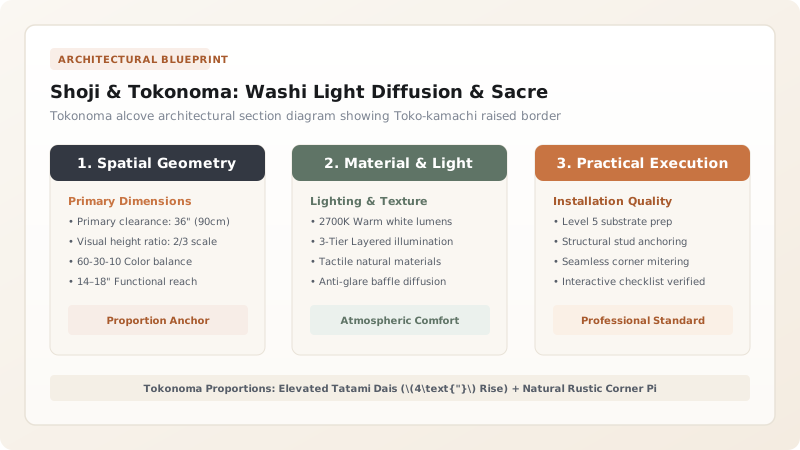
1. Light Physics: Handmade Kozo Washi & Kumiko Cedar Lattice Joinery
Glass windows create harsh, blinding glare and stark shadows. Shoji Screens transform exterior sunlight into a glowing, luminescent wall.
The screen frame is made from fine-grained Alaskan Yellow Cedar or Hinoki Cypress with a Kumiko Lattice (3mm thick ribs assembled with half-lap joints). The back face is papered with Handmade Mulberry Washi (*Kozo*) using reversible rice starch glue (*nori*). Master cedar poles in natural cedar log poles.

2. Sacred Alcove Architecture: Tokonoma Proportions & The Toko-Bashira
The Tokonoma Alcove is the spiritual heart of the tea house, where the tea master displays a seasonal hanging calligraphy scroll (*kakejiku*) and a single seasonal flower in a vase (*chabana*).
The alcove floor is Elevated 4 Inches Above the Room Tatami and framed with a Rustic Natural Corner Post (*Toko-bashira*). Review tatami geometry in tatami module grids and explore Sukiya tea house hub.
Shoji Screen Components Specifications
Use this reference table to calculate exact physical dimensions, ratios, and specifications before purchasing:
| Shoji Component | Traditional Material | Joinery / Construction | Functional & Optical Role |
|---|---|---|---|
| Lattice Ribs (Kumiko - Optimal) | Hinoki Cypress / Alaskan Yellow Cedar | 1/8" (3mm) Half-Lap Interlocking Joints | Structural grid supporting delicate paper |
| Translucent Screen Paper | Handmade Kozo Mulberry Washi | Adhered with natural rice starch paste | Diffuses glare / Softens room shadows |
| Bottom Sliding Floor Track | Cherry / Keyaki Hardwood (*Shikii*) | Twin 1/8" deep grooved guide channels | Provides silent sliding without metal tracks |
| Top Header Track | Solid Hinoki Timber (*Kamoi*) | Deep upper grooved rebate channel | Allows easy lifting and removal of screen |
Synthetic Vinyl Shoji Moisture Condensation Constraints
Every successful decoration project must account for physical and environmental constraints:
Using Plastic Vinyl Laminated Paper Causing Condensation Droplets and Zero Breathability
Synthetic plastic shoji paper does not breathe; indoor moisture condenses into dripping water droplets on the plastic face; strictly use natural handmade Japanese washi paper that naturally breathes and regulates indoor humidity.
How to Build Kumiko Shoji Screens and Proportion a Tokonoma
Execute this professional sequence to achieve flawless results without backtracking:
Cut Hinoki Timber for Outer Shoji Stiles and Rails
Mill straight-grained Hinoki cypress into 1-1/8" × 1-1/2" stiles; cut mortise-and-tenon corner joints.
Notch Kumiko Lattice Strips with Precision Half-Laps
Cut 1/8" thick cedar strips; notch interlocking half-lap dados every 2-1/2" using a fine Japanese pull saw.
Assemble Kumiko Grid and Glue Outer Frame
Interlock all vertical and horizontal lattice strips; insert tenons into outer stiles; clamp square.
Apply Rice Starch Paste and Mount Mulberry Washi Paper
Brush natural rice paste onto lattice face; roll washi paper flat; mist with water to shrink drum-tight.
Mill Hardwood Floor Track (*Shikii*) and Lubricate with Beeswax
Rout two 1/2" wide × 1/8" deep grooves in cherry wood sill; rub pure beeswax into grooves for frictionless glide.
Frame Tokonoma Alcove with Elevated Dais and Toko-Bashira
Elevate floor 4" with polished front rail (*toko-kamachi*); erect natural rustic corner pillar (*toko-bashira*).
Common Mistakes & Countermeasures
Avoid these costly errors that compromise aesthetics, ergonomics, and budget:
Using Aluminum Sliding Tracks for Shoji Screens
Project Execution Checklist
Track your physical progress. Checkboxes persist automatically on this device:
Frequently Asked Questions
How often does washi paper on shoji screens need to be replaced?
In traditional Japanese homes, shoji paper is replaced annually at New Year's (*Oosouji*). The old paper is easily stripped by wiping the lattice with a wet sponge to dissolve the water-soluble rice starch paste.


