
Install under-vanity night lighting by mounting a 45-degree aluminum LED channel along the front underside of the floating cabinet. Power with a 24V driver connected to a miniature PIR motion sensor (or smart automation), emitting soft 2200K to 2400K light (50-80 lm/ft) that guides nighttime navigation without waking you up.
At a Glance: Key Takeaways
- 2200K Melatonin-Safe Light: Ultra-warm amber glow does not shock sleep-adjusted retinas at 2:00 AM.
- PIR Motion Activation: Infrared sensor detects feet entering the bathroom, turning on light for 60 seconds.
- Floating Optical Enhancement: Illuminating the floor void makes the vanity appear weightlessly suspended in air.
- Channel Concealment: Mount aluminum extrusion channel 2 inches behind the front bottom lip facing backward.
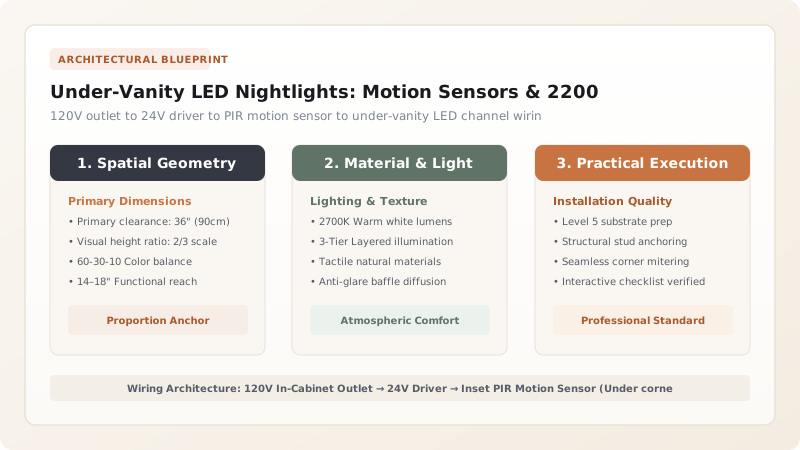
1. Circadian Retinal Biology: The 2200K No-Glare Nightlight
Turning on bright 3000K overhead bathroom vanity lights in the middle of the night shocks dark-adapted pupils and instantly stops the brain's production of melatonin, making it difficult to fall back to sleep.
Under-vanity indirect toe-kick lighting keeps illumination down on the floor plane where your feet walk. By specifying an ultra-warm 2200K to 2400K CCT (similar to candlelight) at a low 50 lumens per foot, the soft glow guides your steps without blinding your eyes.

Under-Vanity Lighting Control Methods Comparison
Use this reference table to calculate exact physical dimensions, ratios, and specifications before purchasing:
| Control Method | Hardware Required | Nighttime Convenience | Sleep Friendliness |
|---|---|---|---|
| PIR Motion Sensor (Under-Cabinet) | 12V/24V In-line PIR sensor switch | 100% Automatic (Turns on with footsteps) | 100% (Shuts off after 60 seconds) |
| Smart Home Automation (Lutron/Zigbee) | Smart switch + astronomical clock | 100% Automated (Auto on at sunset) | High (Dimmable down to 5% at night) |
| Dedicated Wall Switch | Separate wall toggle switch | Manual (Must find switch in dark) | Moderate (Risk of leaving on all night) |
| Photocell Dusk-to-Dawn Sensor | Light sensor probe | Automatic (On all night) | Moderate (Continuous light glow) |
Gloss Floor LED Diode Reflection Constraints
Every successful decoration project must account for physical and environmental constraints:
Reflected Diode Dots Visible in High-Gloss Polished Marble Tile
Mounting standard LED strips under a vanity reflects ugly yellow diode dots in shiny polished floor tile; strictly use continuous phosphor COB LED tape inside a deep aluminum channel with a milky frosted opal diffuser lens.
How to Install an Under-Vanity Motion LED System
Execute this professional sequence to achieve flawless results without backtracking:
Install 120V Outlet Inside Vanity
Plumb an in-cabinet 120V electrical outlet inside the center vanity divider partition.
Plug in 24V Constant Voltage Driver
Connect compact 30W 24V DC driver inside cabinet cavity.
Drill 1/2" Hole for PIR Sensor
Drill 1/2" hole in the bottom corner of the cabinet floor and press micro PIR sensor flush.
Screw 45° Aluminum Extrusion
Fasten channel along the bottom front rail pointing 45 degrees backward toward the wall.
Adhere 2200K COB LED Strip
Stick 2200K dotless COB tape into channel, wire to sensor output, and snap diffuser on.
Common Mistakes & Countermeasures
Avoid these costly errors that compromise aesthetics, ergonomics, and budget:
Pointing the Under-Vanity LED Strip Forward Out into the Room
Project Execution Checklist
Track your physical progress. Checkboxes persist automatically on this device:
Frequently Asked Questions
How much electricity does an under-vanity LED nightlight use?
Because modern 24V COB LEDs operate at low wattage (approx. 2 to 3 Watts per foot) and PIR sensors only turn the light on for 60 seconds per trip, the total electricity cost is less than $1.00 per year.


