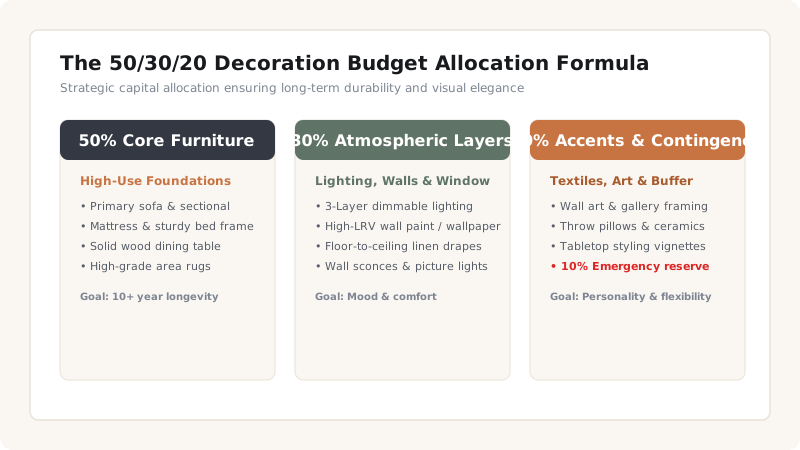
To plan an interior decoration budget accurately, calculate total project capital and allocate 50% to core foundational furniture (sofa, bed, dining table), 30% to the atmospheric envelope (lighting, wall paint, drapery), and 20% to decorative styling accents and a mandatory 15% contingency reserve to absorb shipping, tax, and assembly fees.
At a Glance: Key Takeaways
- Always include 15% for hidden costs: sales tax, freight shipping, delivery, and hardware.
- Allocate 50% to high-touch core furniture designed to last 10+ years.
- Dimmable 2700K lighting and high-LRV paint deliver the highest aesthetic return per dollar.
- Use line-item tracking to prevent scope creep during shopping.
1. Line-Item Cost Estimation & Hidden Fee Formulas
Most home decorating budgets blow past their limits not because furniture is expensive, but because homeowners fail to calculate unseen tertiary costs. A $2,000 sofa frequently costs $2,500 by the time freight shipping ($150), state sales tax ($160), and white-glove assembly ($190) are tallied.
The standard line-item allocation formula for a $10,000 living room budget:
- Core Foundations ($5,000 / 50%): Quality 84" sofa ($2,400), 9x12 ft wool area rug ($1,200), solid wood coffee table ($800), and 2 accent armchairs ($600).
- Atmospheric Envelope ($3,000 / 30%): 3-layer lighting fixtures with dimmers ($900), custom-fit linen drapery for 2 windows ($800), professional wall painting ($900), and wall mouldings ($400).
- Styling Accents ($1,000 / 10%): Framed wall art ($450), throw pillows and blankets ($300), decorative vases and trays ($250).
- Contingency Reserve ($1,000 / 10%): Absorbs shipping fees, wall anchors, and unexpected price fluctuations.
Room-by-Room Typical Decoration Budget Tiers
Use this reference table to calculate exact physical dimensions, ratios, and specifications before purchasing:
| Room Category | Budget Tier (DIY / Thrift) | Mid-Range Quality (10-Yr) | Luxury Bespoke Tier | Key Value Driver |
|---|---|---|---|---|
| Living Room (200 sq ft) | $2,500 – $4,500 | $7,500 – $14,000 | $25,000 – $50,000+ | High-density sofa + 9x12 wool rug |
| Master Bedroom (180 sq ft) | $1,800 – $3,200 | $5,000 – $9,500 | $18,000 – $35,000+ | Quality mattress + layered 2700K lighting |
| Dining Room (150 sq ft) | $1,200 – $2,500 | $4,000 – $7,500 | $12,000 – $25,000+ | Solid hardwood table + chandelier |
| Home Office (120 sq ft) | $800 – $1,800 | $2,500 – $5,000 | $8,000 – $15,000+ | Ergonomic chair + modular shelving |
Budget Planning Constraints
Every successful decoration project must account for physical and environmental constraints:
Freight and Surcharge Shocks
Heavy stone coffee tables and oversized armoires incur freight surcharges up to $300. Always calculate full landed cost in your budget spreadsheet before clicking purchase.
Trade Minimum Hourly Rates
Electricians and painters have minimum trip fees ($150–$250). Group all light fixture installations into a single half-day visit to minimize contractor callout fees.
Return Shipping Penalties
Returning an oversized sofa or rug incurs 15–25% restocking fees plus return freight. Measure door clearances twice to ensure zero returns.
How to Build an Interior Decoration Budget Spreadsheet
Execute this professional sequence to achieve flawless results without backtracking:
Define Total Available Capital
Establish your firm maximum project ceiling (e.g., $10,000).
Subtract 15% Mandatory Contingency
Set aside $1,500 immediately as your emergency buffer, leaving $8,500 in working capital.
Allocate 50% to Core Furniture
Allocate $4,250 across sofa, primary rug, and core tables.
Allocate 30% to Atmosphere & Trades
Allocate $2,550 for paint, lighting fixtures, and window drapery.
Allocate 20% to Accents & Accessories
Allocate $1,700 for wall art, pillows, throws, ceramics, and greenery.
Common Mistakes & Countermeasures
Avoid these costly errors that compromise aesthetics, ergonomics, and budget:
Spending 80% of Budget on Accessories First
Project Execution Checklist
Track your physical progress. Checkboxes persist automatically on this device:
Frequently Asked Questions
What is the single most expensive item in a living room makeover?
The primary sofa is typically the largest single expense (accounting for 25–35% of the total furniture budget), followed by a high-quality 9x12 ft wool area rug.
How can you save 30% on a decoration budget without sacrificing quality?
Source solid wood tables, vintage rugs, and brass lighting secondhand through architectural salvage and local classifieds, while buying sofas and mattresses new.