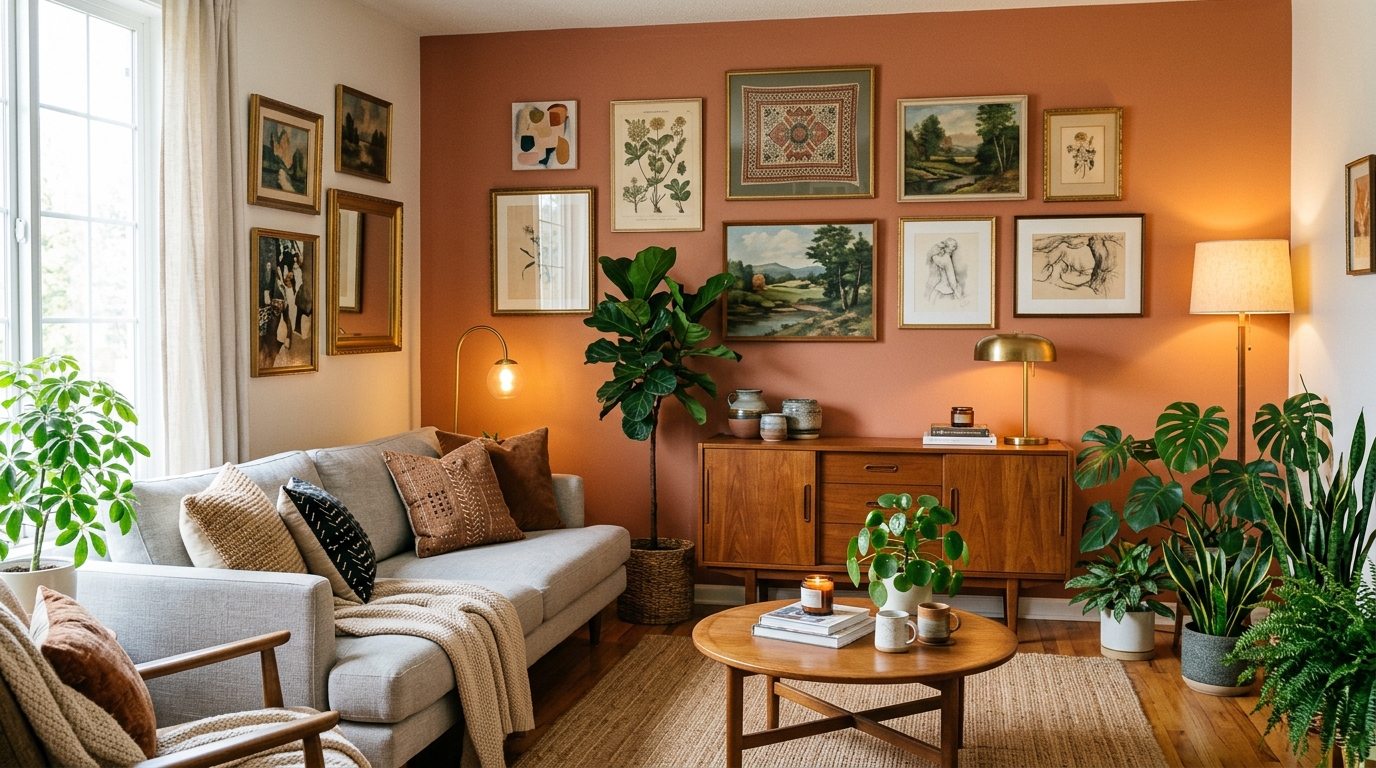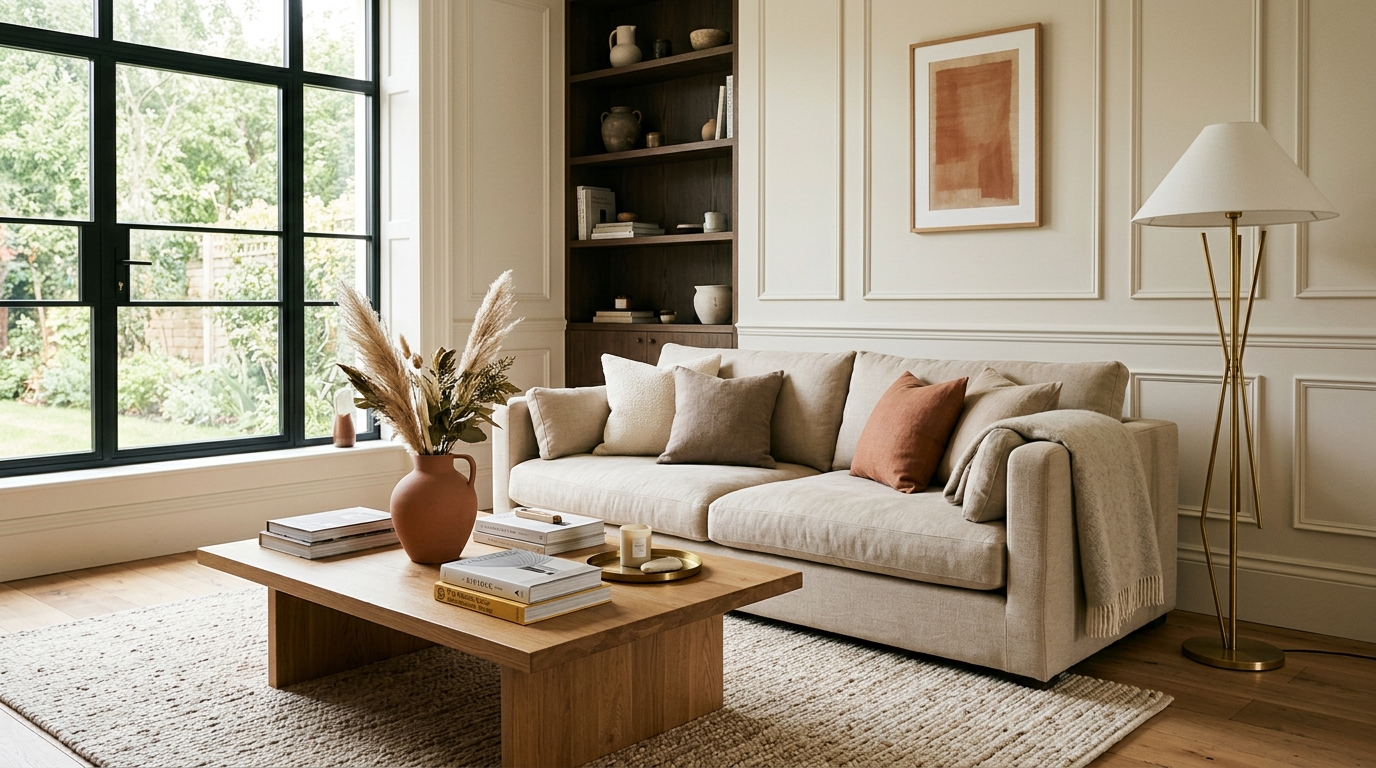
To decorate a home without buying new furniture, begin by completely emptying the room of accessories to evaluate the architectural floorplan. 'Shop your own home' by swapping accent chairs, rugs, and lamps between rooms. Float seating away from perimeter walls to create cozy conversation clusters, edit 40% of small clutter, and restyle bookcases using horizontal and vertical book stacking.
At a Glance: Key Takeaways
- Floating existing sofas 12–18" off walls instantly creates an intentional, upscale designer layout.
- 'Shop your house': Move a bedroom accent chair to the living room and swap rugs between dining and study.
- Edit aggressively: Removing 40% of small decorative accessories immediately makes rooms look larger and curated.
- Restyle bookcases with the 60/40 rule: 60% books (stacked vertically & horizontally) and 40% open sculptural negative space.
1. The Power of Radical Furniture Repositioning
Most homeowners live with their furniture in the exact position it was placed on move-in day. Over time, spaces feel stagnant and dated not because the furniture is old, but because the layout is uninspired. Radically repositioning your existing pieces costs zero dollars but completely transforms daily living:
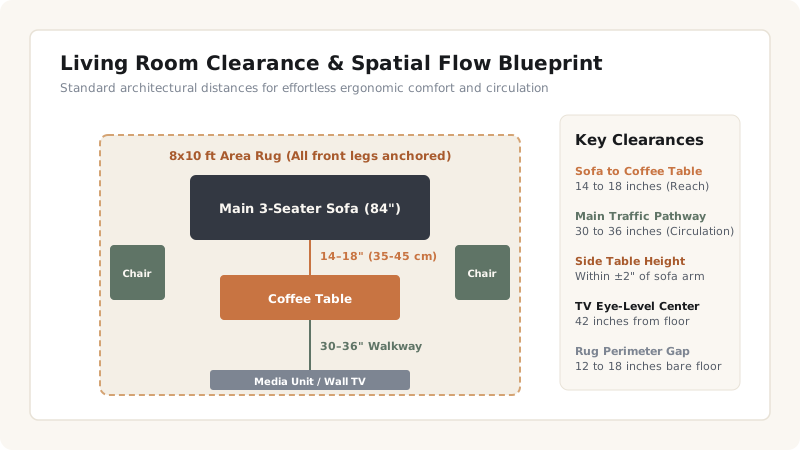
- Float the Seating: Pull sofas and armchairs off perimeter drywall. Floating a sofa 12 to 24 inches into the room creates an intimate conversation zone around a coffee table and opens up graceful walking corridors behind the seating.
- Reorient the Focal Point: If your room is rigidly centered on a black television screen, rotate the seating 90 degrees to face a window view, architectural fireplace, or curated art wall.
- Create Micro-Zones: In larger rooms, break apart a single massive seating block into two zones: a primary 3-person conversation grouping and a quiet corner reading nook with an existing armchair and floor lamp.
2. 'Shop Your Own Home': Cross-Room Swapping
Furniture often feels worn out simply because you are accustomed to seeing it in the same context. By migrating pieces across functional zones, they take on an entirely new identity:
- The Bedroom-to-Living Chair Swap: Take an upholstered bedroom accent chair that rarely gets used and move it into the living room as a companion to your sofa.
- Rug Rotation: Swap the dining room area rug with the living room rug. The shift in scale and pattern immediately alters the visual weight of both rooms.
- Nightstand & End Table Migrations: Move a small 3-drawer bedroom chest into the living room as a character-rich end table or entryway drop zone.
- Lighting Repositioning: Take a ceramic table lamp from a home office desk and place it on a kitchen counter or dark hallway credenza for warm evening ambience.
3. The 60/40 Surface & Bookcase Restyling Formula
Clutter is the enemy of high-end design. Shelving and coffee tables become visual junk drawers over time. Clear every single shelf, table, and mantle completely, and restyle using the 60/40 Negative Space Formula:
- 60% Functional Books: Stack books both vertically (standard library style) and horizontally in stacks of 3 to 4. Use horizontal book stacks as pedestals to elevate small existing objects.
- 40% Open Breathing Space: Leave generous empty gaps between groupings. This negative space allows the eye to rest and makes individual decor pieces look important.
- Remove Dust Jackets: Strip glossy, multicolored commercial paper jackets off hardcover books to reveal sophisticated cloth-bound linen spines in neutral creams, blacks, and deep tones.
Zero-Cost Redecoration Action Matrix
Use this reference table to calculate exact physical dimensions, ratios, and specifications before purchasing:
| Action Item | Time Required | Visual Transformation | Tools Needed | Difficulty |
|---|---|---|---|---|
| Float Living Room Seating | 30 mins | Massive: Expands room & improves flow | Felt floor sliders | Easy |
| Cross-Room Rug & Chair Swap | 45 mins | High: Completely alters room character | None | Easy-Moderate |
| Restyle Shelves (60/40 Rule) | 1 hour | High: Eliminates visual chaos | Microfiber cloth | Easy |
| Strip Book Dust Jackets | 20 mins | Moderate: Clean, cohesive library look | None | Very Easy |
| Prune Architectural Garden Branches | 15 mins | High: Adds organic scale & life | Pruning shears & glass vase | Very Easy |
Rearrangement Practical Constraints
Every successful decoration project must account for physical and environmental constraints:
Heavy Furniture Weight
Always place felt or plastic furniture sliders under heavy solid wood legs before sliding across hardwood or carpet to prevent surface gouging and muscle strain.
Fixed Electrical Outlets
Ensure your new lamp positions reach existing outlets without stretching cords taut across walking paths; use flat extension cords taped under rugs.
Door and Window Radii
Verify that relocated armchairs do not block exterior balcony doors or bump against bedroom closet swings.
10-Step Zero-Cost Home Redecoration Sequence
Execute this professional sequence to achieve flawless results without backtracking:
Empty the Room Completely
Move all lamps, pillows, books, and small tables into an adjacent room to view the raw architectural shell.
Deep Clean Floors and Baseboards
Vacuum behind previous furniture positions, scrub scuffs off baseboards, and clean window glass.
Reposition the Primary Sofa
Test floating the sofa off the wall, centering it on a fireplace, architectural window, or conversational axis.
Survey Other Rooms for Accent Pieces
Walk through bedrooms, hallways, and offices to identify underutilized chairs, lamps, and small tables.
Anchor Seating with Repositioned Rug
Re-center your largest area rug so all front seating legs rest securely on its weave.
Distribute Lamps into Dark Corners
Place table and floor lamps on dimmers in the room's darkest corners to expand perceived evening boundaries.
Strip Hardcover Book Dust Jackets
Expose cloth linen spines and organize books by neutral spine color in horizontal and vertical stacks.
Restyle Coffee Table with the Rule of Three
Place 1 stack of books, 1 tray or bowl, and 1 organic element (plant/candle) on the table.
Bring in Foraged Nature
Clip long sculptural green branches from your garden and arrange them in a large glass or ceramic jug.
Box Up 30% of Excess Decor
Store excess trinkets in a closet; rotating decor seasonally keeps the home feeling permanently fresh.
Common Mistakes & Countermeasures
Avoid these costly errors that compromise aesthetics, ergonomics, and budget:
Keeping Every Inherited Object on Display
Ignoring Seating Distance Clearances
Pushing Coffee Tables Out of Reach
Project Execution Checklist
Track your physical progress. Checkboxes persist automatically on this device:
Frequently Asked Questions
How often should I rearrange my furniture?
Rearranging once or twice a year (e.g., in Spring and Autumn) refreshes your psychological connection to the space, allows for thorough deep cleaning beneath furniture, and adapts your layout to seasonal sunlight shifts.
What do I do with old furniture that doesn't match my style?
Sand and paint dated wooden pieces in a rich matte neutral (deep charcoal or warm olive), swap handles for modern brass hardware, or drape an oversized linen throw over a tired sofa to instantly modernize its silhouette.
How can I make an old sofa look brand new without reupholstering?
Replace sagging cushion foam with high-density polyurethane inserts, use a fabric de-fuzzer/shaver to remove pilling, and add 2 high-quality down-filled accent pillows with textured linen covers.