
Art Deco Bronze Powder Patinas and Indirect Cove Lighting represent the theatrical synthesis of metallic surface art and modern illumination. In grand 1930s lobbies and cinema palaces, plaster was transformed into faux-bronze, silver, and gold through cold-casting techniques—dusting mold cavities with atomized metallic powders bound directly to setting gypsum, then chemically patinated with liver of sulfur. Illuminated by concealed indirect neon or cove lighting tucked within stepped ziggurat cornices, these metallic plaster reliefs glowed with warm, radiant architectural drama.
At a Glance: Key Takeaways
- Cold-Cast Metallic Powders: Atomized bronze, copper, brass, and aluminum powders bonded directly to plaster faces.
- Chemical Patination: Aging metallic plaster surfaces using liver of sulfur (potassium polysulfide) and ammonium chloride.
- Concealed Indirect Cove Lighting: Tucking tubular lamps within plaster setbacks to eliminate harsh point-source glare.
- Raking Optical Drama: Light grazing across stepped chevron ridges to cast deep, rhythmic geometric shadows.
- Dutch Metal & 23k Gold Leafing: Embellishing focal ziggurat crests with genuine oil-gilded metal leaf.
- Microcrystalline Wax Sealing: Buffing finished bronze patinas with hard waxes to lock metallic luster for decades.
1. Cold-Cast Metal Powders: Transforming Plaster into Bronze
Casting solid bronze architectural friezes for a 40-story skyscraper was prohibitively expensive and structurally impossible due to extreme metal weight. Art Deco plasterers perfected cold-cast metalization.
Before pouring wet plaster, craftsmen dusted the flexible rubber mold with atomized bronze, copper, or aluminum powder (325 mesh). The wet alpha-gypsum crystal needles locked around the metal particles during exothermic setting. Once demolded, the surface was 80% solid metal by surface volume, allowing it to be buffed with fine steel wool to reveal a cool, heavy, genuine metallic gleam.
2. Chemical Patinas: Liver of Sulfur and Verdigris
Raw bronze powder looks like bright, gaudy brass. To impart the dignified depth of antique bronze, artisans treated the metallic plaster with chemical patina solutions.
A warm wash of potassium polysulfide (liver of sulfur) reacted with the copper content of the bronze powder, creating rich brown and velvet-black cupric sulfide patinas in the recessed chevron grooves. High points and speed-line ridges were then rubbed back with scotch-brite pads to expose bright polished metal, producing dramatic chiaroscuro contrast across the geometric reliefs.
3. The Engineering of the Indirect Lighting Cove
The magic of Art Deco plaster lies in how it receives light. In historic 1930s theaters, plasterers cast stepped cornices with built-in light coves (gorges lumineuses).
Tucked behind an upstanding 100mm plaster lip, custom neon gas tubes or linear incandescent lamps bathed the ceiling in soft, shadow-free ambient illumination. The angles of the stepped ziggurat setbacks were specifically calculated to intercept the upward light rays, creating a cascading gradient of brightness that transformed static plaster into glowing architectural jewelry.
Art Deco Metallic Plaster Finishes & Chemical Patina Recipes
Use this reference table to calculate exact physical dimensions, ratios, and specifications before purchasing:
| Metallic Finish | Base Metal Powder | Chemical Patina Agent | Surface Buffing Technique | Aesthetic Outcome |
|---|---|---|---|---|
| Antique Roman Bronze | Atomized Bronze (80/20 Cu/Sn) | Liver of Sulfur (0.5% in water) | Relief ridges buffed with steel wool | Deep chocolate brown with golden highlights |
| Verdigris Green Bronze | Pure Atomized Copper Powder | Ammonium Chloride + Vinegar wash | Air-dried overnight without buffing | Earthy turquoise-green Mediterranean antique |
| Streamline Silver / Platinum | Atomized Aluminum / White Bronze | Dilute black ink glaze in crevices | Machine-buffed with cotton mops | Gleaming machine-age chrome/silver sheen |
| Imperial Gilded Gold | 23.75k Gold Leaf / Dutch Metal | Oil-based 12-hour gold size | Burnished with agate stone | Warm, celestial mirror-like brilliance |
Chemical & Lighting Constraints
Every successful decoration project must account for physical and environmental constraints:
Toxicity of Sulfur Patina Solutions
Liver of sulfur releases foul-smelling hydrogen sulfide gas during application; requires active ventilation.
LED Color Temperature Matching
Modern cool-white LEDs (5000K) make bronze plaster look sickly greenish-gray; use warm 2400K-2700K fixtures with CRI > 95.
Protocol for Metallizing, Patinating, and Lighting an Art Deco Plaster Frieze
Execute this professional sequence to achieve flawless results without backtracking:
Mold Metal Powder Pre-Dusting
Dust clean silicone mold with atomized 325-mesh bronze powder using soft badger-hair brush; blow out loose pooling dust.
Alpha Gypsum Backing Pour
Pour fine casting plaster gently over metallic film; reinforce with jute scrim; allow 45 minutes for full exothermic cure.
Demolding & Steel Wool Abrasion
Demold panel; gently buff front face with #0000 steel wool to remove surface plaster haze and expose raw bronze particles.
Chemical Patina Application
Brush warm liver-of-sulfur solution into recessed chevron grooves; observe metal darken to rich brown-black; rinse with fresh water.
High-Relief Relief Burnishing & Waxing
Rub raised speed-line ridges with fine abrasive pad to reveal gleaming golden highlights; seal with warm microcrystalline wax.
Cove Lighting Luminaire Calibration
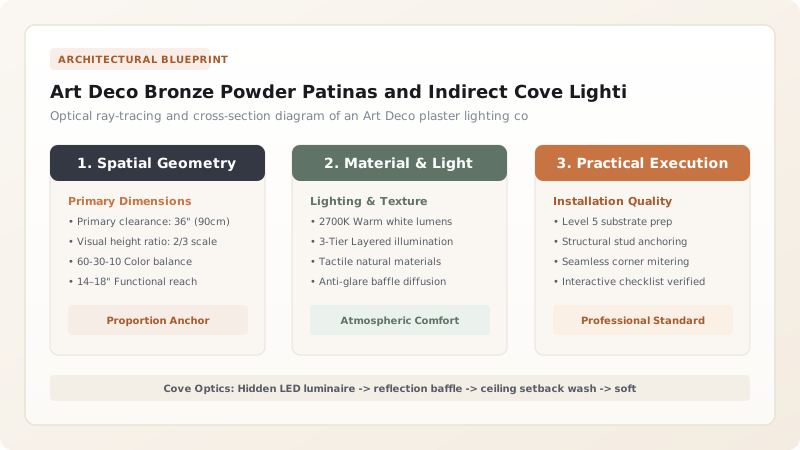
Install continuous 2700K warm LED light strips inside plaster cove trough; angle light baffle at 45° across stepped setbacks.
Common Mistakes & Countermeasures
Avoid these costly errors that compromise aesthetics, ergonomics, and budget:
Applying cheap metallic aerosol spray paint over plain plaster
Placing cove light fixtures so point-source LED diodes are directly visible from the floor
Project Execution Checklist
Track your physical progress. Checkboxes persist automatically on this device:
Frequently Asked Questions
How do you clean and preserve historic metallic Art Deco plaster?
Dust regularly with soft feather dusters, and clean every 5 years with mineral spirits applied on soft microfiber cloths. Re-buff with museum-grade microcrystalline wax (such as Renaissance Wax) to protect the underlying bronze powder from atmospheric tarnishing.
Can color-changing RGB LEDs be used in historic Art Deco coves?
Yes. In modern restorations of historic 1930s movie palaces (such as Radio City Music Hall), color-changing LED strips are frequently installed to replicate the original multicolored incandescent neon light shows that shifted dynamically between gold, amber, and sapphire during theater performances.


