
Execute traditional Japanese Kintsugi by joining broken ceramic shards using Mugi-Urushi (a natural adhesive made from tree sap and wheat flour). Fill micro-chips with Sabi-Urushi clay putty, cure in a high-humidity cabinet (*Muro*), apply a fine line of red Bengara-Urushi, and dust with genuine 24K gold powder using a bamboo pipe.
At a Glance: Key Takeaways
- Natural Urushi Tree Resin: Harvested from *Toxicodendron vernicifluum* trees; hardens via humidity polymerization.
- Muro Curing Cabinet (75% Humidity / 75°F): Urushi requires moisture (rhus laccase enzyme) to cure into indestructible polymer.
- Bengara Red Lacquer Base: Red iron oxide under-layer provides deep, luminous contrast beneath the gold powder.
- 24K Fine Gold Dust (*Kinpfun*): Pure gold powder brushed over tacky lacquer creates permanent, food-safe golden veins.
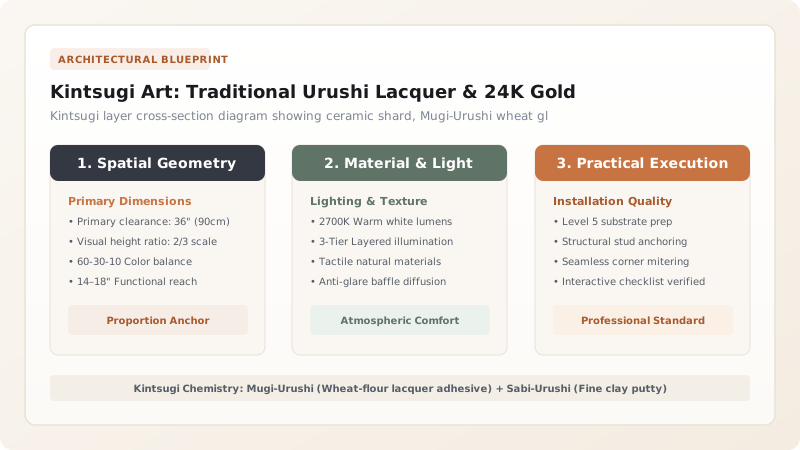
1. Polymer Chemistry: Enzyme Polymerization in Urushi Lacquer
Modern craft kits use cheap 5-minute epoxy glue mixed with mica gold glitter. Epoxy degrades over 3 years, turns yellow, and is toxic (not food-safe for tea bowls).
Authentic Japanese Kintsugi uses Natural Urushi Lacquer, which contains the organic active compound Urushiol. Unlike synthetic resins that dry by solvent evaporation, Urushiol cures through an enzyme called Laccase, which extracts oxygen from high-humidity air (70%–80% RH) to polymerize into a food-safe, boiling-water-proof, chemical-resistant organic plastic.

Traditional Urushi Kintsugi vs Modern Epoxy Kits
Use this reference table to calculate exact physical dimensions, ratios, and specifications before purchasing:
| Methodology | Adhesive Formulation | Curing Mechanism & Time | Food Safety & Longevity |
|---|---|---|---|
| Traditional Urushi Kintsugi (Authentic) | Natural Urushi tree sap + Tonoko clay | Humidity Chamber (75% RH / 7-14 Days) | 100% Food-Safe / Lasts centuries |
| Gintsugi (Silver Powder Repair) | Urushi sap + Pure Silver dust | Humidity Chamber (7-14 Days) | 100% Food-Safe / Develops dark patina |
| Modern 2-Part Epoxy Kit (Craft) | Bisphenol-A epoxy resin + Mica dust | Room air cure (15 Minutes) | TOXIC (Not food safe) / Degrades in 3 yrs |
| Cyanoacrylate (Super Glue + Paint) | Instant glue + Gold marker | Air cure (1 Minute) | FAILS: Water dissolves bond |
Urushiol Contact Dermatitis Poison Ivy Constraints
Every successful decoration project must account for physical and environmental constraints:
Raw Urushi Lacquer Causing Severe Allergic Skin Rash
Raw Urushi contains active urushiol (identical to poison ivy) that causes severe contact dermatitis; always wear nitrile gloves, long sleeves, and safety glasses when handling uncured lacquer; once fully cured, Urushi is 100% inert and hypoallergenic.
How to Perform Authentic Japanese Kintsugi
Execute this professional sequence to achieve flawless results without backtracking:
Mix Mugi-Urushi Joint Glue
Mix raw Ki-Urushi lacquer with wheat flour and water (1:1 ratio) to create tacky joint adhesive.
Join Shards and Cure in Muro (7 Days)
Apply adhesive to shard edges, press together, and place in a warm, 75% humidity box for 7 days.
Fill Gaps with Sabi-Urushi Putty
Mix Urushi with Tonoko clay powder to fill edge chips; cure for 5 days and sand with 1000-grit stone.
Paint Fine Line of Bengara Red Lacquer
Use a fine squirrel-hair brush to paint a crisp, hairline stroke of red iron oxide Urushi along the seam.
Dust 24K Pure Gold Powder (*Kinpfun*)
When red lacquer is tacky (after 30 mins), dust 24K gold powder using a bamboo pipe (*Ashike*).
Burnish with Agate Stone
After curing 14 days, burnish the gold line with a smooth agate stone tool to achieve a mirror shine.
Common Mistakes & Countermeasures
Avoid these costly errors that compromise aesthetics, ergonomics, and budget:
Trying to Cure Urushi Lacquer in a Dry, Heated Room
Project Execution Checklist
Track your physical progress. Checkboxes persist automatically on this device:
Frequently Asked Questions
Can Kintsugi-repaired tea bowls be used for hot liquids?
Yes! Authentic Urushi Kintsugi is completely waterproof and heat-resistant up to 212°F (100°C). However, Kintsugi pottery should always be washed gently by hand and NEVER placed in a microwave or dishwasher.


