
Design an authentic Wabi-Sabi space by rejecting machine symmetry in favor of natural organic textures: finish walls with hand-troweled lime or clay plaster, furnish with live-edge unrefined timber showing natural checks and grain, and display artisanal ceramics repaired with gold Urushi lacquer (Kintsugi).
At a Glance: Key Takeaways
- Fukinsei (Asymmetry & Irregularity): Eliminates rigid manufactured perfection in favor of organic, natural balance.
- Authentic Urushi Kintsugi: Highlights fractures in ceramics with 24K gold powder and natural tree resin lacquer.
- Raw-Edge Unrefined Timber: Live-edge tables stabilized with butterfly keys embrace natural cracks and weathered grain.
- Uneven Hand-Troweled Lime Plaster: Soft matte mineral surfaces develop subtle light-refractive patinas over time.
- Muted Earth Tone Palette: Ochre, raw umber, warm limestone, charcoal, and unbleached flax linen.
In-Depth Guides in this Directory
Explore specialized subtopic blueprints, technical dimensions, and execution checklists:
Kintsugi Art: Traditional Urushi Lacquer & 24K Gold Dust
Master authentic Japanese Kintsugi ceramic repair: natural toxicodendron Urushi tree lacquer, Tonoko clay putty, 24K gold powder dusting, and curing physics.
Live-Edge Joinery: Butterfly Keys & Bark Preservation
Master live-edge timber craftsmanship: butterfly Dutchmen key stabilizer math, debarking techniques, natural oil patinas (Osmo Polyx), and embracing natural drying checks.
Wabi-Sabi Plaster: Slaked Lime Patinas & Mottled Textures
Master Wabi-Sabi textured plaster walls: aged slaked lime putty (*grassello di calce*), earth pigment dilution, sweeping trowel movement, and carbonation curing.
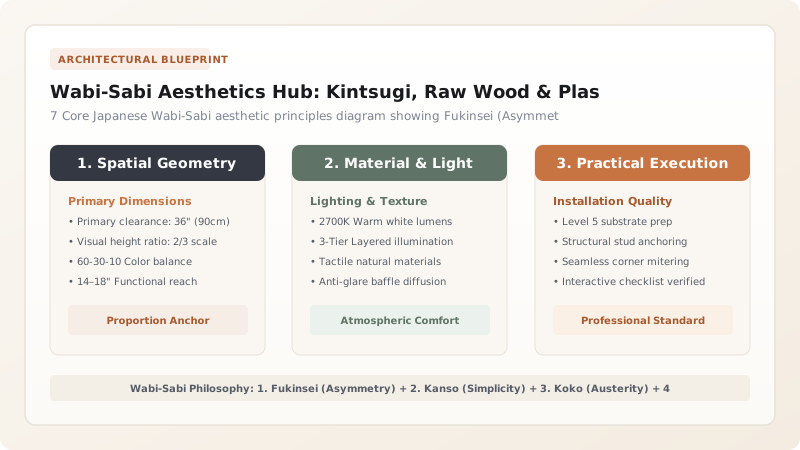
1. Zen Origins: The Tea Ceremony & Sen no Rikyu's Philosophy
Rooted in 16th-century Zen Buddhism and the tea master Sen no Rikyū, Wabi-Sabi (侘寂) represents a profound worldview that finds transcendent beauty in the imperfect, impermanent, and incomplete (*Mono no Aware*).
Rather than hiding age or repairing damage with invisible synthetic fillers, Wabi-Sabi elevates the passage of time. A cracked ceramic bowl repaired with golden Urushi lacquer (Kintsugi), a centuries-old hand-hewn cedar beam with checking cracks, or an undulating lime plaster wall becomes more valuable because its history is laid bare.

Wabi-Sabi vs Mass-Market Minimalism
Use this reference table to calculate exact physical dimensions, ratios, and specifications before purchasing:
| Design Element | Authentic Wabi-Sabi Philosophy | Mass-Market Minimalist Spec | Sensory Impact |
|---|---|---|---|
| Wall Surfaces | Hand-troweled matte lime/clay plaster | Flat white latex drywall paint | Tactile warmth & light diffraction |
| Wood Millwork | Live-edge timber with butterfly keys | Factory plastic laminate / veneer | Honors natural tree growth rings |
| Ceramics & Decor | Handmade wood-fired stoneware / Kintsugi | Identical mold-cast ceramics | Unique artisanal character |
| Textiles | Rough-spun unbleached linen / Boro sashiko | Synthetic polyester blends | Breathable, organic drape |
Faux Distress Manufactured Gimmick Constraints
Every successful decoration project must account for physical and environmental constraints:
Buying Fake 'Distressed' Factory Furniture Ruining Authentic Organic Zen
Artificial sander distress marks look cheap and manufactured; authentic Wabi-Sabi requires genuine natural materials (reclaimed barn beams, raw travertine, unvarnished solid wood) that age naturally through authentic daily use.
How to Curate a Wabi-Sabi Living Space
Execute this professional sequence to achieve flawless results without backtracking:
Strip Space to Architectural Essentials
Declutter ruthlessly, removing plastic items, shiny chrome, and synthetic decorative knick-knacks.
Apply Matte Lime or Roman Clay Plaster
Trowel natural mineral plaster across walls with sweeping, intentionally imperfect trowel strokes.
Introduce Solid Live-Edge Furniture
Anchor the room with a solid walnut or oak low table displaying natural bark edges and butterfly joints.
Layer Raw Tactile Textiles
Drape sofa with heavy unbleached Belgian linen and hand-woven raw wool rugs.
Display Asymmetrical Ikebana Branches
Place a single gnarled flowering quince or dry magnolia branch in a handcrafted ceramic vase.
Common Mistakes & Countermeasures
Avoid these costly errors that compromise aesthetics, ergonomics, and budget:
Confusing Wabi-Sabi with Sloppy or Dirty Clutter
Project Execution Checklist
Track your physical progress. Checkboxes persist automatically on this device:
Frequently Asked Questions
How does Wabi-Sabi differ from Japandi design?
Japandi combines Japanese minimalism with Scandinavian functionalism (crisp lines, blonde woods, functional order). Wabi-Sabi is a broader philosophical pursuit of rustic patina, weathered age, organic asymmetry, and contemplation of impermanence.


