
Select Chip-on-Board (COB) LED tape for under-cabinet kitchen lighting. COB strips feature 480+ micro-diodes per meter sealed beneath a continuous yellow phosphor coating, delivering 100% dotless, seamless light that never reflects ugly pixelated dots in polished quartz countertops.
At a Glance: Key Takeaways
- COB Technology: 480 to 528 micro-LEDs per meter packed under a flexible silicone phosphor ribbon.
- Zero Dotted Glare: Completely eliminates pixelated 'polka-dot' reflections in polished marble and granite.
- Wide 180° Beam Spread: Casts a wider, softer light cone than traditional 120° SMD diode chips.
- 24-Volt Reliability: 24V COB runs up to 32 continuous feet on a single power feed with zero voltage drop.
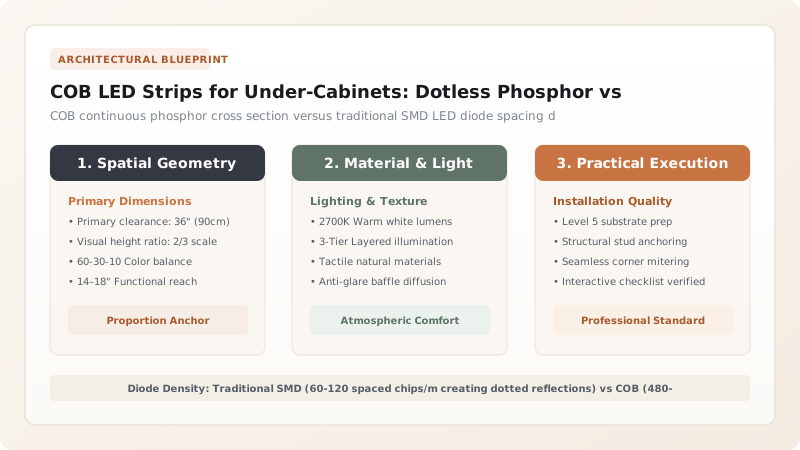
1. Chip-on-Board Engineering & Optical Diffusion
Traditional SMD (Surface Mounted Diode) LED strips mount individual plastic-encased chips (like SMD 2835 or 5050) spaced 1/2 inch apart on a copper tape. When mounted under cabinets, each chip creates a harsh point-source reflection that reflects in polished quartz countertops like a string of Christmas lights.
COB (Chip-on-Board) LED tape bonds hundreds of microscopic diode chips directly to the copper circuit board, covering the entire array with a continuous layer of fluorescent silicone phosphor. The phosphor layer acts as a built-in microscopic diffuser, emitting a seamless, unbroken bar of pure light.

COB LED Tape vs Traditional SMD LED Tape
Use this reference table to calculate exact physical dimensions, ratios, and specifications before purchasing:
| LED Feature | COB LED Tape (Chip-on-Board) | SMD 2835 LED Tape | Winner / Takeaway |
|---|---|---|---|
| Diodes Per Meter | 480 - 528 micro-LEDs/m | 60 - 120 LEDs/m | COB (4x higher density) |
| Diode Dotting in Stone | 0% (100% Solid continuous light) | High (Dotted reflections in gloss stone) | COB (Zero pixelation) |
| Beam Angle Spread | 180° Ultra-wide beam | 120° Standard beam | COB (Wider counter coverage) |
| Cut Increment Flexibility | Every 1.75 inches (45mm) | Every 2.0 to 4.0 inches | COB (Precise cabinet fit) |
| Color Rendering (CRI) | CRI 95+ (R9 > 80) | CRI 80 - 90 standard | COB (Museum color rendering) |
COB Solderless Connector Failure Constraints
Every successful decoration project must account for physical and environmental constraints:
Clip-On Solderless Connectors Losing Contact Over Time
Cheap plastic snap connectors loosen under cabinet vibrations; strictly specify 'Transparent Hippo Piercing Connectors' or solder wire leads directly to copper solder pads for permanent reliability.
How to Cut and Connect COB LED Tape
Execute this professional sequence to achieve flawless results without backtracking:
Measure Exact Cabinet Recess
Measure inner cabinet length between end walls.
Cut ONLY on Designated Copper Lines
Use sharp scissors to cut precisely across the copper solder oval marks (every 1.75").
Insert into Transparent Piercing Clip
Slide cut end into transparent piercing connector and clamp tight with pliers.
Test Polarity Before Sticking
Power on driver to verify positive (+) and negative (-) polarity before peeling adhesive backing.
Common Mistakes & Countermeasures
Avoid these costly errors that compromise aesthetics, ergonomics, and budget:
Cutting COB Tape Anywhere Outside the Designated Cut Marks
Project Execution Checklist
Track your physical progress. Checkboxes persist automatically on this device:
Frequently Asked Questions
Do COB LED strips still require aluminum channels?
Yes! Even though COB strips are dotless on their own, aluminum channels provide essential thermal heat sinking to keep the chips cool, and protect the silicone phosphor from cooking steam and splattering cooking oil.


