
The golden radiance of Damascene Ajami is an optical alchemy: hand-hammered tin leaf (waraq qazdir) or silver leaf is applied over garlic-juice or animal-glue size, then coated with tinted copal and sandarac tree resin varnishes. Tinted with natural saffron, gamboge, or madder root, the translucent golden-yellow glaze transforms reflective silver tin into deep imperial gold.
At a Glance: Key Takeaways
- Base Metal Leaf: Hand-hammered pure tin leaf (waraq qazdir) or silver leaf beaten to 0.5 micron thickness.
- Organic Gilding Size: Crushed garlic juice (ma' al-thawm) or diluted rabbit-skin collagen size.
- Resin Varnish Chemistry: Hard Zanzibar copal and Moroccan sandarac resin dissolved in boiled linseed oil and turpentine.
- Organic Color Tints: Saffron stigmas (Crocus sativus), gamboge gum resin (Garcinia), and alizarin madder.
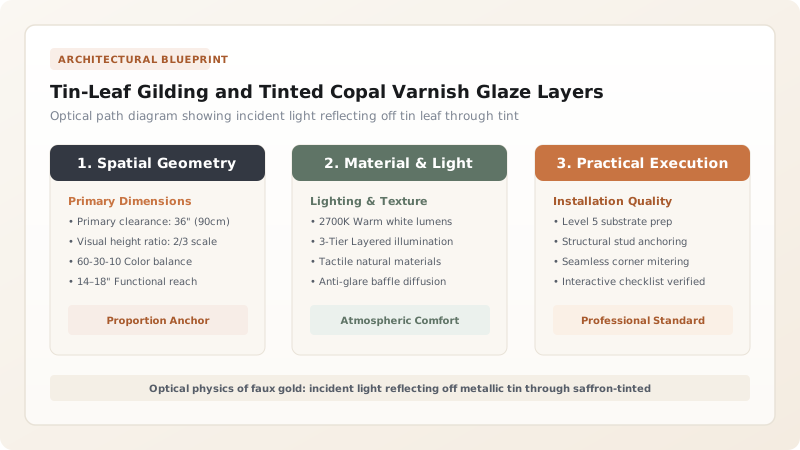
- Optical Physics: Light reflects off metallic tin substrate and passes twice through tinted transparent resin glaze.
- Atmospheric Protection: Copal resin film seals metallic tin from air, permanently preventing surface oxidation.
Waraq Qazdir: Hammered Tin Leaf Metallurgy
In Ottoman Syria, tin was imported in ingots via Mediterranean maritime trade routes. Coppersmiths and gilders melted pure refined tin and poured it into thin ribbons. The ribbons were interleaved between sheets of ox-gut parchment (goldbeater's skin) and beaten with heavy, double-faced bronze hammers for days.
Known as waraq qazdir, the resulting tin leaves measured approximately 10cm x 10cm and were less than one micron thick. Tin leaf offered distinct advantages over gold: it was 1/50th the cost, highly malleable, and adhered effortlessly to complex three-dimensional relief contours without tearing.
Garlic Juice Size (Ma' al-Thawm): The Natural Tacky Adhesive
Standard oil gilding sizes take 12 to 24 hours to reach 'tack' and can seep into porous gesso, softening the fine relief lines. Damascene artisans utilized garlic juice size (ma' al-thawm).
Fresh cloves of garlic are crushed, squeezed through muslin, and strained into a viscous liquid. Applied with a fine sable brush over the raised anba relief, the garlic juice dries in 20 minutes to an aggressively tacky, water-insoluble film. The gilder transfers the tin leaf using a gilder's tip brush, pressing it down with a ball of raw sheep wool. The tin leaf grips the relief with unbreakable adhesion, conforming to every undercut and floral petal.
Copal and Sandarac Glazing: Transmuting Silver to Gold
Once the tin leaf is burnished with an agate stone, the magic of Ajami begins: the transmutation of silver into gold. The master prepares an oil-resin varnish by heating fossilized Zanzibar copal and Moroccan sandarac resin with clarified linseed oil.
To create golden glazes, the hot varnish is infused with natural saffron (za'faran) or bright yellow gamboge resin. When brushed over the bright silver tin leaf, the yellow resin acts as a color filter: ambient light travels through the transparent yellow glass, reflects off the silver tin mirror, and returns to the eye as rich, warm, radiant gold. Red glazes were formulated using madder root lakes, and emerald greens combined saffron with indigo.
Natural Tinting Formulations for Damascene Ajami Glazes
Use this reference table to calculate exact physical dimensions, ratios, and specifications before purchasing:
| Target Luster / Color | Metallic Leaf Base | Resin Varnish Matrix | Botanical / Mineral Tint | Visual Effect |
|---|---|---|---|---|
| Imperial Royal Gold | Hammered Tin (waraq qazdir) | Copal & boiled linseed oil | Infused saffron & gamboge gum | Luminous, deep golden metallic luster |
| Damascene Ruby Red | Hammered Tin or Silver | Sandarac & mastic resin | Alizarin madder root extract | Deep glowing crimson enamel |
| Ottoman Emerald Green | Hammered Tin leaf | Copal resin in oil | Copper resinate + saffron tint | Brilliant, translucent jewel green |
| Lapis Royal Blue | Hammered Tin leaf | Bleached dammar resin | Indigo extract / pulverized smalt | Vibrant midnight blue metallic reflection |
Practical Constraints
Every successful decoration project must account for physical and environmental constraints:
Pungent garlic odor during sizing application in residential interiors
Mitigation: The sharp allicin scent dissipates completely within 48 hours as the size dries and is sealed under resin varnishes.
Execution Blueprint & Craftsmanship Sequence
Execute this professional sequence to achieve flawless results without backtracking:
Extract and Filter Pure Garlic Juice Size
Crush 500g fresh garlic cloves in stone mortar; press through fine linen cloth and bottle liquid size.
Brush Garlic Size over Raised Anba Relief Contours
Paint thin, uniform coat of garlic juice exclusively over raised relief ridges; let stand 20 minutes to reach tack.
Lay Hammered Tin Leaf with Gilder's Tip Brush
Pick up tin leaf using static charge on squirrel-hair tip brush; lay gently over tacky relief and tamp with cotton.
Burnish Tin Leaf with Smooth Dog-Tooth Agate
Stroke metal leaf with polished agate stone, consolidating edges and eliminating wrinkles until metal shines like chrome.
Cook Copal and Sandarac Varnish with Saffron
Melt copal resin into warm linseed oil at 180°C; stir in pulverized saffron and gamboge until brilliant gold syrup forms.
Brush Translucent Golden Glaze over Burnished Tin
Flow warm saffron varnish smoothly over tin leaf using soft badger-hair brush, watching silver ignite into glowing gold.
Common Mistakes & Countermeasures
Avoid these costly errors that compromise aesthetics, ergonomics, and budget:
Applying modern gold bronze powder or metallic paint instead of tin leaf and tinted glaze
Using water-soluble food coloring to tint modern clear varnishes
Project Execution Checklist
Track your physical progress. Checkboxes persist automatically on this device:
Frequently Asked Questions
Why didn't Damascene artists use real gold leaf on Ajami ceilings?
Real gold leaf was reserved for small accents, Quranic bindings, and royal mosques. For monumental palatial salons covering thousands of square feet, saffron-glazed tin leaf was vastly more economical while actually producing a warmer, more vibrant optical glow under candlelight.
How long do saffron-tinted copal glazes last without fading?
Because the organic saffron pigments are encapsulated within a dense, oxygen-impermeable fossil copal resin matrix, authentic 18th-century Damascene rooms survive with brilliant gold tones intact after 250+ years.


