
Spanish Guadamecí leather achieves its dramatic tactile relief and luminous color through matrix embossing, hand-forged iron punch tooling (ferronnerie), and translucent oil-egg tempera glazing. The gilded skin is dampened from the flesh side and pressed into intaglio-carved pearwood matrix dies under a screw press to raise primary floral arabesques and architectural cartouches. Artisans then strike specialized iron punches (hierros) to stipple backgrounds with light-scattering textures. Finally, mineral pigments ground in walnut oil and egg yolk are applied as sheer glazes, allowing the gilded silver base to shimmer through high-relief highlights.
At a Glance: Key Takeaways
- Embossing Punch Tools: Hand-forged iron chisels (Hierros de picar: rosettes, pearls, rings)
- Key Historical Pigments: Copper resinat verdigris, Cochineal carmine lake, Azurite blue
- Matrix Mold Material: Quarter-sawn Pearwood (Peral) or Walnut (Nogal) relief blocks
- Polychrome Binders: Refined walnut oil glazes and egg tempera emulsion
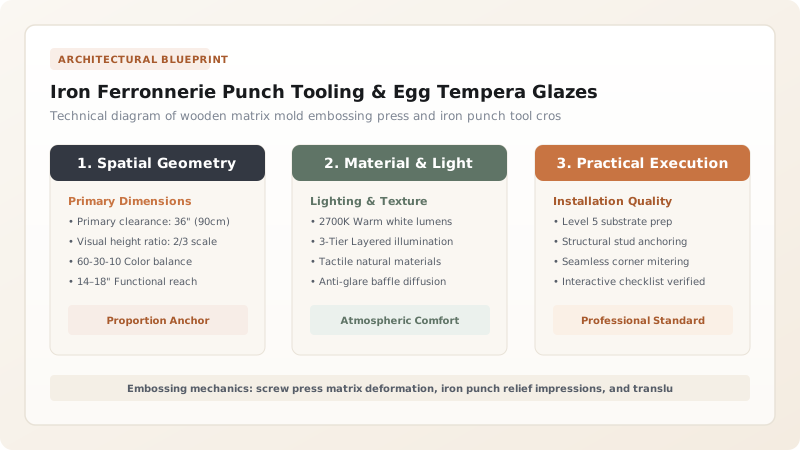
Matrix Molds: Carved Pearwood Blocks and Mechanical Screw Presses
To produce recurring decorative repeats across large palace suites, Renaissance Guadamecí workshops utilized high-relief matrix molds. Master wood sculptors carved the negative pattern in reverse (intaglio) into dense, fine-grained hardwoods—predominantly Pearwood (Pyrus communis) or Spanish Walnut (Juglans regia).
The gilded and cured leather was lightly misted with warm water on the unvarnished flesh side, making the collagen fibers soft and moldable. The skin was laid face-down over the oiled wooden mold, backed with heavy wool felt blankets, and placed into a monumental oak screw press (prensa de husillo). Immense downward pressure forced the leather into the carved depressions, raising relief contours 3 to 6 mm above the background plane.
Iron Punch Tooling (Ferronnerie): The Vocabulary of Hierros
While matrix molds created broad sculptural volumes, the shimmering vitality of Guadamecí comes from hand-hammered iron punch tooling (el picado con hierros). Working on a lead or end-grain hardwood anvil, the artisan struck specialized steel and iron punches with a balanced brass mallet.
Guild ordinances cataloged dozens of dedicated punches: the granillo (single tiny bead), the anillo (hollow concentric ring), the estrellita (six-pointed star), and the uña (crescent fingernail). By rhythmically stippling the flat background fields around floral motifs, the artisan created thousands of microscopic indented facets. These facets diffuse and scatter candlelight, making the background shimmer softly while allowing the smooth, raised gilded arabesques to gleam with mirror intensity.
Translucent Polychromy: Sheer Oil Glazes and Mineral Pigments
Unlike canvas paintings where opaque gesso hides the support, Guadamecí polychromy is fundamentally transparent. Master colorists formulated glazes using cold-pressed walnut oil thinned with Venetian turpentine or egg-yolk tempera emulsions.
Natural mineral pigments were ground to ultrafine particle sizes: copper resinat or verdigris produced deep emerald foliage; cochineal carmine lake (derived from dried nopal cactus scale insects) created rich crimson drapery; and crushed mountain azurite provided celestial royal blues. Painted across the gilded relief, these sheer colors acted as stained-glass filters over the bright silver-gold ground.
Highlight Wiping, Burnishing, and Conservation Sealing
The signature artistic technique of the Andalusian painter was highlight wiping (el limpiado de luces). Immediately after brushing glaze across an embossed motif, the painter took a soft linen rag wrapped around the thumb and gently wiped the wet color off the highest crests of the relief.
This exposed the sparkling, unpainted golden corladura on the ridges while leaving rich, saturated color pooled in the recessed folds. The optical effect was breathtaking: flowers, acanthus scrolls, and human figures appeared to glow from within with three-dimensional luminescence. After curing, a final protective coat of purified beeswax and gum mastic was buffed across the leather to protect the delicate glazes from airborne moisture.
Guadamecí Tooling & Polychrome Specifications
Use this reference table to calculate exact physical dimensions, ratios, and specifications before purchasing:
| Tool / Material | Historic Composition | Operational Technique | Visual / Physical Result |
|---|---|---|---|
| Pearwood Matrix Mold | Dense quarter-sawn pearwood block | Negative intaglio carving under screw press | 3-6mm continuous dimensional relief |
| Granillo Punch | Tempered tool steel, 1.5mm round point | Repeated mallet tap across background | Dull stippled sparkle that contrasts mirror relief |
| Estrellita Punch | Hand-cut 6-pointed star die tip | Struck along border friezes and haloes | Radiant crystalline light-scattering reflections |
| Translucent Glaze | Cochineal lake in walnut oil & varnish | Brushed sheer; ridges wiped with linen rag | Luminous stained-glass chromatic depth over gold |
Practical Constraints
Every successful decoration project must account for physical and environmental constraints:
Collapsing of High-Relief Embossed Pockets Over Centuries
Gravity and changing humidity cause hollow raised leather relief to sag and flatten over centuries. Solution: Fill the back cavities of all high-relief sections with traditional permanent pastillage paste (flour, whiting, and hide glue).
Fading and Darkening of Copper Resinate Green Glazes
Historic verdigris oil glazes naturally oxidize over centuries, turning from vibrant emerald into muddy olive brown. Solution: Stabilize historical glazes under inert microcrystalline wax and formulate restoration retouches using lightfast chromium oxide.
Execution Blueprint & Craftsmanship Sequence
Execute this professional sequence to achieve flawless results without backtracking:
Pearwood Matrix Negative Intaglio Carving
Carve the negative design into a 50mm pearwood slab using gouges and rasps; seal wood with boiled linseed oil to prevent swelling.
Flesh-Side Leather Dampening and Pressing
Mist the unvarnished flesh side with warm water; position face-down over matrix; screw press down with felt blankets for 30 minutes.
Relief Cavity Paste Backing (Pastillage)
While damp, fill deep hollows on the flesh side with paste of rye flour, chalk, and glue to prevent relief from collapsing over time.
Background Stippling with Hand-Forged Hierros
Rest embossed leather on lead sheet; tap granillo and anillo punches with brass hammer to stipple background fields around motifs.
Translucent Mineral Glaze Painting
Apply walnut-oil glazes of verdigris, cochineal, and azurite using fine sable brushes across leaves, petals, and cartouches.
Highlight Wiping and Beeswax Buffing
Wipe wet glaze off relief crests with dry linen cloth; dry 7 days; buff with pure beeswax and mastic polish to satin luster.
Common Mistakes & Countermeasures
Avoid these costly errors that compromise aesthetics, ergonomics, and budget:
Over-Soaking Leather Before Matrix Pressing
Striking Iron Punches with Excessive Force on Hard Steel Anvils
Project Execution Checklist
Track your physical progress. Checkboxes persist automatically on this device:
Frequently Asked Questions
What is 'Pastillage' and why is it applied to the back of embossed leather?
Pastillage is a structural backing compound made from fine wheat flour, powdered chalk (calcium carbonate), and hide glue. When packed into the hollow pockets on the back of deeply embossed leather, it dries into a rock-hard core. This prevents the three-dimensional relief from sagging or collapsing when pressed against walls or furniture.
How did artisans punch background patterns without piercing the leather?
Master artisans worked atop an anvil made of soft sheet lead or end-grain boxwood. The lead absorbs shock and yields slightly under the punch tip, allowing the iron tool to stretch and indent the leather fibers without severing them, provided the mallet strike is calibrated with practiced precision.
Why use walnut oil for glazes rather than linseed oil?
While boiled linseed oil was used for the warm golden corladura underlayer, refined cold-pressed walnut oil was preferred for colored glazes (especially blues and whites). Walnut oil does not yellow nearly as much as linseed oil over time, preserving the purity and transparency of delicate blue azurite and crimson cochineal glazes.
Can machine presses replicate the hand punch tooling of Guadamecí?
A machine roller or hydraulic stamp produces identical, repetitive, sterile impressions. In authentic hand tooling, the artisan's hammer blows vary slightly in angle, spacing, and depth, creating lively organic micro-facets that scatter candlelight with dynamic, shimmering warmth.


