
Spanish Cordoban leatherwork distinguishes between two historic traditions: Cordobán (supple, vegetable-tanned goat leather used for upholstery, footwear, and trunks) and Guadamecí (luxurious wall hangings and altar frontals crafted from fine sheepskin, leaf-gilded with silver or gold, embossed in high relief using engraved iron plates or wooden dies, and illuminated with translucent oil glazes). Originating in Islamic Córdoba during the Umayyad Caliphate (10th century) and reaching European prominence during the Renaissance and Baroque eras, Guadamecí wall panels provided palace interiors with thermal insulation, radiant metallic luminosity, and acoustic absorption while resisting Mediterranean humidity.
At a Glance: Key Takeaways
- Embossing Method: Hand-hammered iron punch tooling (Hierros) or carved walnut roller presses
- Metallic Base: Beaten Silver Leaf (Plata fina) glazed with golden saffron varnish (Corladura)
- Substrate Skin: Fine-grain Spanish Sheepskin (Piel de Cordero) or Goat (Badana)
- Tanning Agent: Pyrogallol tannins from Sumac leaves (Rhus coriaria) and Gallnuts
In-Depth Guides in this Directory
Explore specialized subtopic blueprints, technical dimensions, and execution checklists:
Vegetable-Tanned Sheepskin Currying & Silver Leaf Gilding: Guadamecí Substrate Prep, Boiled Linseed Varnish & Gold Lustre
Master artisanal guide to preparing sumac-tanned sheepskin for Guadamecí leather, currying beams, rabbit-skin glue sizing, beaten silver leaf gilding, and golden corladura.
Iron Ferronnerie Punch Tooling & Egg Tempera Glazes: Hierros Matriz Dies, Blind Embossing & Translucent Oil Lacquers
Comprehensive guide to embossing Guadamecí leather: carved wooden matrix molds, hand-forged iron punches (hierros), egg tempera polychromy, and oil glazes.
Baroque Cordoban Leather Hangings & Humidity Stabilization: Stretcher Mounting, Collagen Preservation & Microclimate Control
Master conservator guide to preserving historic Baroque Cordoban and Guadamecí leather wall hangings: wooden stretcher framing, collagen conditioning, and humidity control.
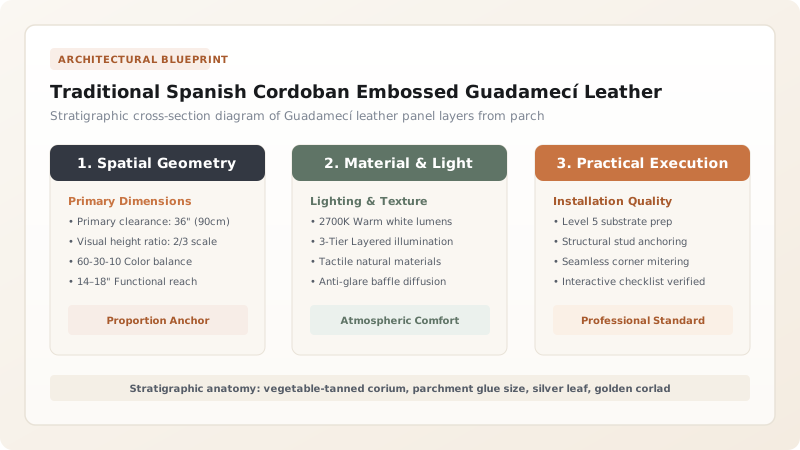
Al-Andalus Origins: The Dual Lineage of Cordobán and Guadamecí
In Islamic Al-Andalus, the leather tanners and cuirassiers of Córdoba attained worldwide renown. The craft divided strictly into two specialized branches governed by rigorous guild ordinances (Ordenanzas de Guadamacileros):
- Cordobán: Specifically designated vegetable-tanned goat hide (piel de cabra). Tanned with sumac, it yielded an exceptionally supple, dense, and water-resistant leather prized for footwear, furniture upholstery, saddles, and traveling coffers.
- Guadamecí (from the Arabic gadamesí, referring to the Libyan oasis of Ghadames): Highly ornamental wall hangings and screens crafted exclusively from fine sheepskin (badana). The sheepskin was leaf-gilded with silver or gold, embossed in sculptural relief, and hand-painted with translucent glazes to imitate precious woven brocades.
During the 16th and 17th centuries, Cordoban Guadamecí panels were exported across royal courts in France, Flanders, and Italy, becoming the ultimate symbol of aristocratic interior luxury.
Sumac Tanning and Parchment Sizing: Creating the Pristine Skin
The foundation of a luminous Guadamecí panel is flawless skin preparation. Sheepskins were limed to remove wool, unhaired with blunt scudding knives, and delimed in fermented wheat bran drenches. Tanning was conducted using Sumac (Rhus coriaria), a Mediterranean shrub whose leaves contain high concentrations of pure pyrogallol tannins.
Unlike harsh oak bark, which darkens hides to a deep reddish-brown, sumac imparts a pale, creamy blonde tint and maintains exceptional leather flexibility. After tanning, curriers slicked the flesh side dead-flat and shaved the corium to a uniform 1.2 to 1.5 mm thickness. The grain surface was sealed with a refined parchment glue size made by boiling kid-glove leather clippings, creating an impermeable barrier that prevents subsequent gilding sizes from soaking into the leather pores.
The Illusion of Gold: Silver Leaf Gilding and Corladura Lacquer
True gold leaf was extraordinarily expensive. Andalusian masters perfected an ingenious metallurgical trick to produce dazzling gold walls at a fraction of the cost: silver leaf gilding transformed by golden varnish (la corladura).
Sheets of beaten pure silver leaf (panes de plata) were applied over the sized leather using an egg-white glair adhesive and burnished with a dog's tooth or agate stone until mirrored. The craftsman then brushed a warm, translucent varnish called Corladura over the silver. Formulated from boiled linseed oil, mastic tears, spike lavender oil, and dyed with saffron, aloe resin, and weld, the amber glaze transformed the reflective silver beneath into an incandescent, glowing gold that never tarnished.
Embossing, Iron Punch Tooling, and Translucent Polychromy
Once gilded and varnished, the leather was embossed. In early Renaissance workshops, patterns were impressed using carved pearwood or walnut matrix molds under a screw press. To create sparkling micro-textures, artisans used a suite of hand-forged iron punches (hierros)—matted stars, rosettes, ring points, and hatching chisels.
Finally, the relief was hand-painted. Painters applied translucent oil glazes and egg tempera: copper verdigris for emerald greens, cochineal lake for crimson robes, and azurite for sapphire backgrounds. Crucially, the painter wiped the glazes thinner over high-relief ridges, allowing the radiant silver-gold underlayer to shine through like liquid metal, creating luminous optical depth unmatched by woven tapestries.
Spanish Guadamecí vs. Cordobán Technical Specifications
Use this reference table to calculate exact physical dimensions, ratios, and specifications before purchasing:
| Attribute | Guadamecí Wall Leather | Cordobán Functional Leather | Craft Significance |
|---|---|---|---|
| Raw Skin Animal | Fine Merino Sheepskin (Badana) | Mature He-Goat (Cabra de Córdoba) | Sheepskin is flatter and takes fine tooling; goat has tough grain |
| Primary Tanning Agent | Sumac leaves (Rhus coriaria) | Gallnuts & Sumac blend | Sumac leaves skin pale blonde, essential for translucent gilding |
| Surface Metallic Layer | Beaten silver leaf + Corladura varnish | None (or limited cold gold tooling) | Silver underlayer provides luminous metallic optical reflection |
| Decorative Relief Method | Iron punch tooling & wooden matrix mold | Blind wheel tooling & cold irons | Guadamecí features 3-5mm deep three-dimensional relief |
| Primary Architectural Use | Thermal wall hangings & altar frontals | Upholstered armchairs, chests & footwear | Guadamecí insulates masonry walls while deadening room echo |
Practical Constraints
Every successful decoration project must account for physical and environmental constraints:
Atmospheric Sulfur Tarnishing Exposed Silver Leaf
Airborne sulfur reacts with silver underlayer through microscopic pinholes, creating unsightly black silver-sulfide corrosion spots. Solution: Ensure 100% continuous encapsulation of silver leaf beneath boiled linseed-mastic corladura varnish containing pine resin barriers.
Extreme Hygroscopic Movement and Collagen Shrinkage
Cycles of high and low room humidity cause leather panels to swell and contract, pulling out perimeter nails and tearing seams. Solution: Mount panels onto secondary cedarwood stretcher frames using loose brass tacks with continuous woven linen backing tapes.
Execution Blueprint & Craftsmanship Sequence
Execute this professional sequence to achieve flawless results without backtracking:
Raw Sheepskin Dehairing and Sumac Tanning
Lime fresh sheepskins for 14 days; scud off wool; tan in pure Sicilian sumac liquor for 21 days until cross-section is pale creamy white.
Flesh Shaving, Squaring, and Edge Skiving
Shave leather to 1.3mm uniform caliper on currier's beam; trim skins into precise rectangular tiles (500x600mm); skive edges.
Parchment Glue Sizing and Egg Glair Priming
Brush two coats of warm parchment gel size onto the grain; dry; apply beaten egg-white glair as an adhesive mordant for leaf gilding.
Silver Leaf Laying and Agate Stone Burnishing
Transfer pure beaten silver leaves using gilder's tip; press onto wet glair; burnish to mirrored luster with a rounded agate burnisher.
Corladura Golden Lacquer Application
Apply hot saffron-tinted linseed oil varnish (corladura) over the silver leaf; bake in warm solar drying ovens until a lustrous gold sheen appears.
Matrix Press Embossing and Iron Punch Tooling
Dampen leather flesh side; press into carved wood mold; tap hand-forged iron punches (hierros) to stipple and cross-hatch background fields.
Common Mistakes & Countermeasures
Avoid these costly errors that compromise aesthetics, ergonomics, and budget:
Using Oak-Bark Tanned Leather for Gilded Guadamecí Panels
Applying Modern Polyurethane Clear Sealers Over Historic Leather
Project Execution Checklist
Track your physical progress. Checkboxes persist automatically on this device:
Frequently Asked Questions
What is the difference between Cordobán and Guadamecí?
Cordobán refers strictly to vegetable-tanned goat skin (chivo or cabra), noted for its tight pebble grain, elasticity, and durability for furniture, bookbindings, and shoes. Guadamecí refers exclusively to sheepskin (badana) that has been silver-leafed, varnished into gold (corladura), embossed in relief, and painted with oil colors for decorative architectural wall hangings.
Why did Spanish artisans use silver leaf instead of real gold for walls?
Beyond saving immense cost across hundreds of square meters of palace walls, silver leaf covered with amber 'corladura' varnish produced a warmer, more vibrant golden radiance than solid gold leaf. The high reflectivity of burnished silver bouncing through tinted linseed oil glazes created a luminous, shimmering depth that flickered dramatically by candlelight.
How did master artisans keep the leather embossed permanently without flattening?
Artisans dampened the back of the tanned leather with warm water containing a small amount of gum arabic or rabbit-skin glue. When pressed into the carved wooden matrix under heavy pressure and allowed to dry slowly under restraint, the collagen fibers locked permanently in their new three-dimensional configuration.
How are historic Guadamecí panels cleaned and preserved today?
Conservators never use saddle soaps or wet detergents on historic gilded leather. Panels are cleaned with dry vulcanized latex sponge crumbs and lubricated with micro-doses of potassium lactate or synthetic lipid emulsions (such as British Museum leather dressing) to restore collagen suppleness without darkening the gold.


