
Finish and protect tin ceiling tiles by applying a rust-inhibitive oil-based metal primer, followed by a dark satin basecoat (such as oil-rubbed bronze or charcoal). Accentuate stamped details by wiping on an antique glaze and dry-brushing metallic copper or gold onto high reliefs, sealing with two coats of dead-matte clear polyurethane lacquer.
At a Glance: Key Takeaways
- Rust-Inhibitive Metal Primer: Essential oil-based barrier that stops raw steel oxidation in humid kitchens and baths.
- Two-Tone Antiquing Glaze: Dark pigment pools in deep embossed crevices while high relief edges catch metallic highlights.
- Dry-Brush Highlighting Technique: Lightly skimming a semi-dry brush across raised patterns creates rich 3D depth.
- Dead-Matte Polyurethane Clear Coat: Protects delicate metallic pigments without creating harsh, plastic-like light reflections.
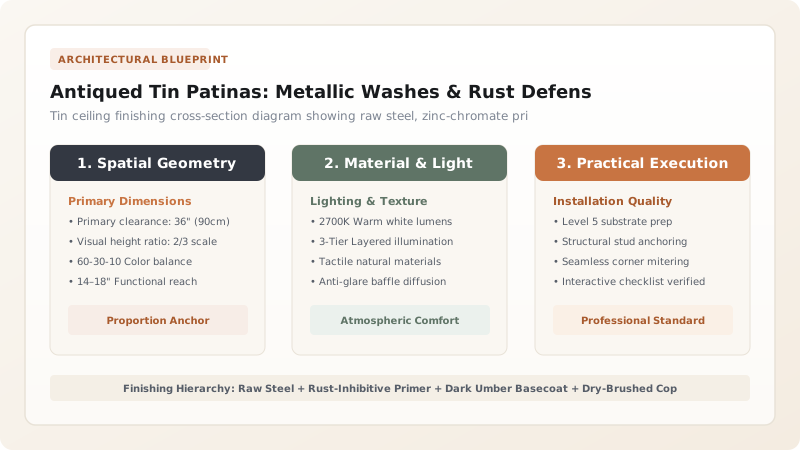
1. Corrosion Chemistry: Steel Oxidation & Primer Barriers
Unfinished 'bright tin' tiles are made of cold-rolled steel coated in a microscopic tin flash. In normal room humidity, oxygen and airborne moisture penetrate micro-pores in the tin plating, causing the steel to develop orange rust spots within 6 to 12 months.
Both sides of raw metal panels must be sealed with a Rust-Inhibitive Oil-Based Metal Primer (such as Rust-Oleum Clean Metal Primer). Water-based latex primers must NEVER be applied directly to raw steel, as water solvents induce flash rusting during drying. Learn substrate framing in wood furring strip spacing.

2. Patination Techniques: Antiqued Copper vs Vintage Whitewash
A single solid coat of spray paint makes stamped tin look flat and plastic. Master decorative painters execute a Multi-Tier Patina Glazing Process:
- Antiqued Copper / Bronze: Black basecoat + rich copper glaze wiped into recesses + gold dry-brushing on leaf tips.
- Vintage Victorian Whitewash: Warm linen white basecoat + raw umber oil glaze wiped with cheesecloth to simulate 100-year-old aged paint patina.
Always lock the patina with matte clear lacquer. Coordinate with warm ambient chandelier illumination.
Tin Ceiling Paint Finishes & Patina Recipes
Use this reference table to calculate exact physical dimensions, ratios, and specifications before purchasing:
| Patina Finish Style | Basecoat Formulation | Glaze / Highlight Recipe | Aesthetic Character |
|---|---|---|---|
| Antiqued Copper (Optimal) | Satin Black Oil Enamel | Wiped dark umber + Dry-brushed copper mica | Rich, warm Victorian pub & library warmth |
| Vintage Distressed Whitewash | Warm Linen White Satin | Raw umber / burnt sienna oil wipe | Historic farmhouse / French bistro charm |
| Pewter / Gunmetal Antique | Deep Charcoal Satin | Silver / pewter metallic dry brush | Art Deco industrial sophistication |
| Single Coat Spray Paint (Budget) | Direct spray paint (No glaze) | None (Flat monochromatic finish) | FAILS: Obscures delicate stamped relief depth |
Water-Based Latex Flash Rusting Constraints
Every successful decoration project must account for physical and environmental constraints:
Applying Water-Based Latex Paint Directly to Raw Steel Tin Panels
Water in latex paint reacts immediately with raw steel, causing orange rust stains to bleed through white paint within 24 hours; always apply an oil-based rust-inhibitive metal primer before any water-based topcoats.
How to Paint and Antique a Stamped Tin Ceiling
Execute this professional sequence to achieve flawless results without backtracking:
Degrease Metal with Mineral Spirits
Wipe raw tin panels with mineral spirits to remove protective stamping machine oils.
Prime Both Sides with Rust-Inhibitive Primer
Spray an even coat of oil-based metal primer over front and back of all panels; let dry 24 hours.
Apply Dark Satin Enamel Basecoat
Roll or spray satin black or deep charcoal basecoat across installed ceiling panels.
Brush and Wipe Antiquing Glaze
Brush dark umber oil glaze into crevices, wiping high points with a lint-free cotton cloth.
Dry-Brush Metallic Copper Highlights
Dip a natural bristle chip brush into metallic copper paint, dab off 90% on cardboard, and skim lightly over raised reliefs.
Seal with 2 Coats Matte Polyurethane
Spray two thin coats of non-yellowing dead-matte clear polyurethane lacquer to lock the patina.
Common Mistakes & Countermeasures
Avoid these costly errors that compromise aesthetics, ergonomics, and budget:
Applying High-Gloss Clear Lacquer Over Distressed Patinas
Project Execution Checklist
Track your physical progress. Checkboxes persist automatically on this device:
Frequently Asked Questions
Can you buy factory pre-finished antique tin ceiling tiles?
Yes! Leading manufacturers (such as American Tin Ceilings or Shanker Industries) offer factory powder-coated and hand-patinated tiles (e.g. Antique Copper, Pewter, Brushed Bronze) that are ready to nail up immediately with zero painting required.


