
Build an authentic Santa Fe kiva fireplace by constructing a parabolic-curved firebox lined with yellow refractory firebrick and high-temperature fireclay mortar. Enclose the exterior in a hand-sculpted conical beehive masonry shell finished with smooth white plaster, and flank with soft-cornered arched wall nichos.
At a Glance: Key Takeaways
- Parabolic Curved Firebox: Curved rear firebrick wall focuses and radiates 90% of heat energy outward into the room.
- Beehive Conical Plaster Hood: Organic tapered chimney hood eliminates sharp corners, softening room geometry.
- Arched Wall Nichos (*Nichos*): 4-inch deep arched wall recesses illuminated with miniature 2700K micro-spots for art.
- Elevated Hearth Bench (*Banco*): Continuous 16-inch high plaster seating ledge wraps around the fireplace base.
- Authentic Piñon Wood Grate: Upright vertical log grate specifically designed to burn standing piñon pine firewood.
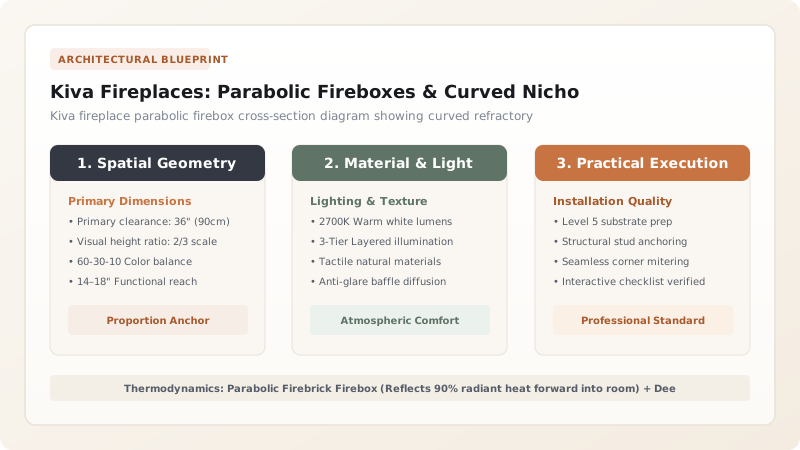
1. Combustion Physics: Parabolic Radiation & The Deep Smoke Shelf
Unlike standard rectangular fireplaces that send most heat straight up the chimney, the authentic Southwestern Beehive Kiva Fireplace features a Parabolic Curved Firebox.
The rear wall of yellow refractory brick curves forward at a 60-degree angle toward the smoke shelf. This geometric curve acts as an infrared reflector dish, focusing radiant heat directly outward toward the room floor, keeping desert living rooms warm long after the fire dies down.

Kiva Fireplace Fuel Types & Construction Methods
Use this reference table to calculate exact physical dimensions, ratios, and specifications before purchasing:
| Fireplace Fuel Type | Firebox Construction | Venting / Chimney Spec | Sensory Authenticity |
|---|---|---|---|
| Wood-Burning (Authentic Piñon) | Yellow Refractory Firebrick + Fireclay | 8" Class-A double-wall insulated chimney | Maximum (Aromatic piñon aroma & crackle) |
| Gas Log Conversion | Refractory firebox + Ceramic piñon logs | B-Vent / Direct Vent Pipe | Convenient (Instant switch / No ash) |
| Electric Holographic Kiva | Framed drywall with curved wire lath | Vent-free (Zero flue required) | Modern apartment retrofits |
| Unlined Adobe Mud (Historic) | Sun-dried adobe bricks (Raw mud) | Adobe chimney stack | HISTORIC ONLY: High chimney fire risk |
Plaster Thermal Cracking Expansion Constraints
Every successful decoration project must account for physical and environmental constraints:
High Firebox Heat Cracking Plaster Around the Kiva Arch Opening
1,000°F heat from the firebox expands masonry, cracking outer plaster; embed high-temperature fiberglass mesh and refractory cement around the arched opening, maintaining a 2-inch thermal air break between firebrick and outer plaster shell.
How to Build a Sculpted Beehive Kiva Fireplace
Execute this professional sequence to achieve flawless results without backtracking:
Lay Concrete Block Base and Banco
Build 16" high CMU seating bench (banco) and fireplace sub-base anchored to concrete slab.
Lay Parabolic Refractory Firebox
Lay yellow refractory firebrick in a curved semicircle using high-temp hydraulic refractory mortar.
Install Steel Damper and Chimney Flue
Mount 8-inch cast iron rotary damper and transition to Class-A insulated chimney pipe.
Frame Conical Beehive Shape with Metal Lath
Shape 20-gauge steel studs and diamond mesh wire lath into a smooth, tapered conical dome.
Trowel 3 Coats of White Stucco Plaster
Apply scratch, brown, and smooth finish coats of white plaster, rounding all edges to a soft 1" radius.
Common Mistakes & Countermeasures
Avoid these costly errors that compromise aesthetics, ergonomics, and budget:
Building a Sharp Square Firebox Inside a Curved Kiva
Project Execution Checklist
Track your physical progress. Checkboxes persist automatically on this device:
Frequently Asked Questions
How wide and deep should a decorative wall nicho be?
Standard pottery nichos measure 12 to 18 inches wide, 18 to 24 inches high (with an arched top), and 4 to 6 inches deep—the perfect depth to display Native American pottery, kachina dolls, or stone sculptures.


