
Program circadian lighting automation by scheduling tunable white LED fixtures to follow a 4-phase biological curve: 1) Morning Awakening (4000K at 100% brightness at 7:00 AM), 2) Afternoon Focus (3000K at 80%), 3) Sunset Relaxation (2700K at 40%), and 4) Pre-Sleep Melatonin (2200K at 10% brightness).
At a Glance: Key Takeaways
- Melanopic Lux Control: Regulates intrinsically photosensitive retinal ganglion cells (ipRGCs) in the human eye.
- 4000K Morning Cortisol Boost: Suppresses melatonin and boosts alertness without harsh blue glare.
- 2200K Evening Melatonin Preservation: Eliminates 480nm blue wavelengths that disrupt REM sleep cycles.
- Astronomical Clock Synchronization: Shifts Kelvin temperatures automatically based on your home's exact GPS sunset time.
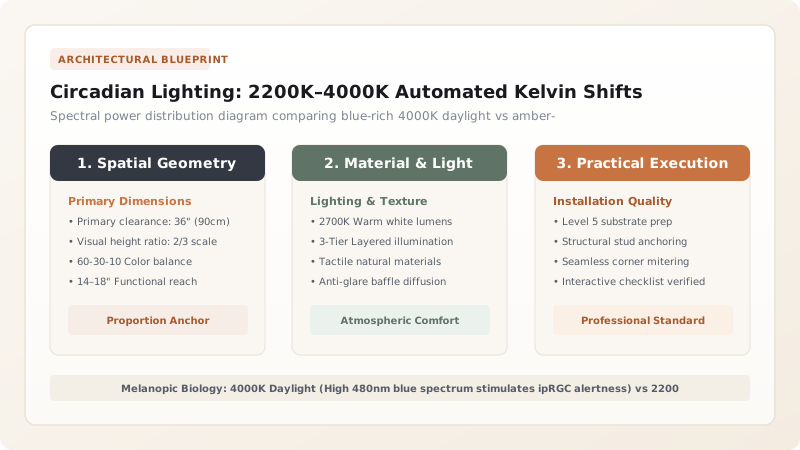
1. Photobiology: Retinal ipRGC Cells & Melanopsin Suppression
The human retina contains specialized non-visual photoreceptors called Intrinsically Photosensitive Retinal Ganglion Cells (ipRGCs) that are tuned specifically to 480nm cyan-blue light wavelengths.
Exposure to standard 4000K–5000K LED light after sunset tricks the brain into believing it is noon, instantly suppressing melatonin production by up to 85% and causing chronic insomnia. By scheduling Tunable White (2200K to 4000K) LED drivers to transition down to amber tones at sunset, the lighting system supports healthy circadian biology.

24-Hour Circadian Lighting Schedule Architecture
Use this reference table to calculate exact physical dimensions, ratios, and specifications before purchasing:
| Time of Day / Phase | Color Temperature (CCT) | Brightness Level (Lux) | Biological Effect |
|---|---|---|---|
| 07:00 AM - 11:00 AM (Awakening) | 4000K Crisp Cool White | 100% (400 - 500 Lux) | Suppresses melatonin; boosts morning alertness |
| 11:00 AM - 05:00 PM (Focus / Work) | 3000K Neutral Warm White | 80% (300 - 400 Lux) | Maintains productive focus with visual comfort |
| 05:00 PM - Sunset (Relaxation) | 2700K Soft Warm White | 40% (150 Lux) | Signals transition to evening rest |
| 08:30 PM - 11:00 PM (Pre-Sleep) | 2200K Deep Amber Glow | 10% - 15% (30 - 50 Lux) | Stimulates natural melatonin production for deep sleep |
Abrupt Kelvin Transition Shock Constraints
Every successful decoration project must account for physical and environmental constraints:
Light Suddenly Snapping from 4000K to 2700K in 1 Second
Instantaneous color shifts are jarring and distracting to occupants; program smart lighting controllers to execute smooth, imperceptible 30-to-45-minute linear transition fades around sunset.
How to Automate a Circadian Lighting Schedule
Execute this professional sequence to achieve flawless results without backtracking:
Install 2-Channel Tunable White LEDs
Install dual-channel (Warm 2200K / Cool 4000K) LED tape connected to DALI-2 or 0-10V tunable drivers.
Configure Home GPS Coordinates
Enter home location into the smart bridge so the system tracks real-time astronomical sunrise and sunset.
Set 30-Minute Transition Fades
Program automations to begin shifting Kelvin temperatures 30 minutes prior to local sunset.
Create 'Late Night Melatonin' Scene
Lock all bedroom and bathroom lights to 2200K at 10% max brightness after 10:00 PM.
Test with Spectrometer or CCT App
Verify color temperatures across different times of day to ensure smooth biological pacing.
Common Mistakes & Countermeasures
Avoid these costly errors that compromise aesthetics, ergonomics, and budget:
Using Cold 5000K 'Daylight' LED Bulbs in Bedrooms
Project Execution Checklist
Track your physical progress. Checkboxes persist automatically on this device:
Frequently Asked Questions
Can smart smart bulbs automatically follow the sun's position without programming?
Yes! Systems supporting Apple HomeKit Adaptive Lighting or Lutron Natural Light automatically calculate solar angles and modulate color temperature throughout the day with zero manual scheduling.


