
Create authentic Scandinavian scrubbed wood floors by applying a heavy coat of softwood potash lye (potassium hydroxide solution) over sanded raw pine or spruce planks. The lye reacts with wood lignins, permanently preventing amber yellowing. Once dry, scrub and maintain the floor using white-pigmented natural vegetable oil soap.
At a Glance: Key Takeaways
- Potash Lye Chemical Bleach (*Softwood Lye*): Neutralizes natural wood lignins, stopping pine from turning orange over time.
- White Titanium Wood Soap (*Woca / Faxe*): Natural coconut and soy oil soap infused with white chalk pigments protects raw wood.
- Silky, Breathable Velvet Texture: Zero plastic film; leaves wood pores open, soft, and velvety under bare feet.
- Self-Healing Soil Resistance: Scrubbing with soapy water lifts dirt easily, building a denser white soap patina with every wash.
- Wide-Plank Scots Pine or Douglas Fir: 8" to 12" wide solid softwood planks with tight vertical grain.
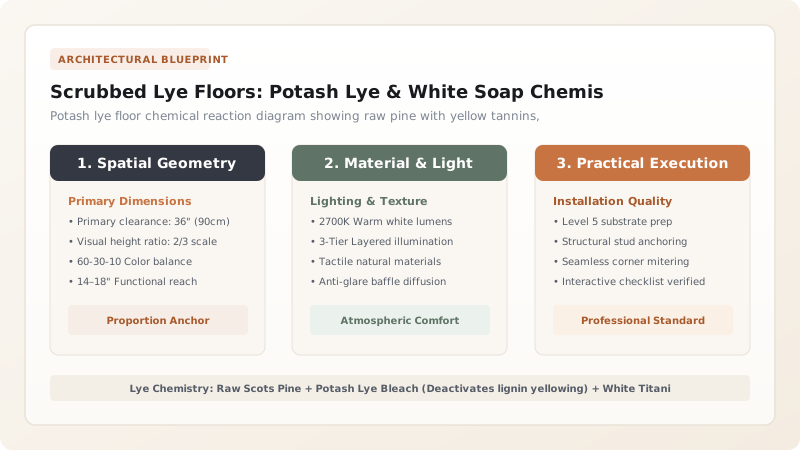
1. Wood Chemistry: Why Lye Stops Pine from Turning Orange
When raw pine wood is exposed to ambient sunlight and oxygen, natural Lignins and Tannic Resins oxidize, turning the wood a dark, brassy yellow-orange color within 12 months.
Scandinavians invented Potash Lye (*Trælyd*): an alkaline solution of Potassium Hydroxide and White Chalk Pigments. The high pH (\(\text{pH} \approx 13\)) permanently alters the cellular structure of wood lignins, bleaching the pine white and deactivating the photochemical yellowing reaction forever. Review overall aesthetics in Scandinavian Gustavian style.

2. The White Soap Saturation Protocol: Two-Bucket Mopping
Lye alone leaves the wood thirsty and vulnerable to coffee and wine spills. The floor must be saturated with Natural White Wood Floor Soap (such as WOCA White Soap).
Mop the floor with a Two-Bucket Mopping System (one bucket for soapy water, one for dirty rinse water). Over 3 to 4 initial applications, the vegetable oil soap bonds into the open wood fibers, creating a repellent, silky-smooth matte white armor. Explore paint recipes in pale grey egg tempera recipes.
Lye & Soap vs Polyurethane for Pine Floors
Use this reference table to calculate exact physical dimensions, ratios, and specifications before purchasing:
| Floor Treatment | UV Yellowing Resistance | Barefoot Tactile Feel | Maintenance Workflow |
|---|---|---|---|
| Potash Lye + White Soap (Optimal) | 100% Non-Yellowing (Stays chalk blonde) | Velvety, warm natural wood texture | Routine mopping with white soap water |
| Lye + White Hardwax Oil | High (90% Non-yellowing) | Smooth satin (Mild wax layer) | Buffing with maintenance oil yearly |
| Waterborne Polyurethane | Moderate (Slight amber over 5 yrs) | Cold plastic barrier film | Full sanding required to repair scratches |
| Oil-Based Polyurethane (Avoid) | FAILS: Turns bright orange-yellow | Sticky plastic film | FORBIDDEN for Gustavian floors |
Chemical Lye Alkaline Skin Burn Constraints
Every successful decoration project must account for physical and environmental constraints:
Potash Lye Splattering and Causing Chemical Caustic Alkaline Burns
Softwood lye has a pH of 13 and causes severe skin and eye burns; wear heavy neoprene rubber gloves, safety goggles, and rubber boots when applying lye; keep a gallon of distilled white vinegar nearby to instantly neutralize any accidental skin splashes.
How to Apply Potash Lye and White Soap to Pine Floors
Execute this professional sequence to achieve flawless results without backtracking:
Drum-Sand Pine Floors to 120-Grit
Sand wide pine planks flat with 60, 80, and 120-grit abrasives; vacuum 100% of wood dust.
Shake Softwood Lye Solution Vigorously
Shake WOCA Softwood Lye container thoroughly to suspend all white chalk pigments evenly.
Apply Lye with Acid-Resistant Nylon Brush
Brush lye liberally along the grain in 2-plank widths; let the wood absorb lye and dry 8 to 12 hours.
Buff Away White Lye Chalk Haze
De-nib the dry lye residue using a rotary floor buffer fitted with a green nylon scrubbing pad.
Mix White Soap Concentrate (1:10 with Warm Water)
Dilute white wood floor soap 1 part soap to 10 parts warm water in mop bucket.
Saturate Floor with 3 Soap Applications
Mop floor generously with white soap solution, wipe away excess, and allow to dry; repeat 3 times.
Maintain with Routine White Soap Mopping
Mop every 2 to 4 weeks with white soap to continuously renew the protective chalk patina.
Common Mistakes & Countermeasures
Avoid these costly errors that compromise aesthetics, ergonomics, and budget:
Using Hardwood Lye on Softwood Pine Floors
Project Execution Checklist
Track your physical progress. Checkboxes persist automatically on this device:
Frequently Asked Questions
Can you clean a lye and soap floor with standard household floor cleaners?
ABSOLUTELY NOT! Standard detergent floor cleaners strip away the protective white soap layers and cause the raw wood to absorb stains. ONLY clean lye floors with natural white-pigmented wood floor soap.


