
Anchor permeable paver borders using cast-in-place concrete curbs (6" wide × 12" deep) or heavy-duty 3/16" steel L-angle edging anchored with 12" spiral steel spikes driven into the aggregate base every 12 inches. Maintain permeability every 2 to 3 years by vacuuming the top 1/2" of joint grit using a regenerative-air street sweeper and sweeping in fresh washed ASTM No. 8 chips.
At a Glance: Key Takeaways
- 5,000 lb Lateral Wheel Thrust Resistance: Turning truck wheels exert massive lateral shear forces that push un-anchored paver edges outward.
- Cast-in-Place Concrete Edge Curbs (6" × 12"): Poured on top of the No. 57 stone base with #4 rebar, providing permanent vehicular edge containment.
- Heavy-Duty Steel L-Angle Edging (3/16" / 5mm): Commercial steel edging anchored with 12" spiral spikes every 12 inches for clean invisible borders.
- Regenerative-Air Vacuum Sweeping: Extracts organic leaf mulch and fine silt from the upper 1/2" of paver joints without dislodging pavers.
- ASTM No. 8 Washed Chip Joint Replenishment: Sweeping in fresh stone chips after vacuuming restores joint interlock and hydraulic flow.
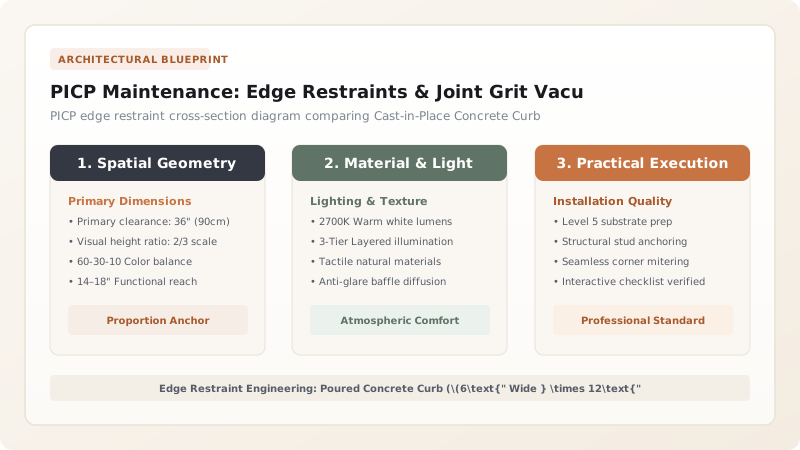
1. Structural Mechanics: Lateral Wheel Thrust & Cast-in-Place Concrete Curbs
Plastic landscape edging with short plastic spikes works for pedestrian mulch beds, but fails catastrophically on permeable driveways. Heavy SUVs turning wheels in place exert over 5,000 lbs of lateral shear thrust.
Permeable vehicular pavements require Cast-in-Place Concrete Curbs (6" wide × 12" deep) poured directly over the compacted ASTM No. 57 base or Heavy-Duty 3/16" (5mm) Structural Steel L-Edging anchored with 12" Spiral Steel Spikes. Learn aggregate layers in open-graded aggregate bases.

2. Long-Term Maintenance: Regenerative-Air Vacuuming & Joint Chip Top-Up
Over 3 to 5 years, fallen leaves, lawn mower clippings, and tire dirt collect in the top 1/2-inch of paver joints, forming an organic crust that reduces infiltration.
To restore like-new performance, run a Regenerative-Air Vacuum Sweeper (such as Elgin or Schwarze). The vacuum removes the top 1/2" of dirty grit. Immediately sweep Fresh Washed ASTM No. 8 Chips into the joints. Review hydrology in stormwater infiltration hydrology and explore permeable pavers hub.
PICP Edge Restraints Comparison
Use this reference table to calculate exact physical dimensions, ratios, and specifications before purchasing:
| Edge Restraint Type | Lateral Load Capacity | Visual Visibility | Vehicular Driveway Suitability |
|---|---|---|---|
| Cast-in-Place Concrete Curb (Optimal) | Very High (>10,000 lbs shear) | Visible flush curb or ribbon strip | 100% Certified for Commercial & Heavy Trucks |
| Heavy 3/16" Steel L-Edging with 12" Spikes | High (5,000 lbs shear) | Low profile (Hidden below turf) | 100% Perfect for Luxury Residential Driveways |
| Submerged Concrete Troweled Trowel-Tack | Moderate (2,000 lbs) | 100% Invisible | Residential light cars only |
| Plastic Nail-Down Lawn Edging (Avoid) | Low (<300 lbs) | Visible black plastic | FAILS: Spikes pull out / Edge blowouts |
High-Pressure Power Washing Joint Blown-Out Constraints
Every successful decoration project must account for physical and environmental constraints:
Using 4,000 PSI Pressure Washer Blasting Joint Stone Chips Deep Into Base Reservoir
Blasting high-pressure water vertically into permeable joints washes stone chips and surface dirt deep into the base reservoir, permanently clogging internal voids; use strictly suction vacuum sweepers or hold pressure washer nozzles at a shallow 30-degree angle to sweep debris across the surface without jetting down.
How to Install Edge Restraints and Perform Maintenance Vacuuming
Execute this professional sequence to achieve flawless results without backtracking:
Form and Pour Concrete Edge Restraints Along Perimeter
Erect wood forms on compacted No. 57 base; pour 4,000 PSI concrete with #4 rebar; strike flush with paver top.
Allow Concrete Curbs to Cure for 72 Hours
Let concrete cure to minimum 2,500 PSI before screeding ASTM No. 8 bedding and laying pavers against curb.
Inspect Paver Surface Annually for Silt Build-Up
Check paver joints after heavy rain; if surface water ponds for >15 minutes, joint grit requires vacuum cleaning.
Vacuum Top 1/2" of Joint Grit with Regenerative Sweeper
Run vacuum sweeper or wet-dry industrial shop vacuum with scraper nozzle to extract top 1/2" of dirty chips.
Sweep Fresh Clean ASTM No. 8 Washed Chips into Joints
Broadcast washed No. 8 chips across driveway; sweep with stiff broom until joints are filled flush with paver chamfer.
Sweep Away Excess Chips and Perform Final Inspection
Clear all loose gravel off paver faces to prevent stone grinding under vehicle tires.
Common Mistakes & Countermeasures
Avoid these costly errors that compromise aesthetics, ergonomics, and budget:
Using Commercial Street Broom Sweepers Without Vacuum Suction
Project Execution Checklist
Track your physical progress. Checkboxes persist automatically on this device:
Frequently Asked Questions
How often should permeable pavers be vacuumed?
For typical residential driveways surrounded by clean turf, vacuuming once every 3 to 5 years is sufficient. In wooded areas with heavy pine needles and leaf debris, annual vacuuming in late autumn is recommended.


