
Execute authentic Moroccan *geb* plaster carving by formulating a slow-setting mix of fine alabaster gypsum plaster, powdered Carrara marble dust, and slaked lime. Apply in a 1-inch thick layer over wire lath and hand-carve floral arabesques, kufic calligraphy, and 3D corbeled *muqarnas* stalactite vaults using curved steel gouges while the plaster is leather-hard.
At a Glance: Key Takeaways
- Alabaster Gypsum & Marble Dust Formulation: Ultra-fine mineral mix provides smooth, creamy workability and marble-like final hardness.
- Direct Hand-Carving in Leather-Hard Plaster: Carved freehand with gouges and chisels during the 4 to 6 hour curing window.
- Three-Dimensional Muqarnas Stalactite Niches: Geometric tiered corbeling that dissolves sharp corners into intricate dripping stalactites.
- Polylobed & Horseshoe Arch Geometry: Moorish arch curves that frame courtyard vistas with rhythmic sculptural shadowplay.
- Zero Mold Pre-Casting: 100% hand-carved on site, imparting unique bespoke artisanal vibration and depth to every single arch.
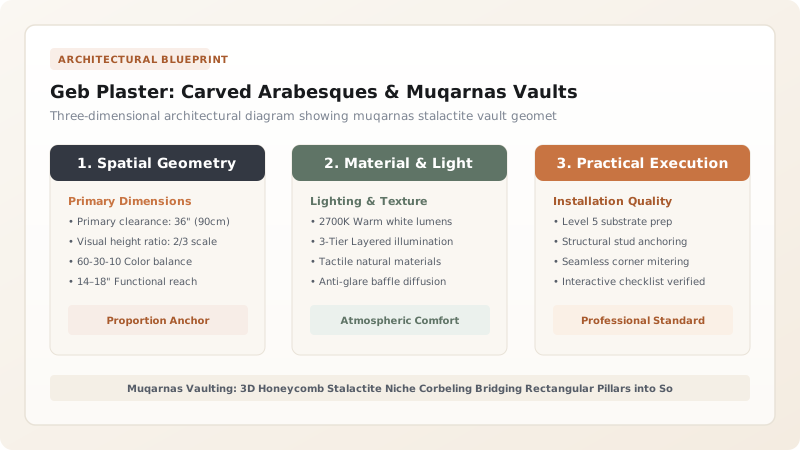
1. Material Formulation: Alabaster Gypsum, Marble Dust & Retarded Open Time
Standard building plaster sets within 20 minutes and is too brittle to carve fine lace without fracturing.
Moroccan Carved Plaster (*Geb*) uses Pure Calcined Alabaster Gypsum mixed 2:1 with Powdered Carrara Marble Dust (0–100 micron) and 5% Slaked Lime Putty. This creamy blend remains carveable for 4 to 6 hours, curing into a dense, stone-like matrix. Master zellij in hand-cut zellij terracotta tile mosaics.

2. Three-Dimensional Muqarnas Vaulting & Hand-Carving Techniques
Artisans transfer sacred geometric patterns onto the damp plaster using Pounce Bags Filled with Charcoal Dust.
They carve relief depths of 1/2" to 1-1/2" with Curved Steel Gouges (*Naqqash*), undercutting shapes to cast bold, crisp shadows. Review courtyard hydraulics in central marble fountains and explore Moroccan Riad hub.
Plaster Craft Methods Comparison
Use this reference table to calculate exact physical dimensions, ratios, and specifications before purchasing:
| Plaster Technique | Material Recipe | Execution Method | Depth & Artistic Value |
|---|---|---|---|
| Hand-Carved Geb Plaster (Optimal) | Alabaster Gypsum + Marble Dust | 100% Hand-Chiseled in Place | 5 / 5 (Museum-Grade Moorish Filigree) |
| Pre-Cast Molded Gypsum Panels | Standard Plaster of Paris | Poured in silicone molds offsite | 2 / 5 (Repetitive / Visible seams) |
| CNC Machine-Carved Plaster | High-Density Gypsum Board | Digital milling machine | 3 / 5 (Crisp but sterile / No human touch) |
| Stamped Wet Stucco | Cement-Sand Stucco | Rubber stamping mats | 1 / 5 (Blunt edges / Commercial look) |
Rapid Drying Plaster Premature Hardening Constraints
Every successful decoration project must account for physical and environmental constraints:
Direct Sunlight or Wind Drying Plaster in 30 Minutes Preventing Hand-Carving
Plaster exposed to dry desert winds flashes off moisture instantly, becoming too hard to chisel; hang damp burlap canvas sheets over arch scaffolding and mist with water spray bottles to maintain leather-hard workability throughout the carving day.
How to Apply, Outline, and Hand-Carve Geb Plaster Arches
Execute this professional sequence to achieve flawless results without backtracking:
Fasten Expanded Metal Lath Over Masonry Arch Frame
Anchor galvanized diamond metal lath over brick or concrete arch armature using masonry anchors.
Apply Base Scratch Coat of Lime-Gypsum Mortar
Trowel 1/2" base coat; score with notched comb; allow to cure for 24 hours to provide mechanical key.
Mix Slow-Setting Alabaster Gypsum and Marble Dust Finish Coat
Blend 2 parts alabaster gypsum, 1 part marble dust, and water with 0.1% citric acid retarder in bucket.
Trowel 1-Inch Thick Plaster Bed and Strike Smooth
Apply plaster over arch faces; float dead-flat with magnesium hawk and straightedge.
Pounce Geometric Pattern onto Leather-Hard Plaster
Place perforated tracing paper template over damp plaster; pat with charcoal dust bag to transfer lines.
Hand-Carve Arabesques and Undercuts with Steel Gouges
Chisel relief outlines at 90° and undercut background recesses 1/2" to 1" deep to create dramatic shadows.
Brush Plaster with Soft Horsehair Brush and Clean Water
Gently brush carved plaster with clean water to remove carving dust and polish delicate plaster filigree.
Common Mistakes & Countermeasures
Avoid these costly errors that compromise aesthetics, ergonomics, and budget:
Using Sand in the Finish Plaster Carving Coat
Project Execution Checklist
Track your physical progress. Checkboxes persist automatically on this device:
Frequently Asked Questions
Can carved geb plaster be painted or gilded?
Traditionally, geb plaster is left in its natural pure white alabaster state to contrast against colorful zellij tilework. In royal palaces, master artisans occasionally apply pure 24-karat gold leaf or subtle natural saffron and indigo mineral washes to highlight calligraphy friezes.


