
Light staircases and baseboards by routing a shallow 0.5-inch groove beneath the stair tread nosing or inside a baseboard reveal. Install 24V warm 2400K-2700K LED strips inside frosted diffusers connected to motion sensors for automated nighttime safety.
At a Glance: Key Takeaways
- Nosing Groove: Route 0.5-inch wide by 0.3-inch deep channel beneath tread overhang.
- Glare Free: Light directs straight down onto the lower step, completely invisible from above.
- Nighttime Kelvin: Use soft 2200K to 2700K amber lighting (100 lm/ft) to preserve night vision.
- Motion Automation: Pair with PIR motion sensors at the top and bottom of the staircase.
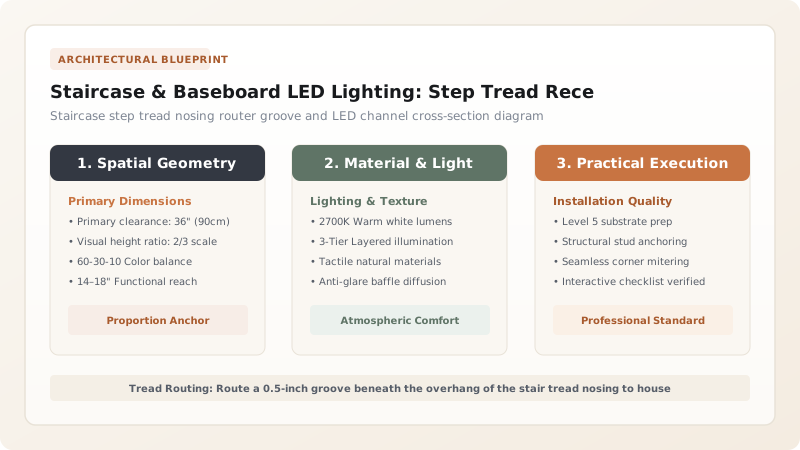
1. Step Nosing Integration & Glare Prevention
Staircase lighting requires strict downward directional control. If lights shine upward or horizontally, they cause momentary blindness for someone walking down the stairs in the dark, creating a severe fall hazard.
Routing an aluminum channel flush into the underside of the stair nosing ensures 100% of the light washes downward onto the tread below, keeping the light source hidden from people descending the staircase.

Staircase & Baseboard LED Integration Methods
Use this reference table to calculate exact physical dimensions, ratios, and specifications before purchasing:
| Integration Method | Installation Effort | Safety Rating | Aesthetic Look |
|---|---|---|---|
| Under-Nosing Tread Groove | Moderate (Wood router needed) | Highest (Direct tread light) | Invisible high-end luxury |
| Recessed Wall Step Sconces | High (In-wall rough-in boxes) | High (Low-level wash) | Architectural hotel style |
| Baseboard Shadowline Reveal | High (Specialized drywall trim) | Moderate (Ambient floor glow) | Ultra-modern minimalist floating |
| Handrail Underside Channel | Moderate (Underside track) | High (Continuous handrail light) | Clean continuous linear guide |
Low-Voltage Wiring Conduit Constraints
Every successful decoration project must account for physical and environmental constraints:
Routing Wires to 14 Separate Steps
Running individual wires to every step tread requires organized cable risers; run an 18/2 trunk line through the stair stringer cavity with parallel solder connections at each tread.
How to Install Under-Tread Stair Lighting
Execute this professional sequence to achieve flawless results without backtracking:
Route Nosing Channel
Use a plunge router with edge guide to cut a 0.5-inch groove under tread front.
Press Aluminum Extrusion
Apply construction adhesive and press aluminum track into the groove.
Insert 2400K COB Strip
Run continuous low-output 24V COB tape light.
Connect PIR Sensors
Wire PIR motion sensors at top and bottom landings for automated trigger.
Common Mistakes & Countermeasures
Avoid these costly errors that compromise aesthetics, ergonomics, and budget:
Using High-Output 4000K Cool White Strips on Stairs
Project Execution Checklist
Track your physical progress. Checkboxes persist automatically on this device:
Frequently Asked Questions
Can stair lights turn on automatically when you walk near them?
Yes! Connecting the LED driver to PIR (Passive Infrared) motion sensors hidden at the top and bottom risers automatically illuminates the staircase as you approach and fades out after 60 seconds.


