
Style open kitchen shelves using the 70/30 rule: reserve 70% of shelf space for daily stoneware plates, stacks of bowls, and clear ingredient jars, and 30% for decorative touches like cookbooks, small ceramic vases, and trailing plants.
At a Glance: Key Takeaways
- Place heaviest items (plates, serving platters) on the bottom shelf for visual grounding.
- Use matching ceramic sets and clear glass containers to prevent visual chaos.
- Maintain 10-12 inches of vertical clearance between shelves for tall glassware.
- Incorporate small potted herbs or pothos for natural green pops.
1. Structural Engineering, Bracket Selection & Wall Stud Anchoring
Open kitchen shelving is one of the most transformative architectural additions in modern kitchen design, substituting heavy enclosed cabinet boxes with airy, accessible display planes. However, an open kitchen shelf is subjected to substantial live loading: a complete set of eight ceramic stoneware dinner plates, matching salad plates, and cereal bowls easily weighs between 30 and 45 pounds. When combined with glassware, cast iron cookware, and the self-weight of solid hardwood timber, a single 48-inch shelf can exert well over 80 to 100 pounds of downward cantilevered force on wall fasteners.
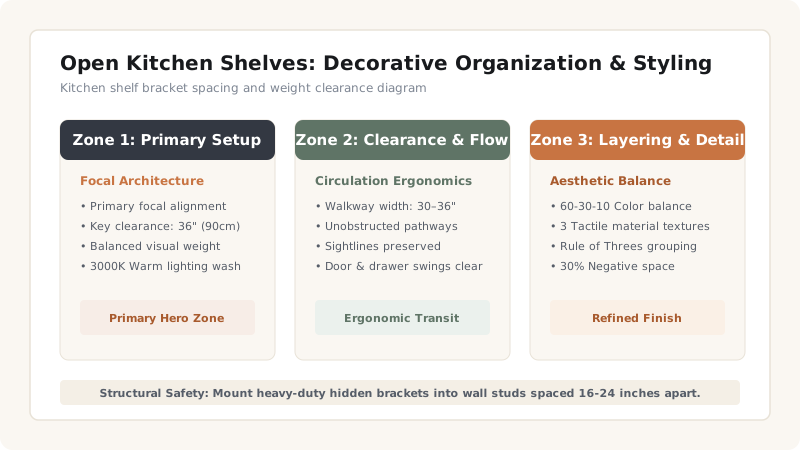
Proper structural anchoring is therefore non-negotiable. Floating shelves must never be mounted using simple hollow-wall drywall anchors or toggle bolts. Heavy-duty floating shelves require precision steel backplates featuring solid 1/2-inch to 3/4-inch cold-rolled steel support rods welded perpendicular to the plate at precise stud intervals. The steel mounting backplate must be secured directly into the center of timber wall studs spaced 16 inches or 24 inches on center using 3-inch or 3.5-inch structural lag screws (such as GRK or Spax heavy-duty fasteners). Each support rod must penetrate at least 5 to 7 inches into the rear core of the shelf timber to prevent rotational droop under load.
When exposed metal brackets are preferred for industrial, Scandinavian, or modern farmhouse aesthetics, select 1/4-inch thick solid steel or forged brass J-brackets or L-brackets with a reinforced gusset or lip. Ensure bracket depth matches shelf depth within 1 inch to prevent cantilever flex when heavy ceramic stacks are retrieved from the outer edge.
2. Dimensional Ergonomics, Clearances & Vertical Spacing Standards
The positioning and dimensional proportions of open kitchen shelves determine whether the installation feels beautifully balanced and functional or awkward and difficult to reach. Strict ergonomic standards must guide shelf height and spacing:
- Shelf Depth Standards: Specify shelf depths of 10 to 12 inches (25 to 30 cm). Standard dinner plates measure 10 to 10.5 inches in diameter; an 11-inch shelf depth provides the ideal safety clearance without protruding excessively into the cook's forehead zone during food prep.
- Countertop Clearance: Mount the lowest floating shelf 18 to 20 inches above the finished countertop surface. This maintains comfortable clearance for standard countertop appliances (coffee makers, stand mixers) while keeping daily dinnerware easily accessible at eye level.
- Vertical Inter-Shelf Clearance: Maintain 11 to 14 inches of vertical spacing between subsequent shelf tiers. An 11-inch gap easily accommodates stacked bowls and standard tumblers, while a 14-inch clearance is ideal for tall wine stems, pitchers, and upright cookbooks.
- Clearance Near Cooking Ranges: Maintain a minimum horizontal clearance of 18 to 24 inches from the edge of gas or induction cooktops to prevent thermal degradation of wood and dangerous oil aerosol accumulation.
3. Hardwood Selection, Food-Safe Finishes & Moisture Defense
Because kitchen environments experience dramatic fluctuations in relative humidity, boiling steam vapors, and temperature swings, material selection for open shelving must prioritize dimensional stability and moisture resistance.
Solid North American white oak, walnut, ash, and hard rock maple represent the premier hardwood selections for kitchen floating shelves. White oak is particularly exceptional due to its closed cellular structure (abundant tyloses), which makes it naturally resistant to water penetration and fungal decay compared to red oak or soft pine. Softwoods like standard construction-grade pine or spruce should generally be avoided for long spans, as they dent easily under ceramic weight and are prone to cupping, twisting, and bowing under kitchen vapor.
Finish open hardwood shelves with high-performance, non-toxic, food-safe protective coatings. Two-part hardwax oil systems (such as Rubio Monocoat 2C) bond molecularly with cellulose fibers, creating a breathable, matte, water-repellent barrier that highlights natural wood grain without forming a brittle plastic film that can peel or chip. For shelves placed in heavy grease zones, a matte water-based conversion varnish or polyurethane provides maximum non-yellowing protection against oil splatters.
4. Curated Styling Architecture & Dust Remediation Protocols
The cardinal rule of open kitchen shelving is the 70/30 functional styling ratio: dedicate 70% of shelf volume to daily, high-rotation utilitarian tableware, and reserve the remaining 30% for curated decorative objects. Because items on open shelves are exposed to airborne kitchen dust and ambient grease vapors, only display tableware that is used and washed at least once a week (daily dinner plates, everyday coffee mugs, cereal bowls, and water tumblers). When items are cycled through the dishwasher weekly, dust has no opportunity to accumulate.
For the 30% decorative layer, integrate natural organic textures to soften ceramic lines: a small potted trailing satin pothos or English ivy in a terracotta pot, a trio of favorite culinary cookbooks stacked horizontally with a brass paperweight on top, an artisan wooden pepper mill, and ribbed clear glass canisters containing dried pantry staples (pasta, whole grains). Avoid tiny decorative knickknacks that create visual noise and demand tedious cleaning.
Clean open shelves monthly by removing all items and wiping the wood along the grain using a microfiber cloth dampened with warm water and a drop of pH-neutral soap. Dry immediately with a fresh towel. Reapply a food-grade wood maintenance oil or wax once every 12 months to preserve luster and moisture resistance.
Open Kitchen Shelving Material & Hardware Matrix
Use this reference table to calculate exact physical dimensions, ratios, and specifications before purchasing:
| Hardwood Species | Janka Hardness | Moisture & Steam Resistance | Recommended Max Span | Visual Character & Style |
|---|---|---|---|---|
| North American White Oak | 1,360 lbf | High (Closed cellular tyloses) | 36" at 1.75" thickness | Neutral warm grain; Scandinavian & Modern Organic |
| American Black Walnut | 1,010 lbf | Moderate-High (Stable) | 34" at 1.75" thickness | Deep chocolate tones; Mid-Century & Luxury Modern |
| Hard Rock Maple | 1,450 lbf | High (Very dense, tight grain) | 38" at 1.75" thickness | Pale blonde uniform surface; Minimalist & Contemporary |
| Ash Timber | 1,320 lbf | Moderate (Similar to oak) | 36" at 1.75" thickness | Pronounced linear grain; Modern Farmhouse & Japandi |
| Powder-Coated Folded Steel | N/A (Structural Steel) | Maximum (100% moisture proof) | 48" with welded brackets | Ultra-slim 3mm profile; Industrial & High-Tech Urban |
Open Kitchen Shelving Constraints
Every successful decoration project must account for physical and environmental constraints:
Wall Stud Alignment Inconsistencies
Wall studs rarely align symmetrically with center sink backsplashes; specify solid steel bracket backplates with continuous multi-hole slot patterns to catch studs wherever they fall behind the drywall.
Airborne Cooking Grease Film
Homes without high-performance range hoods will experience grease settling on shelf upper planes; keep open shelves at least 24 inches away from gas cooktops and clean surfaces with mild degreaser monthly.
Drywall Crushing Risk
Over-tightening heavy-duty steel brackets directly against soft 1/2-inch gypsum drywall can crush the core, causing shelf tilt; ensure bracket plates span across studs or reinforce drywall backings.
How to Style Open Kitchen Shelves
Execute this professional sequence to achieve flawless results without backtracking:
Empty & Wipe Shelves
Start with a clean slate and dust-free wooden shelf surface.
Anchor Bottom with Dinnerware
Stack 6-8 white ceramic dinner plates on the lower left and bowls on lower right.
Middle Layer Glassware
Arrange clear glass tumblers and coffee cups in neat rows.
Top Layer Cookbooks & Greens
Stack 3 cookbooks horizontally with a small trailing ivy plant on top.
Common Mistakes & Countermeasures
Avoid these costly errors that compromise aesthetics, ergonomics, and budget:
Using Hollow-Wall Drywall Anchors for Heavy Shelves
Installing Excessively Deep Shelves Above Prep Zones
Displaying Rare-Use Tableware That Accumulates Dust
Project Execution Checklist
Track your physical progress. Checkboxes persist automatically on this device:
Frequently Asked Questions
How much weight can a properly installed floating kitchen shelf hold?
A high-grade solid hardwood floating shelf mounted to wall studs with heavy-duty structural steel bracket rods can safely support 45 to 50 pounds per linear foot. A 48-inch shelf anchored into three studs will comfortably hold 150 to 200 pounds of distributed tableware.
What is the recommended depth for open kitchen shelves?
10 to 12 inches (25 to 30 cm) is the standard and ideal depth. This accommodates standard 10.5-inch dinner plates with a comfortable margin while keeping the shelf back far enough to prevent users from bumping their heads during meal preparation.
How do you keep open kitchen shelves from getting greasy and dusty?
The key is combining effective kitchen ventilation (running a range hood whenever cooking) with functional staging: only display everyday dishware and glassware that is used and washed constantly. For decorative elements, wipe surfaces monthly with a microfiber cloth and mild soap.
What is the best wood finish for kitchen open shelves?
A matte hardwax oil (such as Rubio Monocoat or Osmo Polyx) or a commercial water-based conversion varnish provides the best protection. These finishes resist water rings, prevent moisture absorption from cooking steam, and will not yellow or peel over time.
Can you install open shelves on a tiled kitchen backsplash?
Yes. Complete the tile installation first, mark stud locations with precision painters tape, drill through the ceramic or porcelain tiles using a diamond-tipped carbide masonry drill bit with water cooling, and drive long structural lag screws through the bracket directly into the wall studs behind the tile.


