
Decorate a kitchen by blending utility with decor: style open shelves with everyday stoneware, organize countertops using wooden cutting board backdrops and marble utensil crocks, install 3000K under-cabinet task lights, and maintain clear 42-inch island walkways.
At a Glance: Key Takeaways
- Maintain the classic kitchen work triangle (12-26 ft total perimeter) with zero decor obstructions.
- Enforce the 60/40 rule: keep 60% of countertop surface area bare for food preparation and prep flow.
- Style open shelves using the 70/30 ratio: 70% everyday dinnerware and 30% curated decorative objects.
- Deploy 3000K illumination with high CRI (>90) for appetizing food tones and shadow-free task prep.
- Group countertop essentials onto wooden, marble, or ceramic trays to eliminate visual clutter.
- Hang island pendant lights 30 to 36 inches above countertop surfaces with 24-30 inches between fixtures.
In-Depth Guides in this Directory
Explore specialized subtopic blueprints, technical dimensions, and execution checklists:
Small Kitchen Decor: Compact Layouts & Visual Expansion
Maximize small kitchens with vertical storage, light-reflecting backsplashes, magnetic knife strips, and space-saving decor tactics.
Open Kitchen Shelves: Decorative Organization & Styling
Style open kitchen shelves with balanced stoneware, glass storage jars, cookbooks, potted herbs, and practical grouping rules.
Kitchen Lighting Design: Under-Cabinet, Island Pendants & Task Light
Plan kitchen lighting architecture with 3000K task lights, under-cabinet LED tape strips, island pendant spacing, and dimmable ambient layers.
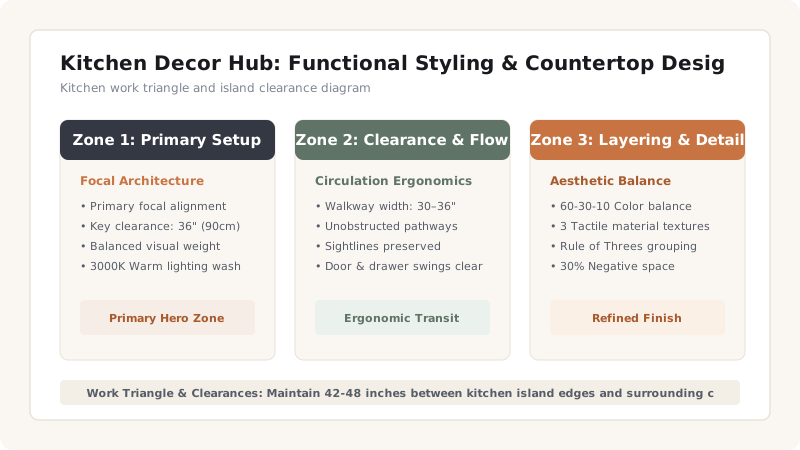
1. The Culinary Styling Philosophy: Balancing Ergonomics & Aesthetics
Kitchen decoration differs fundamentally from living room or bedroom spatial planning. In a living room, decorative accents serve purely aesthetic, acoustic, and relaxation purposes. In a kitchen, however, every decorative object operates within a volatile micro-climate characterized by rapid temperature swings, airborne aerosolized cooking oils, high humidity from simmering pots, and constant sanitation requirements. A poorly planned kitchen decoration strategy quickly turns countertops into grease-coated clutter magnets that obstruct basic meal preparation.
To achieve professional architectural harmony, successful kitchen decoration adopts the philosophy of functional elegance: elevating essential culinary implements into sculptural visual anchors. When your cutting boards, salt cellars, olive oil cruets, and daily stoneware dinnerware are thoughtfully sourced and displayed according to standardized geometric clearance ratios, the kitchen requires very few purely ornamental knick-knacks.
Every kitchen decorating decision must strictly respect the foundational Kitchen Work Triangle—the unhindered movement vector connecting the primary food storage zone (refrigerator), the primary prep and sanitation zone (sink), and the cooking zone (range or cooktop). The total perimeter of these three operational legs should measure between 12 and 26 feet, with no single leg measuring less than 4 feet or greater than 9 feet. Decorative island centerpieces, floor runners, or freestanding butcher blocks must never intrude across these primary transit paths.
- Material Hardiness Standards: Prioritize non-porous glazed ceramics, food-safe oiled hardwoods (black walnut, teak, white oak), 304-grade stainless steel, Carrara marble, and borosilicate glass over unsealed wicker, raw plaster, or delicate fabrics that absorb cooking vapors.
- The 60/40 Countertop Ratio: Exactly 60% of all flat countertop surfaces must remain completely unobstructed by appliances, canisters, or decorative vignettes. This guarantees comfortable food prep staging and prevents visual chaos.
- Safe Cooktop Setbacks: Maintain a 24-inch fire-safe and grease-free clearance buffer around all cooktop burner perimeters. Reserve countertop vignettes strictly for corner dead spaces and perimeter return walls.
2. Countertop Vignette Architecture & Island Centerpiece Styling
Countertops represent the most visible horizontal plane in the entire kitchen, yet they are also the most vulnerable to visual disarray. The most common decorating pitfall is distributing small appliances, spice jars, and utensil holders evenly across the entire perimeter, creating a fragmented and chaotic skyline that shrinks the perceived scale of the kitchen.
Professional interior designers solve this through Tray Vignette Architecture and the classical Rule of Three. Rather than allowing items to float independently across countertops, group them onto a defined structural anchor—such as a rectangular footed marble tray, a round end-grain teak platter, or a shallow fluted ceramic dish. This visual boundary communicates to the human eye that the collection is a single, intentional compositional unit rather than scattered clutter.
To build an authoritative countertop vignette in an awkward corner dead zone, layer three distinct heights and material textures:
- Vertical Backdrop Anchor: Lean two contrasting cutting boards vertically against the tile backsplash (e.g., a tall arched white oak board layered behind a rectangular end-grain walnut butcher block). This conceals electrical outlets, introduces natural wood grain warmth, and softens cold wall surfaces.
- Mid-Tier Utensil Sculptures: Place a heavy ceramic or marble crock holding 4 to 6 natural olive wood and silicone cooking utensils directly in front of the boards. The organic wood heads provide sculptural texture while keeping everyday spatulas within arm's reach.
- Low Functional Accents: Anchor the composition with an amber or smoke glass olive oil cruet equipped with a brushed brass weighted pour spout, paired with a small marble pinch pot filled with coarse flaky sea salt.
For kitchen islands, adopt a low-profile centerpiece strategy. Because islands serve as social gathering nodes and sightline bridges into adjacent living or dining spaces, centerpieces must never exceed 10 inches in vertical height. A wide, low-profile footed bowl crafted from dark stoneware or brushed brass—filled with fresh seasonal citrus (lemons, limes, or green apples)—adds organic color, textural grounding, and instant vitality without blocking conversation lines across the room.
3. Open Shelf Curation: The 70/30 Functional Balance
Open floating kitchen shelves provide an airy, contemporary alternative to heavy upper cabinetry, but they can quickly become unsightly dust collectors if styled improperly. The secret to enduring open shelf aesthetics is the 70/30 Functional Balance Formula: 70% of shelf capacity must be dedicated to everyday high-rotation dinnerware, while only 30% is allocated to curated artistic or decorative accents.
When 70% of the shelf is occupied by plates, bowls, and drinking glasses that are washed and used daily, dust and grease have no opportunity to settle on surfaces. Reserve the uppermost shelves—which are harder to reach during routine cooking—for decorative serving platters, architectural ceramic urns, or clear airtight glass canisters storing pantry dry goods like arborio rice, dried lentils, and heirloom rolled oats.
Follow these structural and visual spacing benchmarks when engineering and styling open kitchen shelves:
- Vertical Clearance Dimensions: Maintain a minimum of 18 inches between the countertop and the bottom edge of the lowest floating shelf to allow standard coffee makers and blenders to operate underneath. Space subsequent shelves 10 to 12 inches apart to accommodate tall stackable dinner plates and glassware.
- Stud Anchorage Requirements: Never rely on hollow wall anchors or butterfly toggles for kitchen shelves. A stack of twelve ceramic dinner plates weighs between 18 and 24 pounds. Always lag-screw heavy-duty steel shelf brackets directly into wall studs, ensuring a working load capacity of at least 35 to 50 pounds per stud connection.
- The Alternating Stack Rhythm: Create rhythmic visual breathing room across shelves by alternating between horizontal plate stacks and vertical objects. On shelf one, place a neat stack of eight white stoneware bowls; beside it, display three leaning ceramic serving platters. On shelf two, mirror this rhythm with a grouping of clear drinking tumblers flanked by a row of curated culinary monographs supported by heavy travertine bookends.
4. 3-Tier Kitchen Illumination & Lighting Color Temperatures
Lighting is the single most critical structural element in culinary decoration. A kitchen with exquisite marble countertops and bespoke cabinetry will feel flat, uninviting, and ergonomically hazardous if illuminated solely by a solitary flush-mount ceiling fixture or harsh spotlight cans. Professional architectural design implements a coordinated 3-Tier Illumination Hierarchy engineered specifically for culinary tasks and social ambiance.
The three essential lighting tiers for kitchen design include:
- Tier 1: Ambient Ceiling Illumination (3000K, 30-40 Lumens/Sq Ft): Recessed ceiling downlights spaced evenly across circulation corridors provide base-level navigational illumination. Fixtures should be positioned along walking aisles rather than centered directly over upper cabinets to prevent harsh scalloping on upper doors.
- Tier 2: Under-Cabinet Task Lighting (3000K, CRI 90+, 50-70 Lumens/Sq Ft): Continuous LED strip channels equipped with frosted polycarbonate diffusers must be mounted along the underside of upper cabinets, set approximately 2 inches back from the cabinet's front face. This casts uniform, shadowless light directly across the cutting board, preventing cooks from working in their own torso shadows.
- Tier 3: Decorative Accent & Island Pendants: Island pendants provide visual focal points and anchor the room's aesthetic personality. Select fixtures that complement the kitchen's hardware finishes—such as ribbed fluted glass, spun brass domes, or matte terracotta pendants. Mount pendants so the bottom rim hovers 30 to 36 inches above the countertop surface, spacing multiple pendants 24 to 30 inches on center.
Crucially, specify 3000K Neutral Warm White with a Color Rendering Index (CRI) of 90 or higher for all kitchen light sources. Standard 2700K residential bulbs cast an overly amber glow that can distort the visual freshness of meats and vegetables, while 4000K commercial bulbs feel cold and clinical. High-CRI 3000K lighting renders crisp whites, vivid vegetable greens, and rich marble veining with exceptional photographic clarity.
5. Backsplash Synchronization, Hardware Mixing & Biophilic Accents
The final layer of kitchen decoration unites vertical wall planes, hardware accents, and organic biophilic life into a cohesive stylistic narrative. The backsplash serves as the architectural focal wall of the entire space, connecting countertop horizontal surfaces with upper cabinetry.
When selecting backsplash decoration, consider how tile orientation alters spatial perception. In kitchens with standard 8-foot ceiling heights, laying handcrafted subway tiles or slim zellige rectangles in a vertical stacked pattern visually lifts the ceiling, making the entire room feel taller and more expansive. In expansive kitchens, horizontal herringbone or running-bond arrangements ground the perimeter walls with classical textural rhythm.
Elevate your kitchen's tactile detailing through three professional design techniques:
- The Two-Metal Finish Rule: Avoid sterile uniformity where every faucet, knob, and pendant uses identical chrome. Instead, establish a dominant metal finish across 70% of fixtures (e.g., matte black cabinet pulls and window frames) and introduce a warm 30% accent metal (e.g., an unlacquered brushed brass faucet, copper sauté pans on a hanging pot rack, or brass pendant collars).
- The Living Window Herb Nook: Deep kitchen window sills provide prime real estate for a functional living herb garden. Arrange small terracotta or glazed stoneware pots containing sweet basil, English thyme, and rosemary. Ensure each pot rests in a shallow moisture-proof saucer to prevent water stains on wood or quartz sill trim.
- Textile Softening with Washable Runners: Kitchens are dominated by hard, reverberant surfaces: stone, stainless steel, tile, and hardwood. Introduce acoustic dampening and physical comfort with a flat-weave, machine-washable runner rug (2.5 × 8 or 2.5 × 10 feet) placed along the sink or island corridor. Choose low-pile polypropylene or treated wool with an integrated non-slip rubber backing to guarantee safety underfoot.
Kitchen Decor Element Selection
Use this reference table to calculate exact physical dimensions, ratios, and specifications before purchasing:
| Area | Primary Decor Element | Material | Maintenance Tier |
|---|---|---|---|
| Countertop Corner | Layered cutting boards + Olive oil cruet | Teak, marble, amber glass | Low (Wipe clean) |
| Island Center | Low footed fruit bowl or ceramic vessel | Terracotta, brushed brass, marble | Low (Seasonal fruit) |
| Open Shelving | Stacked stoneware bowls + Glass jars | Ceramic, borosilicate glass | Medium (Dust monthly) |
| Window Sill | Potted culinary herbs (basil, mint) | Terra cotta planters | Medium (Watering) |
Kitchen Decor Constraints
Every successful decoration project must account for physical and environmental constraints:
Cooking Grease Spatter
Decor placed within 24 inches of cooktops collects airborne grease quickly; keep stovetop zones clear of intricate decor.
Countertop Clutter
Small appliances overcrowd counters; store toaster and blender in appliance garages or lower cabinets.
How to Style Kitchen Countertops
Execute this professional sequence to achieve flawless results without backtracking:
Clear Countertops Entirely
Wipe surfaces clean to evaluate available corner space.
Anchor Corners with Boards
Lean two contrasting wooden cutting boards against the backsplash corner.
Add Utensil Crock & Cruet
Place a marble crock with wooden spoons alongside an oil cruet on a marble tray.
Introduce Fresh Element
Set a small potted rosemary plant or bowl of fresh lemons.
Common Mistakes & Countermeasures
Avoid these costly errors that compromise aesthetics, ergonomics, and budget:
Cluttering All Counter Surfaces
Neglecting Under-Cabinet Task Illumination
Treating Open Kitchen Shelves Like Living Room Bookshelves
Crowding the Range and Cooktop Perimeter
Project Execution Checklist
Track your physical progress. Checkboxes persist automatically on this device:
Frequently Asked Questions
What color temperature is best for kitchen lights?
3000K (Neutral Warm White) is the golden architectural standard for kitchens. Unlike 2700K which can appear overly amber for food preparation, or 4000K which feels sterile like a commercial hospital cafeteria, 3000K renders natural ingredients and marble veining vibrantly while keeping the culinary space warm and inviting.
How high should kitchen island pendant lights hang?
Pendant fixtures should be hung so the bottom rim sits 30 to 36 inches above the finished island countertop surface. When installing multiple pendants, space them approximately 24 to 30 inches apart, and ensure the outer pendants are inset at least 12 to 15 inches from the island perimeter to prevent head collisions.
How do you keep open kitchen shelves clean from cooking grease?
To prevent greasy dust film, store frequently used daily dinnerware on lower open shelves where high turnover prevents dust accumulation. Reserve upper shelves for clear airtight glass jars with dry staples. Clean open shelves monthly with a gentle degreasing citrus-and-warm-water solution.
How do you style a kitchen countertop without creating clutter?
Corral essential countertop items onto a low wooden or marble footed tray. Pair an end-grain cutting board leaning against the tile backsplash with a ceramic crock holding natural olive wood spoons, an amber glass oil cruet, and a small salt cellar. This transforms everyday tools into an intentional, elevated display.


