
Choose 7 to 9-inch Wide Plank European White Oak for modern, transitional, and contemporary homes to reduce floor seams by 70% and make rooms feel expansive. Choose 2.25 to 3.25-inch Narrow Strip flooring for historic Brownstones and Craftsman homes.
At a Glance: Key Takeaways
- Wide Plank Scale: 7.0 to 9.5 inches wide, with long lengths from 6 to 8+ feet.
- Fewer Seam Lines: Reduces visual seam clutter by over 70%, creating a continuous architectural plane.
- Engineered Construction: Wide planks over 6 inches MUST be engineered hardwood to prevent cupping.
- Narrow Strip Charm: 2.25-inch solid strip wood offers authentic historic accuracy for pre-war homes.
1. The Mathematics of Seam Density & Visual Noise
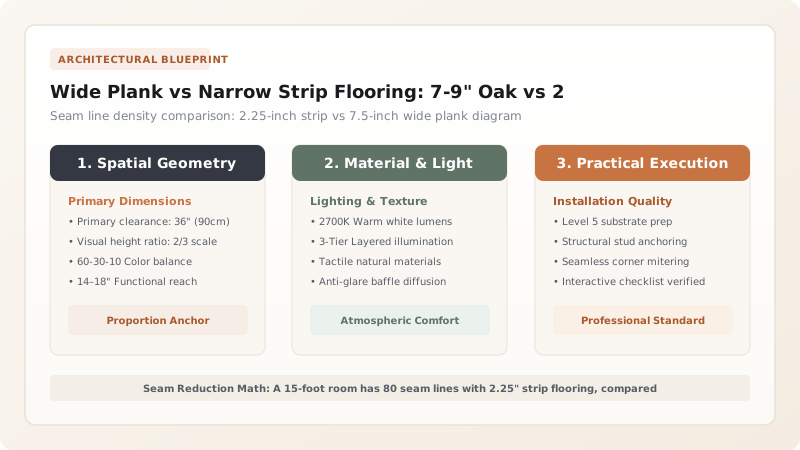
The width of your flooring planks fundamentally dictates the visual frequency of the floor plane. In a standard 15-foot wide room, installing traditional 2.25-inch strip flooring creates 80 distracting parallel seam lines across the space.
Installing modern 7.5-inch wide planks reduces that number to just 24 calm seam lines, immediately eliminating visual clutter and making the entire room appear wider and more open.

Wide Plank vs Narrow Strip Hardwood Comparison
Use this reference table to calculate exact physical dimensions, ratios, and specifications before purchasing:
| Flooring Attribute | 7" - 9" European Wide Plank | 2.25" - 3.25" Narrow Strip | Winner / Best Application |
|---|---|---|---|
| Visual Spaciousness | High (Calm, expansive, fewer lines) | Busy (Many parallel joint lines) | Wide Plank (Modern / Open Plan) |
| Historic Authenticity | Authentic to 18th-century farmhouses | Authentic to 1920-1960s homes | Narrow Strip (Mid-century & pre-war) |
| Humidity Sensitivity | High (Requires engineered core) | Low (Solid wood handles seasonal shifts) | Engineered Wide Plank (Stable) |
| Average Board Length | 6.0 - 8.0 feet long boards | 1.5 - 4.0 feet short random lengths | Wide Plank (Elegant long spans) |
Solid Wide Plank Cupping Constraints
Every successful decoration project must account for physical and environmental constraints:
Solid 8-Inch Planks Cupping in Summer Humidity
Solid hardwood over 5 inches wide cups severely when moisture changes; strictly specify 5/8" or 3/4" Engineered Hardwood with a thick 4mm to 6mm sawn European oak wear layer.
How to Install Wide Plank Hardwood
Execute this professional sequence to achieve flawless results without backtracking:
Check Subfloor Flatness
Ensure subfloor has zero dips exceeding 3/16" over 10 feet.
Glue-Assist Cleat Nailing
Apply elastomeric wood glue in an 'S-pattern' on subfloor plus 18-gauge cleats every 8".
Mix from 4 Boxes Simultaneously
Open 4 boxes to mix long lengths and grain variations evenly across the room.
Maintain 1/2" Perimeter Expansion
Keep a 1/2-inch gap at all walls to allow natural seasonal expansion.
Common Mistakes & Countermeasures
Avoid these costly errors that compromise aesthetics, ergonomics, and budget:
Blind-Nailing Wide 8-Inch Planks Without Glue Assist
Project Execution Checklist
Track your physical progress. Checkboxes persist automatically on this device:
Frequently Asked Questions
Can engineered wide plank hardwood be refinished in the future?
Yes! High-end engineered hardwood with a 4mm to 6mm sawn dry wear layer can be fully sanded and refinished 3 to 4 times, equal to a solid 3/4-inch wood floor.


