
Design hardwood flooring by selecting between 90-degree Herringbone parquet (timeless, interlocking rectangular boards), 45-degree Chevron (dramatic continuous zig-zag arrows), or 7 to 9-inch wide European White Oak planks finished with an ultra-matte hardwax oil.
At a Glance: Key Takeaways
- Herringbone Parquet: 90-degree interlocking rectangular boards (e.g. 4" × 20" or 5" × 25" planks).
- Chevron Parquet: Planks cut at 45 or 60-degree angles meeting along a continuous center spine line.
- Wide Plank Scale: 7 to 9-inch wide planks expand small rooms and reduce distracting joint lines.
- Matte Finish: Ultra-matte (5-10% gloss) hardwax oil reveals natural wood grain without shiny plastic glare.
In-Depth Guides in this Directory
Explore specialized subtopic blueprints, technical dimensions, and execution checklists:
Herringbone vs Chevron Wood Floors: 90° vs 45° Angle Geometry
Compare Herringbone vs Chevron hardwood floors: 90-degree rectangular interlocking vs 45-degree angle miter cuts, waste percentages, labor costs, and visual movement.
Wide Plank vs Narrow Strip Flooring: 7-9" Oak vs 2.25" Heritage
Compare 7-9 inch European wide plank flooring vs 2.25 inch heritage strip hardwood: visual expansion math, engineered multi-ply stability, and cost analysis.
Wire-Brushed vs Smooth Hardwood: Matte Hardwax Oils & UV Poly
Compare Wire-Brushed vs Smooth hardwood finishes: rotary wire-brush texturing, ultra-matte hardwax oils (Rubio Monocoat) vs UV-cured polyurethane, and scratch concealment.
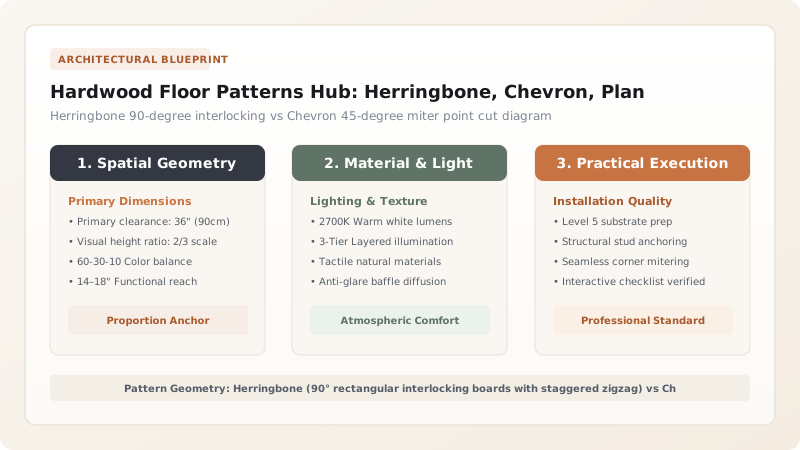
1. The Geometry of Parquet: Herringbone vs Chevron vs Straight Plank
Flooring is the largest continuous surface plane in any interior. While standard straight-laid strip flooring is functional, patterned parquet layouts (Herringbone and Chevron) introduce dynamic directional energy that draws the eye toward focal windows, fireplaces, and architectural views.
The distinction between the two classic European patterns is geometric:
- Herringbone: Rectangular boards meet at exact 90-degree angles, creating a broken zigzag with staggered end joints.
- Chevron: Boards are cut at precise 45 or 60-degree miter angles, meeting point-to-point to form a continuous, razor-sharp center arrow line.

Hardwood Flooring Pattern & Format Comparison
Use this reference table to calculate exact physical dimensions, ratios, and specifications before purchasing:
| Laying Pattern / Format | Plank Dimensions | Material Waste % | Architectural Character |
|---|---|---|---|
| Classic 90° Herringbone | 4" - 5" W × 20" - 25" L | 10% - 15% cutting waste | Parisian Haussmannian, Classic Traditional |
| Continuous 45° Chevron | 4" - 5" W (Angle cut ends) | 15% - 20% miter waste | Modern Luxury, High-Glamour Contemporary |
| 7" - 9" European Wide Plank | 7.5" - 9.0" W × 6 - 8 ft L | 7% - 10% standard waste | Warm Minimalist, Scandinavian, Modern Coastal |
| 2.25" Traditional Strip | 2.25" W × random length | 5% standard waste | Colonial Revival, Craftsman, Historic Restoration |
Subfloor Flatness & Parquet Humping Constraints
Every successful decoration project must account for physical and environmental constraints:
Subfloor Unevenness Causing Parquet Corners to Pop Up
Herringbone and chevron parquet have hundreds of interlocking corners; subfloors with more than 3/16" dip over 10 feet will cause corners to lift and creak; grind high spots and pour self-leveling underlayment.
How to Layout and Install a Herringbone Floor
Execute this professional sequence to achieve flawless results without backtracking:
Snap True Center Axis Line
Snap a laser centerline through the room's primary architectural focal point.
Build a Starter Inverted 'V' Jig
Construct a 90-degree plywood starter triangle to guide the first herringbone row.
Trowel Full-Spread Urethane Glue
Spread moisture-cured urethane wood adhesive across subfloor using 1/4" trowel.
Alternate Left and Right Planks
Interlock tongue-and-groove boards, verifying alignment to centerline every 3 rows.
Common Mistakes & Countermeasures
Avoid these costly errors that compromise aesthetics, ergonomics, and budget:
Installing Wide Solid Planks Over Radiant Heated Floors
Project Execution Checklist
Track your physical progress. Checkboxes persist automatically on this device:
Frequently Asked Questions
Is Chevron or Herringbone more expensive to install?
Chevron is typically 20% to 30% more expensive than Herringbone because every single board end must be precision-mitered at 45 degrees, requiring significantly more cutting labor and generating 15-20% wood waste.


