
Calculate custom drapery yardage by: 1) Multiply rod width by 2.2 for total width, 2) Divide by 54 inches (standard fabric bolt width) to determine the number of fabric widths needed, and 3) Multiply widths by Cut Length (Finished Height + 12 inches for hems).
At a Glance: Key Takeaways
- Standard Fabric Bolt: Upholstery and drapery fabric is manufactured in standard 54-inch wide bolts.
- Width Count: A 72" rod at 2.2x fullness needs 158" of fabric = 3 fabric widths (1.5 widths per panel).
- Cut Length Math: Finished Floor-to-Rod Height + 8 inches (bottom hem) + 4 inches (top buckram).
- Pattern Repeat Factor: Add the vertical pattern repeat (e.g. 18") to each cut length so patterns match horizontally.
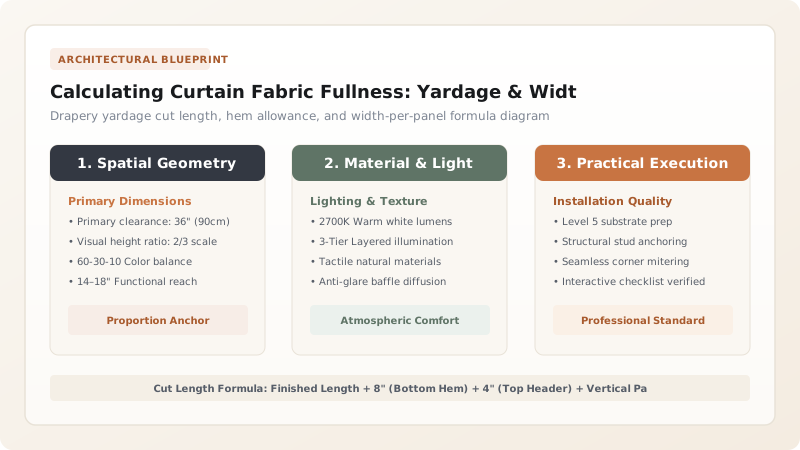
1. The Step-by-Step Professional Yardage Formula
Ordering fabric for custom drapery without precise mathematical calculations leads to expensive shortages. Custom workrooms use a standardized 4-step yardage formula:
Step 1 (Target Width): Rod Length × Fullness Multiplier (2.2) = Total Width Needed
Step 2 (Number of Widths): Total Width Needed ÷ 54 Inches (Bolt Width) = Number of Widths (Round UP)
Step 3 (Cut Length): Finished Length + 12 Inches (Hems & Header) + Pattern Repeat = Cut Length per Width
Step 4 (Total Yardage): (Number of Widths × Cut Length in Inches) ÷ 36 = Total Yards to Order

Window Rod Width vs Fabric Widths Needed
Use this reference table to calculate exact physical dimensions, ratios, and specifications before purchasing:
| Window Rod Width | Fullness (2.2x) | Total Fabric Width | Fabric Widths Needed (54" Bolt) |
|---|---|---|---|
| 48" Rod (Small Window) | 105 inches | 2 Full Widths | 1 Width per panel (50" finished each) |
| 72" Rod (Standard Window) | 158 inches | 3 Full Widths | 1.5 Widths per panel (75" finished each) |
| 96" Rod (Wide Double Window) | 211 inches | 4 Full Widths | 2.0 Widths per panel (100" finished each) |
| 144" Rod (Sliding Glass Door) | 316 inches | 6 Full Widths | 3.0 Widths per panel (150" finished each) |
Vertical Pattern Matching Drop Waste Constraints
Every successful decoration project must account for physical and environmental constraints:
Floral Patterns Staggered and Mismatched Across Seams
Failing to account for pattern repeats causes large floral motifs to jump up and down across panel seams; always add one full pattern repeat (e.g. +24 inches) per fabric cut to align patterns horizontally.
How to Measure a Window for Drapery Yardage
Execute this professional sequence to achieve flawless results without backtracking:
Mount Rod First
Install curtain rod at final position (6-10" above window) before measuring.
Measure to Floor with Steel Tape
Measure from top of rod down to floor at left, center, and right (use shortest measurement).
Calculate Panel Widths
Multiply rod width by 2.2 and divide across two panels.
Add 15% Safety Overage
Order 1 to 1.5 extra yards of fabric to account for bolt flaws and pattern squaring.
Common Mistakes & Countermeasures
Avoid these costly errors that compromise aesthetics, ergonomics, and budget:
Measuring with a Fabric Tape Measure Instead of Steel Tape
Project Execution Checklist
Track your physical progress. Checkboxes persist automatically on this device:
Frequently Asked Questions
What is the standard bottom hem size for custom drapery?
Custom drapery specifies a 'Double 4-Inch Bottom Hem' (8 inches of fabric folded in half twice). This provides substantial downward weight so curtains hang straight and ripple beautifully.


