
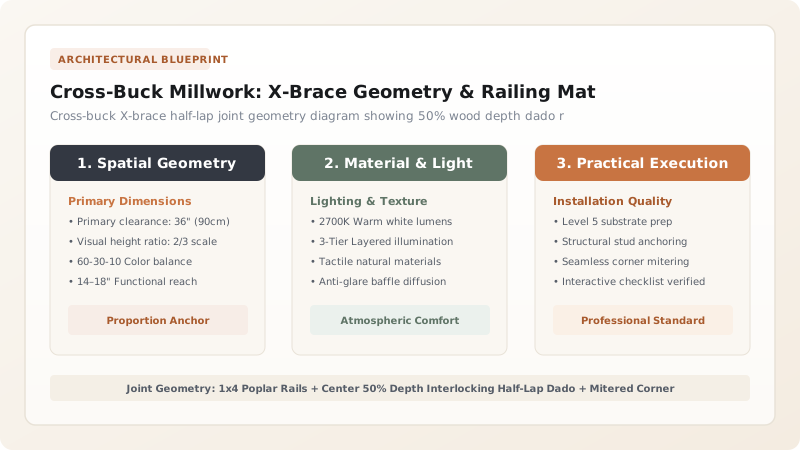
Construct custom Hamptons cross-buck X-brace millwork by framing a rectangular border with 1x4 poplar boards. Connect opposing corners with two diagonal 1x4 braces joined at their center intersection with a 50% depth interlocking half-lap dado joint, ensuring both braces lie 100% flush on the same plane.
At a Glance: Key Takeaways
- Interlocking Half-Lap Center Joint: Both crossing diagonal boards lie perfectly flush on a single surface plane.
- Bisected Corner Miter Cuts: Diagonal brace ends are cut to match the precise aspect ratio angle of the rectangular frame.
- Kitchen Island Gable Ends: Traditional application that grounds large islands with tailored architectural detail.
- Porcelain Smooth Painted Finish: Sanded to 220-grit and sprayed in crisp white polyurethane enamel.
1. Carpentry Joinery: The Interlocking Half-Lap vs Surface Lap
Amateur carpenters make X-braces by running one continuous board and cutting two small triangular pieces to butt against the sides. Over time, wood expansion causes the butt joints to open up, creating unsightly cracked paint lines.
Master millworkers execute a True Interlocking Half-Lap Joint. Both diagonal 1x4 boards run continuously from corner to corner. A dado blade removes exactly 50% of the wood thickness (3/8" on a 3/4" board) at the crossing intersection, locking the braces into an indestructible, monolithic architectural X.

Cross-Buck X-Brace Applications & Lumber Dimensions
Use this reference table to calculate exact physical dimensions, ratios, and specifications before purchasing:
| Architectural Application | Frame Lumber Size | X-Brace Joinery Method | Building Code Requirement |
|---|---|---|---|
| Kitchen Island Gable End (Optimal) | 1x4 Solid Poplar (3.5" wide) | Interlocking Half-Lap Dado | Flush decorative millwork |
| Exterior Coastal Porch Railing | 2x4 Western Red Cedar | Half-Lap with exterior glue | Must pass 4" sphere safety code test |
| Interior Sliding Barn Door | 1x6 Solid Pine / Poplar | Half-Lap + Pocket screws | Full door rigidity |
| Built-In Bookcase Side Panels | 1x3 Hardwood (2.5" wide) | Half-Lap joint | Architectural side trim |
Building Code 4-Inch Railing Sphere Constraints
Every successful decoration project must account for physical and environmental constraints:
Exterior Porch X-Brace Railings Failing 4-Inch Child Safety Code
IRC building codes prohibit openings larger than a 4-inch sphere in guardrails; large open X-braces fail inspection; insert vertical 1-inch balusters or secondary interior horizontal rails inside the X to limit gaps to under 4 inches.
How to Build a Half-Lap Cross-Buck Panel
Execute this professional sequence to achieve flawless results without backtracking:
Build Outer Rectangular Frame
Pocket-screw 1x4 poplar boards into a square/rectangular perimeter frame.
Lay First Diagonal and Trace Corners
Lay full 1x4 board diagonally across frame; trace corner angles from underneath with a pencil.
Lay Second Diagonal and Mark Crossing
Lay crossing board and mark the exact intersecting 3.5-inch diamond overlap area on both boards.
Cut 50% Depth Half-Lap Dados
Set table saw dado blade to 3/8" depth; clear waste inside the marked lines on both boards.
Glue, Clamp and Nail into Frame
Apply wood glue to half-lap joint, press together until flush, and nail into the frame corners with finish brads.
Common Mistakes & Countermeasures
Avoid these costly errors that compromise aesthetics, ergonomics, and budget:
Cutting Dados Too Deep Resulting in a Recessed Sagging Joint
Project Execution Checklist
Track your physical progress. Checkboxes persist automatically on this device:
Frequently Asked Questions
Can cross-buck details be used on kitchen cabinet doors?
Yes! Cross-buck X-mullions placed over clear glass upper cabinet doors or solid pantry doors are a signature luxury feature of custom Hamptons kitchens.


