
Calculate lampshade pleating fabric by multiplying the bottom ring circumference by 3.0 for knife pleats (or 3.5 for box pleats). On tapered Empire cone shades, accommodate the diameter difference by fanning pleats out radially (e.g. 1/4-inch pleats at the top expand to 1/2-inch pleats at the bottom).
At a Glance: Key Takeaways
- Knife Pleat (3x Ratio): Folds overlap in a continuous single direction, creating a swirling modern spiral light texture.
- Box Pleat (3.5x Ratio): Two opposing folds meet at a center box, creating a formal, architectural Georgian look.
- The Tapered Empire Formula: Pleat spacing must scale proportionally between small top ring and wide bottom ring.
- Pinning Sequence: Always pin pleats at the 4 cardinal compass points first (North, South, East, West) to distribute slack.
1. Conical Geometry: The Radial Pleat Fan Formula
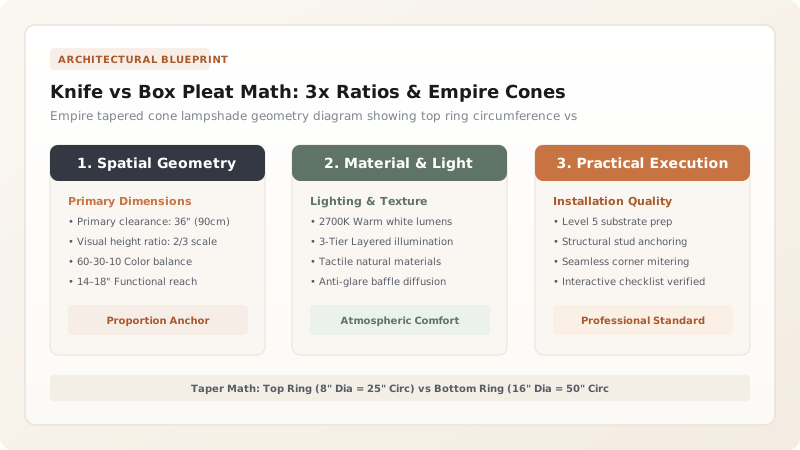
Unlike flat drum shades where top and bottom circumferences are equal, Empire and Tapered Cone Lampshades have a bottom ring that is often twice the circumference of the top ring (e.g. 8" Top Ring = \(25.1\text{ inches}\) vs 16" Bottom Ring = \(50.2\text{ inches}\)).
If you attempt to make pleats the same width at top and bottom, the fabric will twist and distort. The artisan must execute Radial Fanning: calculating pleat widths proportionally so that a 1/4-inch pleat at the top ring expands smoothly to a 1/2-inch pleat at the bottom, maintaining perfectly straight vertical flutes.

Knife Pleat vs Box Pleat Specifications
Use this reference table to calculate exact physical dimensions, ratios, and specifications before purchasing:
| Pleating Style | Fabric Multiplier | Pleat Top/Bottom Ratio (Empire) | Visual Character |
|---|---|---|---|
| Knife Pleat (Directional) | 3.0x Bottom Circumference | 1/4" Top → 1/2" Bottom | Dynamic swirling light texture / Modern classic |
| Inverted Box Pleat | 3.5x Bottom Circumference | 3/8" Top → 3/4" Bottom | Formal architectural symmetry |
| Double Box Pleat (Extra Full) | 4.0x Bottom Circumference | 1/2" Top → 1.0" Bottom | Heavy luxury / English manor style |
| Gathered Shirred (No Folds) | 2.5x Bottom Circumference | Random micro-gathers | Casual country cottage / Relaxed |
Bias Grain Fabric Twist Constraints
Every successful decoration project must account for physical and environmental constraints:
Fabric Cut Off-Grain Twisting and Spiraling Crookedly Around Wire Struts
Cutting lampshade silk even 2 degrees off-grain causes pleats to twist diagonally as they are tensioned; pull a single weft yarn across the silk panel to reveal the true 100% straight grain line before cutting.
How to Layout and Pin Knife Pleats on an Empire Shade
Execute this professional sequence to achieve flawless results without backtracking:
Measure Top and Bottom Circumferences
Measure top wire ring (\(C_1 = 24\text{ inches}\)) and bottom ring (\(C_2 = 48\text{ inches}\)).
Calculate 3x Fabric Length
Multiply bottom circumference by 3: 48" × 3 = 144" total fabric length needed.
Mark 4 Quadrants on Frame
Divide top and bottom wire rings into 4 equal quadrants with chalk marks (North, South, East, West).
Pin Fabric at 4 Quadrant Points
Pin fabric to the 4 marks, dividing the 144" fabric into four equal 36" sections.
Pleat Each Quadrant Individually
Fold 1/4" knife pleats at top and 1/2" at bottom, pinning each fold into the cotton-bound wire.
Hand-Stitch Along Wire Rings
Back-stitch through pleats into cotton twill binding with a curved upholstery needle.
Common Mistakes & Countermeasures
Avoid these costly errors that compromise aesthetics, ergonomics, and budget:
Starting Pleats from One Side and Working All the Way Around
Project Execution Checklist
Track your physical progress. Checkboxes persist automatically on this device:
Frequently Asked Questions
What direction should knife pleats face?
Standard convention is to fold knife pleats facing clockwise when viewed from above. However, the most important rule is consistency: all pleats must face the exact same direction around the entire shade.


