
Prevent loose, wrinkled bench cushion fabric by creating an engineered crown: cut a 3-inch thick 45 ILD high-density foam core, adhere 1-inch thermal-bonded polyester Dacron batting to the top and bottom faces, and feather the edges. Cut the fabric cover 1 inch smaller than the wrapped foam to ensure drum-tight tension.
At a Glance: Key Takeaways
- The 1-Inch Under-Sizing Rule: Fabric covers cut 1" smaller than the foam ensure continuous surface tension.
- Convex Crown Profile: Raises the cushion center by 1/2" to 3/4", preventing the dreaded 'sunken depression' look.
- Dacron Fiber-to-Fabric Slip: Allows face fabric to glide smoothly over foam without binding or bunching during seating.
- Feathered Edge Tapering: Sanding or beveling the Dacron edge creates a smooth waterfall transition into boxing seams.
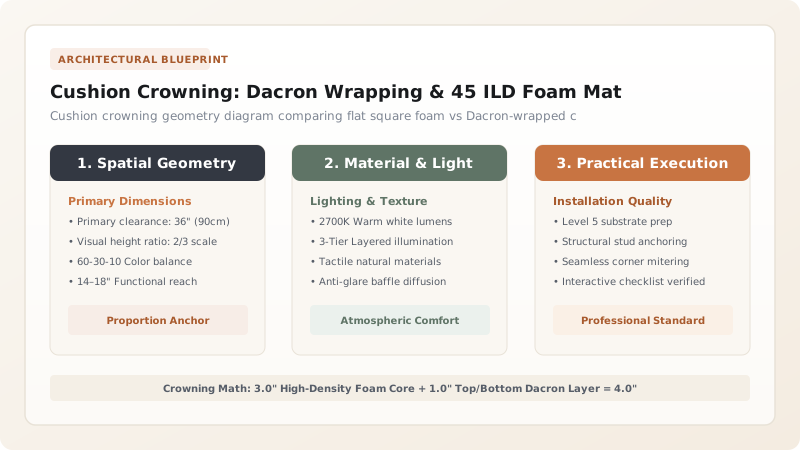
1. Upholstery Mechanics: Fabric Creep vs Elastic Surface Tension
When flat, uncrowned foam is inserted into a fabric cover, the center of the cushion experiences repeated compression from seating. Because woven textiles have slight stretch, the fabric in the center permanently stretches (fabric creep), creating ugly puddling wrinkles in the middle of the seat.
Adding a 1-inch Dacron Crown establishes permanent radial outward tension. The convex dome pushes upward against the fabric continuously, instantly erasing wrinkles the moment an occupant stands up.

Cushion Padding Combinations & Resulting Profiles
Use this reference table to calculate exact physical dimensions, ratios, and specifications before purchasing:
| Core Construction | Batting Wrap | Finished Profile | Wrinkle Resistance |
|---|---|---|---|
| 3" HR-45 Foam (Optimal) | 1.0" Bonded Polyester Dacron | Crowned 3.5" Convex Apex | Maximum (Zero surface wrinkles) |
| 4" HR-45 Foam (Ultra-Plush) | 1.5" Down/Feather Envelope Wrap | Plush Rounded Crown | High (Requires occasional fluffing) |
| 3" Standard HD-36 Foam | 0.5" Thin Batting | Slightly Crowned | Moderate |
| 3" Raw Foam (Unwrapped) | Zero Batting Wrap | Flat Square Block | POOR: Fabric puddles & wrinkles quickly |
Dacron Shifting Bunching Constraints
Every successful decoration project must account for physical and environmental constraints:
Un-Glued Dacron Batting Bunching into Lumps Inside Cushion Covers
Loose Dacron shifts during use, creating ugly lumpy wads in corners; always bond Dacron permanently to foam faces using professional high-tack spray upholstery adhesive (like 3M Foam Fast 74).
How to Crown and Wrap Foam for Bench Cushions
Execute this professional sequence to achieve flawless results without backtracking:
Cut High-Density Foam Core
Size 3" HR-45 foam to exact finished bench width and depth.
Apply Mist of Spray Adhesive
Spray a light, uniform mist of 3M Foam Fast 74 over the top foam face and bottom face.
Wrap 1" Bonded Dacron Over Front Bullnose
Lay Dacron over top, wrap smoothly around the front edge (eliminating front seams), and adhere to bottom.
Feather Side Edge Overhangs
Trim excess side batting with shears at a 45° angle to create smooth feathered transitions.
Vacuum Stuff into Under-Sized Cover
Wrap in thin plastic, vacuum compress, slide into cover, and zip shut; allow foam to expand fully.
Common Mistakes & Countermeasures
Avoid these costly errors that compromise aesthetics, ergonomics, and budget:
Using Heavy 2-Inch Dacron on Thin 2-Inch Foam Cores
Project Execution Checklist
Track your physical progress. Checkboxes persist automatically on this device:
Frequently Asked Questions
What weight of Dacron batting is best for bench cushions?
Specify 1.0-inch thick (1.5 oz per square foot) thermal-bonded polyester Dacron batting. Avoid un-bonded loose quilt batting, which pulls apart and shreds under friction.


